After EMS: The Best Parts
This article is part of an ongoing series from Mike Rubin. In this series, he’ll reflect on his career and share practical retirement advice for emergency medical personnel. Catch up on articles you missed.
As I begin my fourth year of EMS retirement, not much has changed. I’m still an old guy riding in the rumble seat of a vibrant profession without up-to-date schooling or certs. If I don’t remember every cranial nerve, so what? The odds of an executive order making me a medic again are lower than statehood for Somalia. Besides, I can always look stuff up.
I’ve discussed this with Helen. She agrees, but only because she’s watching her favorite TV show, “90 Day Fiancé,” and wants me to shut up. It’s a tactic she’s probably shared with her sister, Sue.
Like Helen, Sue was a fiancé a lot longer than 90 days. Now they’re both retired, which gives the girls plenty of time to stay close in ways the rest of us envy. For Sue and Helen, the extra chances they have to connect is a cornerstone of their casual years.
Anyone who’s retired has plenty of reasons to look past the present, but let’s put that aside for now. Today, I’m just glad I don’t have to work or see a doctor or watch “90 Day Fiancé” as I recall some of life’s entertaining moments.
Hunter Finds Free Cat Litter
My grandson Hunter, 6, went with his dad on some errands two years ago. Hunter kept reminding his father, “Dad, we need litter, we need litter” for their cat, Kitty, so Rob stopped at a pet store, unbuckled his son, and led him toward the entrance.
On their way through the parking lot, Hunter said, “Never mind, Dad, I found it” and retrieved a used fast-food cup that some sloppy dog owner must have tossed within range of a trash can. Before Rob could say, “No, no, that’s not for Kitty,” Hunter added two burger wrappers to his haul and offered his dad the pick of the litter.
Blood Out
I have great veins. Even the little ones are big. My left A/C could replace a cable on the Brooklyn Bridge.
I’m tempted to chuckle at excuses from paramedic students who miss their first practice attempts on my pipes:
- “Did anyone ever tell you your veins roll?” (Why, yes, my three-year-old granddaughter stopped playing with her food long enough to ask me, “Papa, how come your veins roll?”)
- “I could swear I had flashback.”
- “I knew I should have tried
- a smaller cath.”
- a bigger cath.”
- an unused cath.”
- an IO.”
Off The Cuff
Here’s a deceptively simple formula for taking blood pressure in most medical offices I’ve visited: For an average-sized person without a cardiac history, systolic = 120 +/- 2 and diastolic = 80 +/- 2. Exception: BP = your prior systolic +/- 2 over your prior diastolic +/- 2 if the person taking your pressure knows those numbers.
Who knew BP cuffs could cure hypertension? I was getting my pressure checked through two layers of clothing, as usual, by a local clinician who expressed concern that the reading was high. As I prepared for another needless warning of cardiovascular disease, the clinician produced a larger cuff, rechecked my BP, and said, “That’s better.”
New Best Friends Who Ring My Bell
About once a month, salespeople with color-coordinated hats and T-shirts show up at my front door with enticing offers: bugs exterminated or windows replaced for less than the other guys. I always say no because I don’t trust them and don’t want what they’re selling, but all that seems to do is make them more eager for my business.
I used to get frustrated saying no in so many ways. Now I try something entertaining—for me, anyway. I engage them in conversations about occupational topics—window rot, mosquito migration patterns, deadly force—so their visits become obstacles they must overcome. I didn’t have time for any of that when I was working. It’s like being part of a lab experiment where you think you’re the rat but you’re really the cheese.
Reconnecting With My Real Best Friend
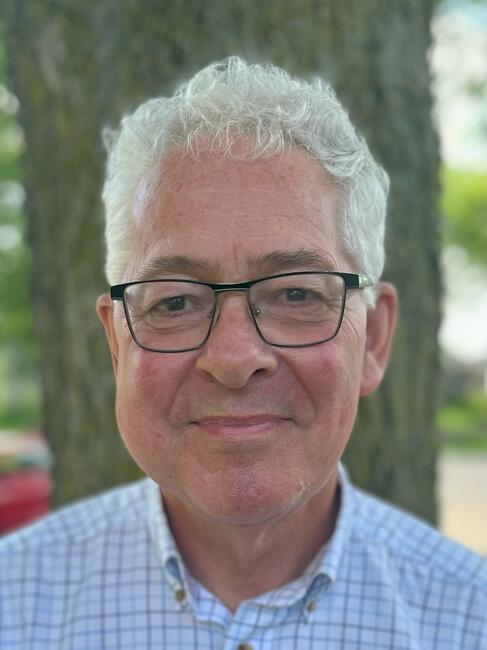
Everyone, say hello to Billy. We were best friends growing up in the ’50s near Boston. Our folks watched out for each other’s kids, as was the custom in that decade. It must have worked, because I don’t remember needing much.
For some reason, we lost touch for 65 years. Then I found Billy living near the New Hampshire-Massachusetts border and was delighted to rehash remarkably clear memories with him about stuff we did. What a joy. I never should have let all that time pass without checking in.
Who knows why we don’t stay close to people we treasure. If you’re in that group, do yourself a favor and call. I doubt you’ll find anything about retirement that’ll make you happier.
Mike’s Exit Poll #14: Excluding family members, who has helped you the most during your time in EMS?
This is a pretty easy question for me. My only concern is that the person I’m thinking of is a closet nice guy who might not wish to be outed. Still, he deserves recognition and has a sense of humor, so I’ll use a name that may or may not be his.
I met Eric after a medevac to his ER. My patient was suffering from blunt plus penetrating trauma, and I was the EMT who got to fly with him because no one smarter was available. After cleaning up, I introduced myself to Eric as a student in the next paramedic class. That meant he’d be one of my instructors. Eric had already worked many years in a big, municipal system and I hadn’t, so I kept my report brief and wondered what he was smiling at. We’ll come back to that.
After graduation, Eric hired me for my first, third, and fifth paramedic jobs. We got along well, although he didn’t hesitate to call me out if he thought I’d screwed up. That happened a few times. Much more common was the stealthy help he gave employees who needed it.
What I liked best about Eric is the examples he set for others. Whether he rode as the boss of his EMS system or as a volunteer for another, he didn’t let his skills go to waste. He could medic as well as any high timer.
About that smiling: At first it seemed out of place, but it just meant Eric was relaxed and enjoyed watching his people try to solve problems. We succeeded more often than not and got better at it the longer we worked for him.
I haven’t seen Eric in a while, but I think of him a lot and am grateful for his mentoring. I hope his job still makes him smile.
Mike Rubin is a retired paramedic and the author of Life Support, a collection of EMS stories. Contact Mike at mgr22@prodigy.net.