When the Last Call is Answered: Inside the Weekend of Honor
The weight was palpable the moment I stepped into the Hyatt Regency Crystal City in Arlington, Virginia. It wasn't loud. In fact, the lobby was filled with quiet conversations, embraces between old friends, and volunteers greeting arriving families. Yet beneath every smile was the shared understanding of why we had come.
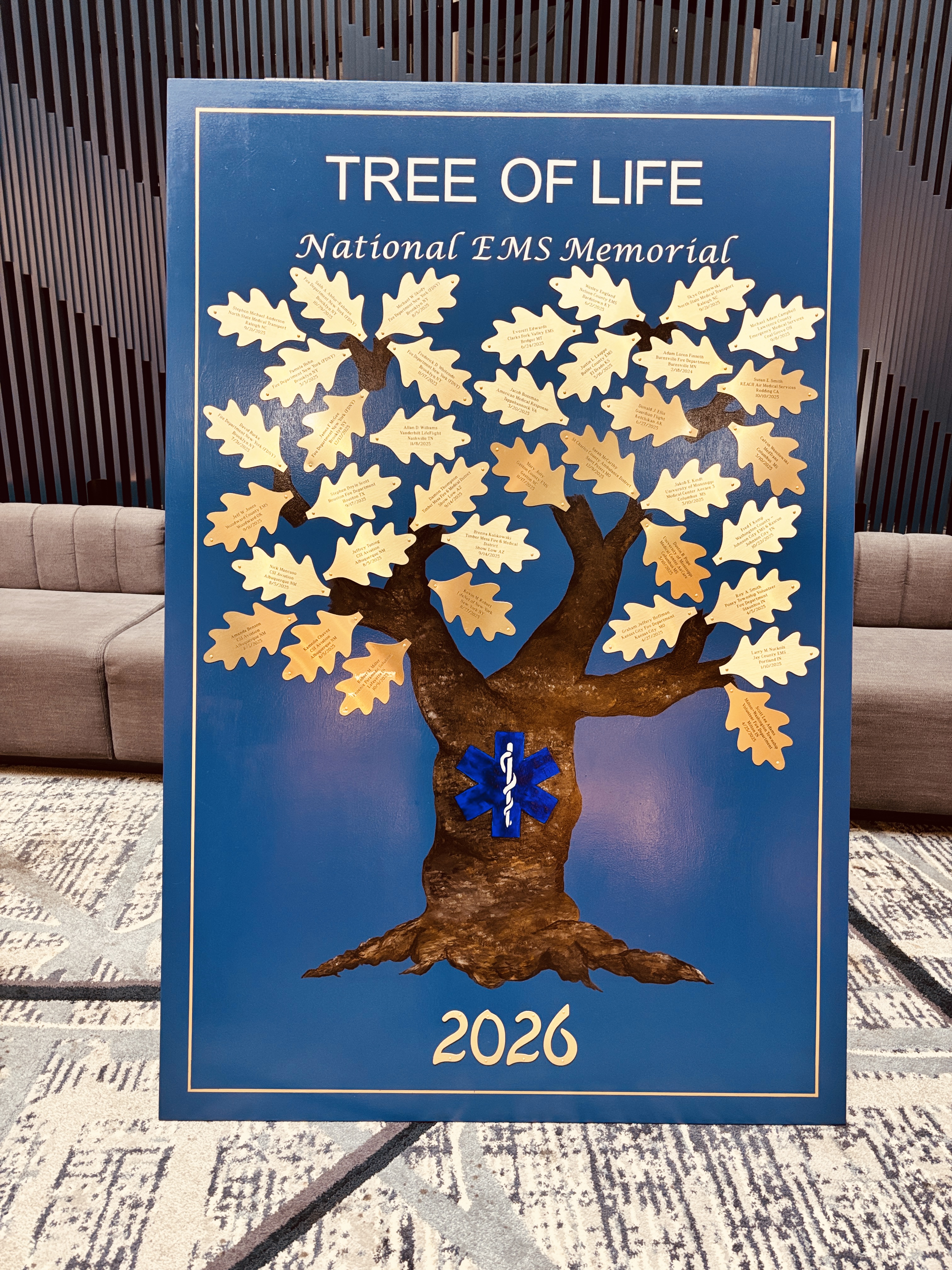
It had been nearly eight months since the tones sounded the last call across the radio for someone I knew, and memories—both good and difficult—came rushing back with a force I hadn't anticipated. Before I had taken more than a few steps, a familiar face appeared, offering a warm handshake and helping carry the emotional weight of the moment as we made our way toward registration. Then the Tree of Life came into view.
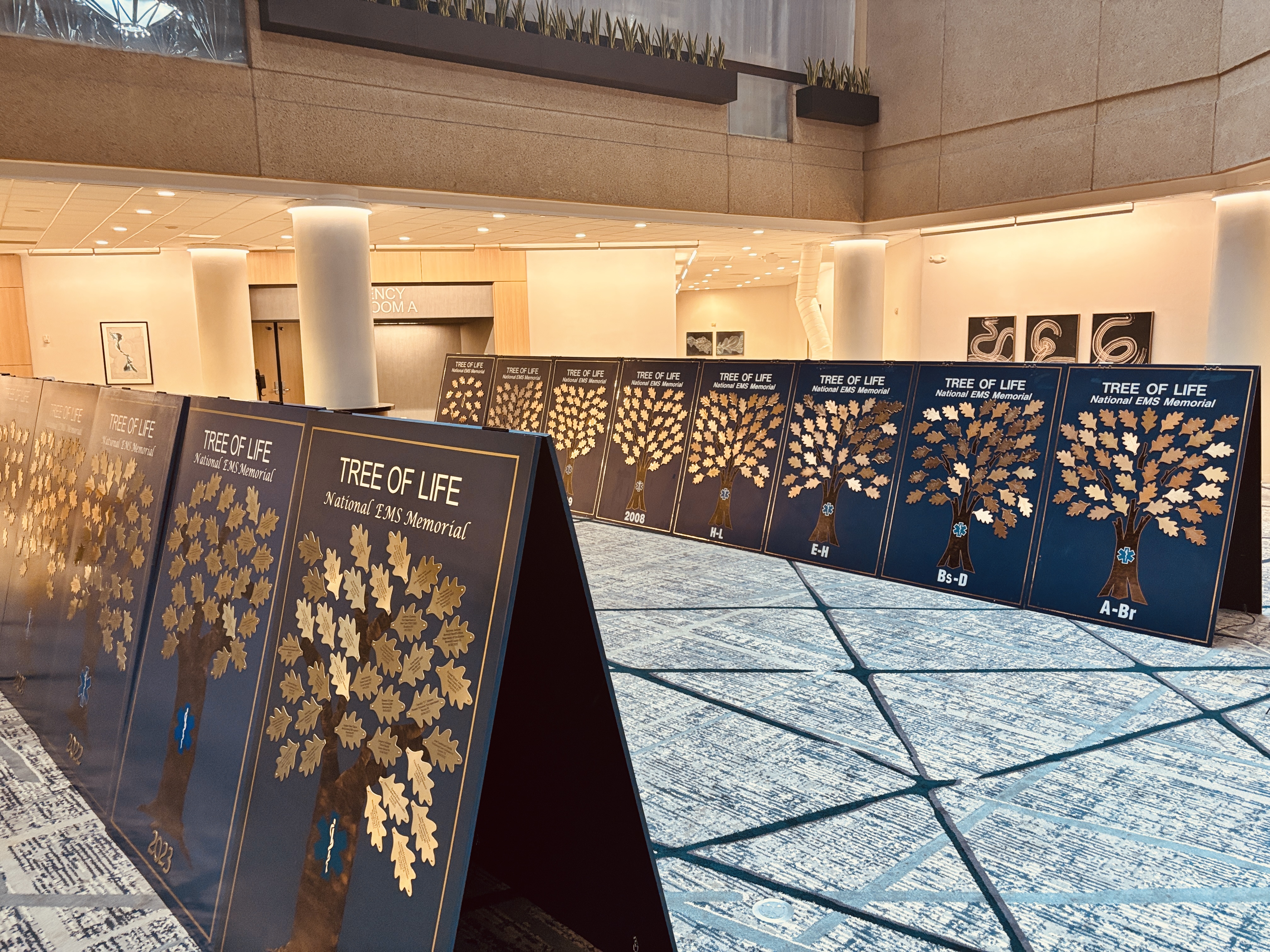
This year’s single panel displayed a tree of 37 names. It stood like a lone sentinel looking at the rows of those who came before it. Thirty-six display panels stood in quiet rows, each covered with polished brass leaves engraved with the names of EMS professionals who answered a call and never came home. Families paused before them, some tracing a fingertip across a familiar name, others standing silently together, absorbing the reality that had brought them there.
I expected to recognize a few names. I wasn't prepared for how many. After more than four decades in EMS, several names were immediately familiar. One had been a coworker years ago. Another had attended a mountain rescue school where I served as an instructor. Others had crossed my path during different chapters of my career. Each brass leaf represented far more than a name. It carried a face, a voice, shared experiences, and memories that suddenly returned with remarkable clarity.
For many first-time attendees—including me—the Tree of Life became more than a memorial display. It became a reminder that EMS is a surprisingly small profession, connected by decades of shared experiences, friendships, and sacrifice. Every person in the room carried a different story, yet all had come for the same purpose: to honor one of our own.
A Community Comes Together
The National EMS Weekend of Honor is the one gathering no one hopes to attend.
Each summer, families, partners, coworkers, honor guard members, EMS Memorial Bike Riders, volunteers, and supporters from across the United States come together for three days unlike any other in EMS. It’s not simply a memorial service. It is the profession quietly gathering around those left behind.
The weekend follows a rhythm that is as intentional as it is comforting.
Friday is arrival.
Saturday is witness.
Sunday is departure.
Yet those simple descriptions fail to capture what truly occurs. Families arrive believing they are alone in their grief. By Sunday morning, many leave embracing people they had never met only two days earlier—people who understand their loss in ways few others can.
The National EMS Memorial Service has quietly become the place where those connections begin.
Throughout Friday afternoon, the hotel lobby gradually transformed into something resembling a family reunion that no one had wanted to attend. New faces mingled with old friends. Honor guard members greeted families they had escorted in previous years. Volunteers answered questions, directed guests, and offered reassurance to those attending for the first time.
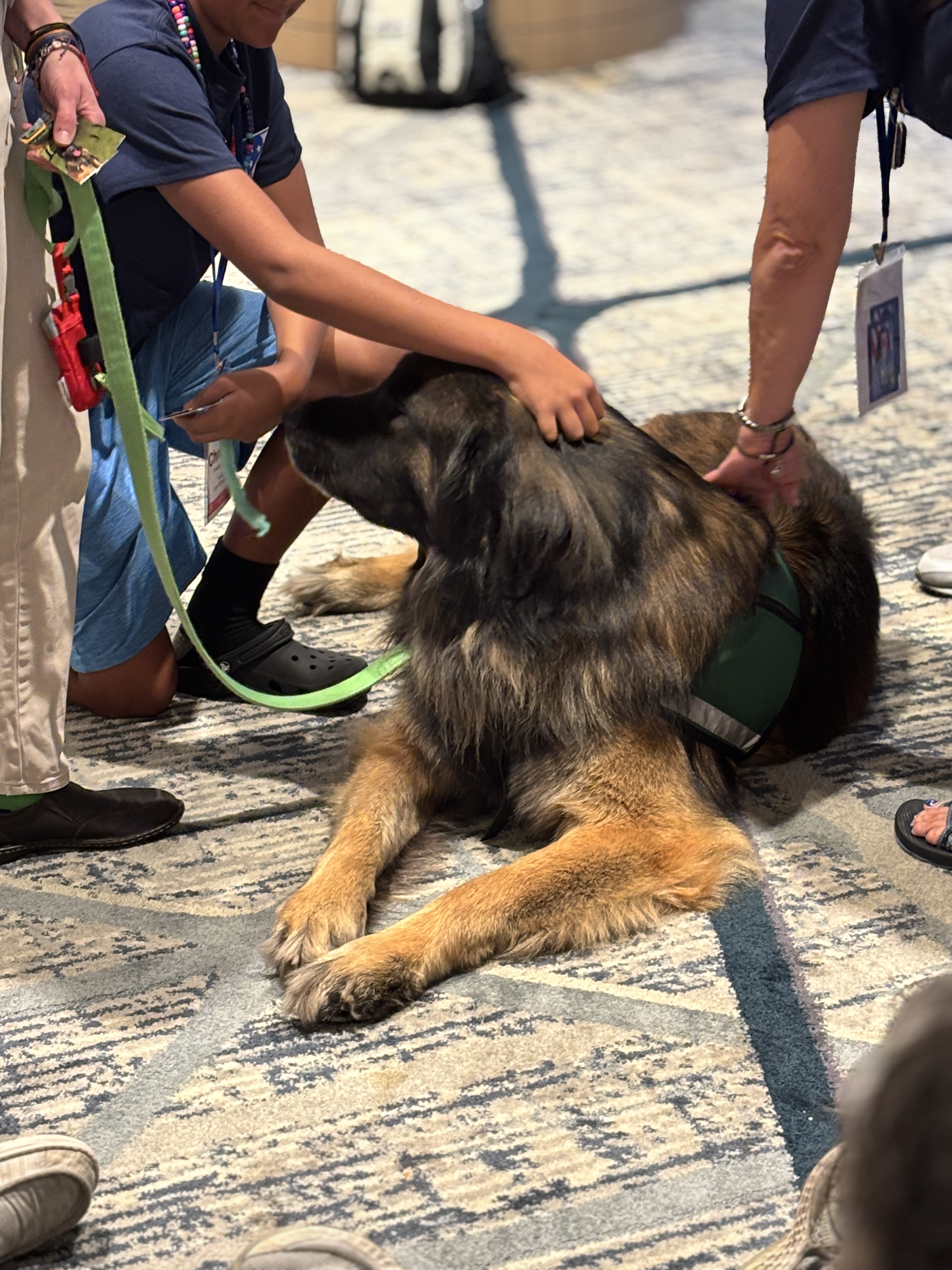
At seemingly random moments, grief surfaced. Someone stepped aside to wipe away tears after seeing a familiar photograph. Another family member quietly accepted an embrace from a stranger. Nearby, one of several therapy dogs patiently rested its head against someone's knee, offering silent comfort that required no words at all. The message was subtle but unmistakable: you are not facing this alone.
Enduring Traditions
Friday afternoon also marks the arrival of one of the Weekend of Honor's most visible traditions—the EMS Memorial Bike Ride. This year's arrival demanded extraordinary determination. Temperatures climbed into the mid-90s across the Washington, D.C. metropolitan area, while humidity pushed the heat index well above 100 degrees. Adding to the challenge, smoke from Canadian and Midwestern wildfires drifted across the region, casting a hazy sky over the nation's capital and making breathing noticeably more difficult.
Shortly after 4 p.m., the riders completed the final miles of their journey into Arlington. Many were visibly exhausted. None appeared discouraged.
For days they had ridden hundreds of miles carrying the names of fallen EMS professionals with them. Now they were finally meeting the families whose loved ones had accompanied them every mile of the journey. Watching those reunions, it became clear that the ride is about much more than cycling. It is about remembrance in motion.
The EMS Memorial Bike Ride traces its roots to 2000, when a small group of cyclists known as the Muddy Angels began riding to honor paramedic Michael "Muddy" McGinn and other EMS providers who died in the line of duty. Over the years the ride has evolved into a nationwide tribute, with routes spanning hundreds of miles and riders carrying the stories of the fallen from community to community before arriving together for the National EMS Weekend of Honor.
Equally enduring is the Tree of Life itself. The tradition traces its roots to memorial ceremonies organized in the early 1990s by the Virginia Association of Volunteer Rescue Squads. As the National EMS Memorial Service evolved, so too did its symbols of remembrance. What began as a simple tribute eventually grew into the Tree of Life and, later, the Moving Honors memorial exhibit—a traveling display ensuring that families and EMS agencies throughout the country could see their loved ones remembered even before a permanent national memorial exists.
For many attending this year's Weekend of Honor, those traditions served as an introduction to a community they never imagined they would one day need.
Understanding a Line-of-Duty Death
Most EMS professionals believe they understand what constitutes a line-of-duty death. Far fewer understand how those determinations are actually made.
Unlike fire and law enforcement, EMS has never had a single national standard governing line-of-duty recognition. EMS systems differ widely from state to state, requiring careful review of each submission.
The National EMS Memorial Service recognizes multiple categories of line-of-duty deaths, including traumatic injuries, ambulance crashes, aeromedical accidents, assaults, duty-related medical events, delayed duty-related deaths, and, historically, COVID-19-related deaths.
Recognition by the National EMS Memorial Service carries profound meaning for surviving families and coworkers, but it does not automatically qualify survivors for federal death benefits.
Many EMS professionals are surprised to learn that the National EMS Memorial Service and the federal Public Safety Officers' Benefits (PSOB) Program operate under different criteria. A death may qualify for recognition during the Weekend of Honor while still requiring a separate federal review to determine eligibility for survivor benefits.
Understanding that distinction is important. Recognition honors their sacrifice, while benefits help support those left behind.
Both matter.
Recognition, Benefits, and the Families Left Behind
For many families, the Weekend of Honor is more than a memorial. It’s also the beginning of understanding a process they never expected to navigate.
The Public Safety Officers' Benefits (PSOB) Program provides federal death benefits to eligible public safety officers, including many EMS professionals. Eligibility, however, is not automatic.
Documentation matters.
The circumstances surrounding the death matter.
Employer status and agency classification matter.
Local, state, and federal survivor benefits often differ, leaving families to navigate a complicated landscape while still grieving. Many arrive unaware of what assistance may be available or what documentation will be required. Throughout the weekend, Foundation volunteers and representatives answer questions, connect survivors with resources, and help ensure no family has to begin that journey alone.
It’s one of the National EMS Memorial Service's least visible but most meaningful contributions. While the public ceremony honors those who died, much of the weekend is devoted to caring for those who continue living with that loss. That distinction becomes clearer with every conversation.
Over the course of the weekend, I found myself speaking with mothers, sisters, husbands, friends, coworkers, and longtime partners of the honorees. Every story was different. Every loss was deeply personal. Yet nearly every conversation eventually arrived at the same place—gratitude that their loved one continued to be remembered by a profession that had not forgotten.
It’s impossible to spend much time at the Weekend of Honor without realizing that every brass leaf on the Tree of Life represents an entire family whose lives were permanently changed.
Honoring Today While Building Tomorrow
The National EMS Memorial Service Foundation oversees the annual Weekend of Honor and the recognition of those added each year to the Tree of Life.
Less widely known is the work of a second organization—the National EMS Memorial Foundation—which continues pursuing something EMS has sought for decades: a permanent National EMS Memorial in Washington, D.C. Unlike firefighters and law enforcement officers, EMS professionals still have no permanent national memorial recognizing those who made the ultimate sacrifice.
Congress took a significant step toward changing that in 2018 when legislation authorized the memorial. Like many long-term projects, however, progress slowed during the COVID-19 pandemic. Congressional authorization must now be renewed before construction can move forward. Even so, planning has continued.
Foundation leaders shared updates throughout the weekend, explaining that three finalist locations have been identified, including a preferred site near the U.S. Department of Health and Human Services along Independence Avenue SW. Faculty and students from the Massachusetts Institute of Technology's School of Architecture have developed conceptual designs, while researchers in psychology have helped shape themes intended to reflect not only sacrifice but also the emotional and cultural history of EMS.
Like every national memorial in Washington, the process is measured in years rather than months. The National Fallen Firefighters Memorial required more than a decade to become reality. The National Law Enforcement Officers Memorial took nearly 20 years from conception to completion. EMS now finds itself following a similar path.
Foundation representatives also explained an aspect of the federal memorial process unfamiliar to many attendees—the historical review period governing permanent memorial inscriptions. Rather than immediately engraving every newly recognized name, national memorials rely on a period of historical review before names become part of the permanent monument. Until then, the National EMS Memorial Service, the Tree of Life, and the Moving Honors exhibit continue ensuring each fallen provider receives the recognition they deserve.
One day, a permanent memorial will stand in the nation's capital. Until then, the people gathered each summer have become the living memorial.
Organizations including NAEMT and EMS World continue supporting both the National EMS Memorial Service and the broader effort to establish a permanent place where the nation's EMS professionals can be remembered alongside other public safety officers.
Saturday Evening
As Saturday evening approaches, conversations grow quieter. Families take their reserved seats. Honor guard members form outside the ballroom. Bagpipes can be heard faintly in the distance as final preparations are completed. The atmosphere is unlike that of any funeral. Nor is it comparable to a graduation, retirement, or military ceremony. It is something uniquely its own.
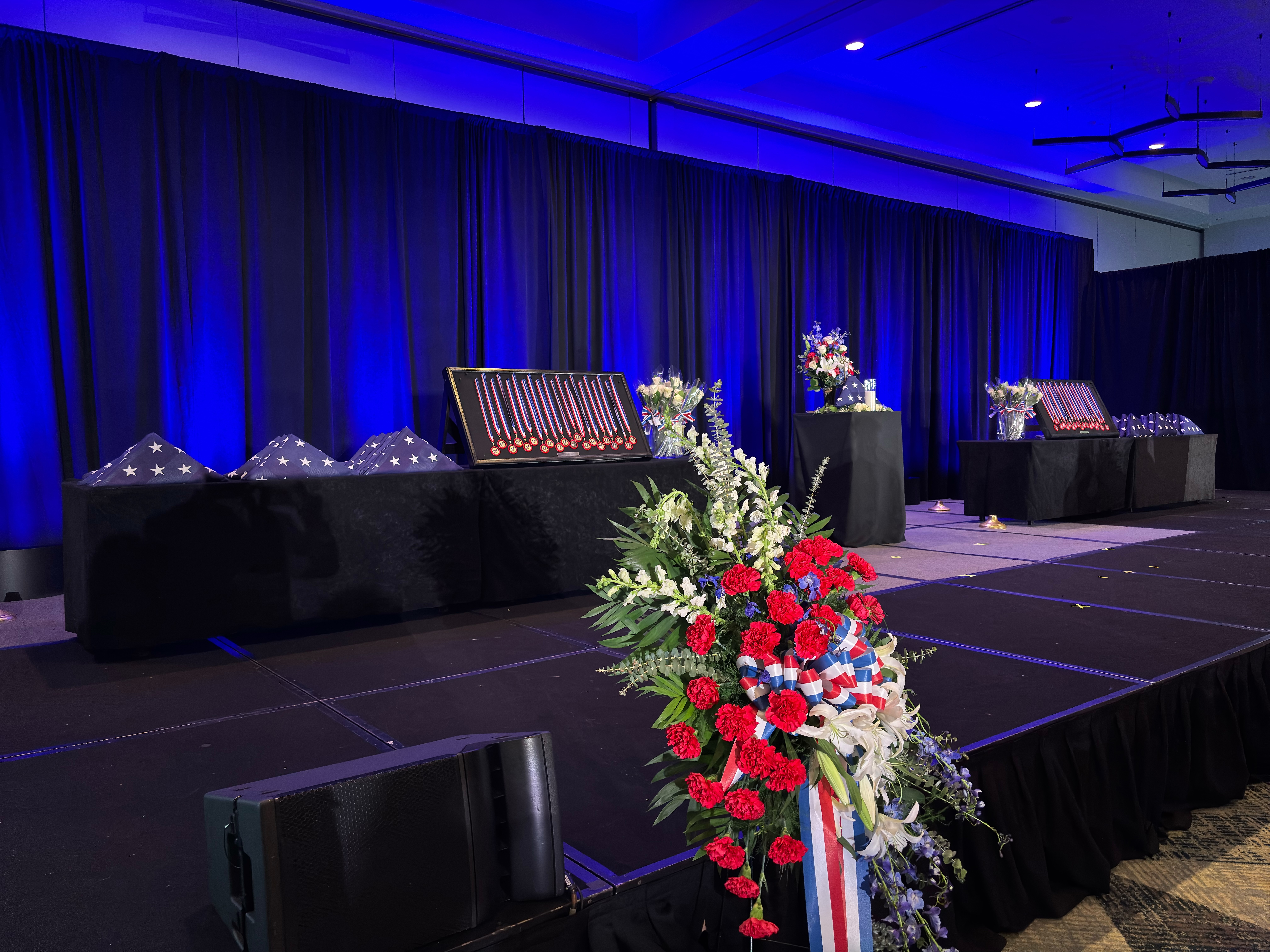
Each family knows the name they have come to hear. Everyone else knows that before the evening is over, that name will become part of the profession's collective memory.
The ceremony opens with an invocation before the presentation of the colors. Accompanied by the FDNY EMS Pipes and Drums, the United States flag enters first, carried with deliberate precision. Behind it come honor guard members bearing the flags representing the home states of each year's honorees. Together they create a remarkable display stretching the length of the ballroom, reminding everyone present that loss in EMS recognizes no geographic boundaries.
The reading of names follows a deliberate rhythm. Each honoree is recognized individually by name, agency, position, and the date of their last call.
As each name is spoken, family members or designated representatives are escorted to the stage by members of the National EMS Honor Guard. There they receive three symbols of remembrance: a white rose signifying enduring memory, a commemorative medallion recognizing national service, and an American flag that has flown over the United States Capitol—a lasting tribute to a life devoted to serving others.
The honor guard then quietly escorts each family back to their seats before the next name is read. The cadence rarely changes. The emotion never diminishes.
Although I had anticipated the dignity of the ceremony, I found myself repeatedly watching the faces of the families rather than the stage. Some stood with quiet composure. Others struggled to contain tears. A mother gently clutched the folded flag she had just received. Sisters embraced one another before returning to their seats. Friends stood together, offering silent support when words no longer seemed adequate.
The ceremony honors individuals. It also reminds every family in the room that their grief is shared.
The Final Tribute
As the final name is read and the last family returns to its seat, the ceremony begins drawing to a close. The FDNY EMS Pipes and Drums once again take their place.
A lone piper begins, and Amazing Grace fills the ballroom. Heads bow. The room seems almost to stop breathing as the melody slowly unfolds before the full band joins in. Around the ballroom, tears begin to fall. Hands quietly reach across rows of chairs. Shoulders lean together. Throughout the ceremony, therapy dogs seem almost instinctively to find those who need them most, offering silent comfort with a gentle nudge or a head resting softly against a grieving hand.
When the final notes fade and the colors are retired, the formal ceremony comes to an end. Yet the Weekend of Honor is far from over. Several hours later, families, friends, coworkers, honor guard members, volunteers, and supporters gather again—this time in a reserved upstairs lounge overlooking the hotel lobby. Formal attire and dress uniforms are put away and comfortable clothing sets the tone. The atmosphere changes from mournful recognition to remembrance.
The names spoken so solemnly only hours before are spoken again. Instead of recounting how someone died, families and colleagues recounted tales of how they lived. A favorite practical joke. The paramedic who never arrived at work without coffee for the crew. The EMT who always carried extra candy for frightened children. The partner whose calm voice steadied everyone else on difficult calls. Laughter began sharing the space with tears.
The FDNY EMS Pipes and Drums were a favorite presence that evening. They gave a tribute to the honorees, then paused to honor one of their own who had died since the previous Weekend of Honor. They then transition into more spirited selections that gradually lift the mood—not to diminish grief, but to celebrate lives defined by service, friendship, and humor as much as sacrifice.
Throughout the room, conversations continued well into the evening. Some families are attending for the first time. Others have returned year after year, quietly welcoming newcomers into a community they never imagined joining themselves. As a first-time attendee, I expected to witness a memorial service. I didn’t expect to discover a new segment of our EMS family.
Over the course of the weekend, I met mothers, sisters, husbands, close friends, coworkers, and fellow EMS professionals from every corner of the country. Some had traveled hundreds of miles to honor someone they loved. Others had come simply because they refused to let a fallen partner be remembered alone.
By Sunday morning, many of the strangers who had first met beside the Tree of Life were embracing as old friends. That may be the National EMS Weekend of Honor's greatest achievement. It certainly remembers the fallen, but it also embraces those they left behind.
More Than a Memorial
Every new name added to the Tree of Life represents a heartbreaking loss. It also represents a promise. The EMS Memorial Bike Riders will continue carrying those names across hundreds of miles of highways each year. Honor guards will continue standing watch with unwavering precision. Volunteers will continue welcoming families who never expected to need such a gathering.
The National EMS Memorial Service Foundation will continue ensuring that each fallen provider receives the recognition they deserve, while the National EMS Memorial Foundation works toward the day a permanent memorial stands in the nation's capital.
For me, another realization emerged over the course of the weekend. After more than four decades in EMS, I understood that each passing year will likely bring more familiar names to the Tree of Life. That is the inevitable consequence of spending a lifetime in this profession. The memorial becomes increasingly personal, not because the names are engraved in brass, but because so many once shared a shift, a classroom, an ambulance, or a difficult call.
Perhaps that is why the Weekend of Honor matters so deeply. It reminds us that while EMS professionals often serve in different uniforms, different agencies, and different states, we ultimately belong to one profession—and one extended family.
Until a permanent National EMS Memorial rises in Washington, D.C., the profession's truest memorial isn’t carved in granite or cast in bronze. It’s found in the people who gather each year to speak the names of the fallen, comfort those who remain, share stories that keep memories alive, and quietly renew a promise that endures long after the final radio call.
Your sacrifice will not be forgotten.
Your life will continue to be remembered.
And those who love you will never have to carry that memory alone.
Sources and Further Reading
- National EMS Memorial Foundation – Project Timeline http://emsmemorial.org/project‑timeline
- Public Law 115‑275 – National EMS Memorial Authorization http://congress.gov/bill/115th‑congress/house‑bill/1037
- National Capital Memorial Advisory Commission – Memorial Approval Process http://ncpc.gov/commissions/ncmac
- National Law Enforcement Officers Memorial – History and Timeline http://nleomf.org/memorial/memorial‑history
- National Fallen Firefighters Memorial – History http://firehero.org/about‑the‑national‑fallen‑firefighters‑foundation/national‑memorial
- 1966 White Paper – Accidental Death and Disability: The Neglected Disease of Modern Society http://ems.gov/pdf/Accidental_Death_and_Disability_1966.pdf