Montana's Virtual Leadership Academy Tackling EMS Challenges
Montana has faced EMS funding and staffing challenges for decades. In particular, the state’s rural EMS services have historically been run by volunteers. They are now nearing retirement age as the population increases in the areas they serve, meaning that demand for EMS is only growing.
In a bid to meet these and other challenges in Montana, the state’s Department of Public Health and Human Services has joined with Montana State University to develop new and effective ideas. Specifically, the Montana Office of Rural Health and Area Health Education Center (MORH/AHEC) has been a leader in creating and disseminating online courses for the state’s rural EMS leaders.
A recent project called the Montana Frontier EMS Leadership Academy is creating rural-specific EMS courses on topics such as recruitment, retention, and mentorship. It’s funded by a $1.25 million five-year cooperative agreement from the Health Resources and Services Administration. Montana was one of eight states awarded the funding with the purpose of strengthening rural EMS workforce by creating sustainable recruitment, retention, and financial and operational strategies that can be replicated in other communities.
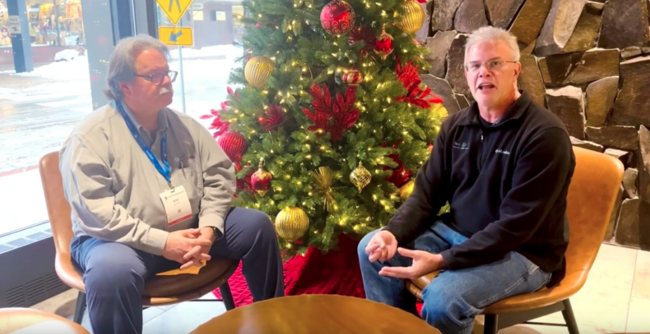
To learn more about the program, EMS World spoke with Kailyn Mock, Director of the Montana Office of Rural Health and Area Health Education Center.
EMS World: Tell us about the Montana Frontier EMS Leadership Academy.
 KAILYN MOCK: The Montana Frontier Leadership EMS Academy is a partnership between our office and the Montana Department of Public Health and Human Services’ Rural Hospital Flexibility Program. We're creating an online academy for frontier EMS agencies to gain leadership and expansive knowledge skills. We partnered with six EMS agencies across the state to take module courses, particularly around the foundations of leadership, recruiting and retention in frontier communities, mentorship, building a social media platform to help with recruitment, and grant writing 101 to expand funding opportunities. Our next module will be focused on community relations, tailored specifically to Montana.
The idea behind this academy is to create an opportunity for folks from different EMS agencies to gain knowledge from content experts. We also set up a community forum so they can connect with peers and exchange ideas. The education is asynchronous, allowing folks to log in on their own time. During a slower day—which I know is rare in EMS work—they can log in from a phone or computer and work through the modules when it suits them, rather than adhering to a set class time.
EMS World: What would I see if I signed onto a typical module? What would I see on my phone and how would I interact with it?
MOCK: It's hosted on a platform called Canvas. When you log in, there is an introduction to the specific module. For example, if the module is Leadership Foundations, you'll learn about different leadership styles. We integrate a variety of videos, literature reviews, examples of frontier best practices from other states, and discussion boards. As you advance through each section on your phone or computer, the system prompts you to move to the next lesson once the current one is completed. At the end, the participant fills out an evaluation form and receives a certificate of completion.
EMS World: Who is this fundamentally aimed at?
MOCK: It’s built for small EMS agencies in Montana that may not have built-in system support for EMS education. Many of these are volunteer-run programs. We wanted to find a way to help as a state and pour resources into these smaller agencies. We piloted the academy with six agencies over the last two years, and we opened it up to all Montana EMS agencies in the late spring of 2026. So, it is now available statewide. Additionally, there are certainly threads of the education that would be applicable to an EMS agency of any size or shape.
EMS World: What are you hoping to achieve by setting this up?
MOCK: We hope to provide more tools for folks' tool belts. We recognize that resources are not always plentiful in EMS. We asked ourselves: how can we do more, especially for a predominantly volunteer-based workforce? How can we provide them with something extra they aren't already receiving?
Growing the workforce is a long-term goal, too. We are looking at how to get high school students and other community members interested in EMS careers. We don't want to see slow or stagnant growth in this arena. It’s vital to get people excited about serving in a role that directly impacts their community. Without EMS, especially in our frontier communities, healthcare access would be severely limited. Having these services makes all the difference in keeping our communities healthy.
EMS World: What results are you seeing so far?
MOCK: Through our module evaluations, we're currently tracking knowledge gain. Since we've only been at this for two years, we haven't yet tracked large-scale metrics like a statewide uptick in workforce interest or long-term retention. However, we are seeing a lot of grassroots interest.
Agencies outside our initial six pilot sites are reaching out, asking for free access to this education. People want to share specific modules, like how to develop a social media campaign to attract recruits, or how to write grants. They appreciate having modules that are truly tailored to EMS personnel, which saves them from having to sort through generic resources. That is where we are seeing immediate change—in the growing interest and ideas around what further education they'd like to see.
EMS World: Finally, is this something that could be used by other states? And if so, how can they contact you?
MOCK: We would be very open to expanding outside of Montana. Collaboration is key to helping other states. There are many other frontier areas in the nation facing similar challenges, so I would welcome anyone to reach out. They can contact me at kailyn.mock@montana.edu.