The Importance of Data in EMS
As EMS leaders, how many of these scenarios can you relate to?
- Local politicians are commenting to media that they have “been told” that it took 30 minutes for an ambulance to arrive after a weekend shooting in a downtown urban area.
- EMS clinicians are increasingly making comments on transporting the same patient repeatedly or identifying “regulars” as dealing with fewer emergent medical issues and more social drivers impacting their quality of life.
- Your media relations team member gets regular and seasonal inquiries relating to hot and cold weather calls, naloxone administration, or pedestrian injuries after a scooter rental company opened in your city.
If any or all these scenarios resonate with you, the response is grounded in one terrific four-letter word, DATA. It’s fair to say that if your EMS organization doesn’t have an established system to collect and analyze data, then you are demonstrating the equivalent analogy of trying to defibrillate a patient with a nine-volt battery. In today’s heavily scrutinized public health world, data can often be our only savior from a politically motivated funding fight, a critical tool to determine deployment strategies and adjustments, and what keeps your organization at the forefront of a local reporter’s mind when working on a larger story and asking the question, “How many times has (insert the latest request for information) happened?” Also critical to the effectiveness is having a data collection infrastructure in place, allowing minimal delay in producing the numbers.
Let’s explore the different scenarios listed and identify how data will shape the response. How would you respond to a public outcry over the amount of time it takes for an ambulance to respond? In a time in which anecdotal details or “it felt like hours” can often become established truth, being able to accurately detail the time of dispatch to scene arrival is crucial to provide the reality of a situation. Even beyond that, over the course of a year, or several years, are you able to quantify your service’s response time? Outrage is often based upon public perception and can only be met with defendable data demonstrating the reality of a situation. Within that, however, you must be willing to accept when your data informs you that you have a problem. As so many urban ambulance services know, run volumes fluctuate all over your coverage area with some ambulances doing only a few runs in a 24-hour period while others might be dispatched seven or eight times per 12-hour shift. If your goal is to provide the same resources for your response area, your data will tell you how long a unit is out of service. If you start to see certain units becoming busier, then your data is informing you that your deployment strategy needs to be adjusted. Be sure that you are listening to the cold, honest story that you’re being told because data does not have an agenda either way. As the saying goes, “the numbers are the numbers.” It’s up to you to decide what to do with them.
It’s possible that the numbers might lead you to a service expansion, putting your organization at the forefront of efforts to improve community health, which could do great things for your overall community value. For the past several months or even years, you’ve heard rumblings of crews being dispatched to the same people who “aren’t suffering from a medical emergency” or a particular area or zip code where the calls are more often the result of a social driver than an emergency. These types of calls are increasing run volume and impacting your resources, which are stretched thin and unavailable when needed. For the past few years, we have seen an increase in partnerships between area resources to create and deploy mobile integrated health (MIH) teams to respond to referrals, often made by EMS clinicians, for people who need a different type of intervention that doesn’t require an ambulance response or even a trip to the emergency department. Make no mistake—these MIH teams are a product of data-informed decisions. Your data infrastructure is there to identify trends over long periods of time to help you make decisions to maximize your service’s effectiveness and provide the most appropriate resource to assist the patient.
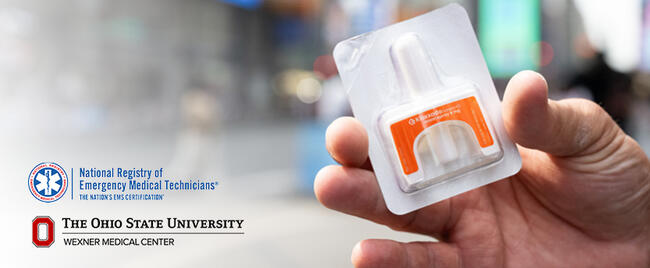
Finally, we get to where data collection might actually be considered fun; at least for those who find data collection to be fun. Is one of the annual signs that summer or winter have truly begun when your public information officer (PIO) comes asking for numbers related to either hot or cold weather responses? Are you operating in an urban area that just introduced scooter rentals, and now local news outlets are asking how many scooter-related injuries you’ve been called to? Maybe your area is in the grips of an opioid epidemic, and you need to track how many doses of naloxone your service is administering. These are just a few examples, good and bad, that might lead to a data-inspired need to create a dashboard to conveniently track niche data that will be regularly needed, possibly leading to a data-informed decision or program on the horizon.
As mentioned before, in these situations, if you wait until after data is requested to build the dashboard, it’s already too late. Any good PIO will tell you that a media request for data isn’t necessarily being done in an adversarial way. It’s just a reporter working on a story idea or trying to finish a story, and they just want some data to see if it’s anything worth looking into or to demonstrate impact. If you can produce those numbers quickly, accurately, and in an easily digestible fashion, it will do wonders for both your relationship with local reporters and your standing in the community as being at the forefront of what’s really happening out there.
The bottom line is that how your service tracks and uses data can mean the difference between being seen as the local ambulance service or being seen as a deeply connected pillar of your community’s public health and safety apparatus. Listen to what your EMS clinicians are saying, watch social media trends, and listen to what other agencies around you are discussing. Don’t wait until data is requested to decide that it’s time to start tracking something. Get your system established and track everything—today.
About the Author
Tom Arkins, MSHI, EMT-P is the Chief of IT and Informatics for Indianapolis EMS. Arkins has dedicated his career to public safety since 1986, beginning his service with the White River Fire Department. He joined Wishard/Indianapolis EMS in 1994 and has served in multiple roles, including EMT, paramedic, EMS supervisor, and tactical paramedic. He is the immediate past Vice Chair of the National EMS Advisory Council. In addition to his operational and leadership roles, he has been a committed member of the Health & Hospital Corporation Legislative Committee since 2008, contributing to the advancement of EMS policy and advocacy.