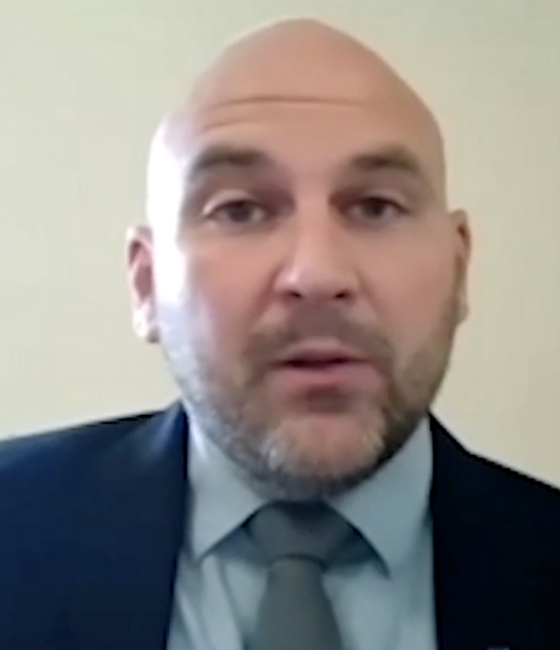
In this podcast, Dr Solomon reviews his research into the design of a randomized controlled active comparator strategy for gout that will compare a treat to target serum urate strategy versus an approach to treat to avoid symptoms.
Daniel Hal Solomon, MD, is a professor of rheumatology at Harvard Medical School and holds the Matthew H. Liang Distinguished Chair in Arthritis and Population Health in Rheumatology at Brigham and Women’s Hospital, Boston.
CLINICAL PRACTICE SUMMARY:
TRUST Pragmatic RCT Comparing Treat-to-Target Serum Urate vs Treat-to-Avoid-Symptoms Strategies in Gout
-
Study design and population: The TRUST trial is an ongoing, NIH-funded, pragmatic randomized controlled active-comparator trial in the United States comparing a treat-to-target serum urate strategy versus a treat-to-avoid-symptoms strategy for gout management. The trial is recruiting primary-care–based patients with gout and serum urate >6 mg/dL who are not under rheumatology care, excludes severe kidney disease, and allows baseline allopurinol up to 200 mg. Recruitment is approximately halfway complete; the trial spans 4 years with 2 years of follow-up and is conducted across 7 academic sites.
-
Interventions and care setting: In the treat-to-target arm, nurses titrate urate-lowering therapy using standardized algorithms (allopurinol starting at 100 mg monthly uptitration to achieve serum urate <6 mg/dL; febuxostat 40 mg for patients with high-risk HLA subtype), with ongoing serum urate monitoring. The comparator arm reflects usual care focused on symptom control using anti-inflammatory therapies (e.g., colchicine, NSAIDs, or steroids). Both arms emphasize shared decision-making and nurse-led implementation to mirror typical US practice.
-
Outcomes and rationale: The primary outcome is gout flares, selected because flares drive pain, disability, and quality-of-life burden for most patients. Secondary and exploratory outcomes include quality of life (SF-36, gout impact score), serum urate levels, blood pressure, glycemic control (HbA1c, insulin resistance), renal function (eGFR), and coronary disease (CT angiography substudy). Results are anticipated in approximately 3 years.
TRANSCRIPT:
Any views and opinions expressed are those of the authors and or participants, and do not necessarily reflect the views policy or position of the Rheumatology and Arthritis Learning Network or HMP Global its employees and affiliates.
RALN: Welcome to this podcast from the Rheumatology and Arthritis Learning Network. I'm your moderator, Rebecca Mashaw, and today I'm honored to be speaking with Dr. Daniel Solomon, a rheumatologist at Brigham and Women's Hospital in Boston, and a professor at Harvard Medical School. Thanks for taking the time to talk to us about this study you led entitled, the design of a randomized controlled active comparator strategy for gout treat to target serum urate versus treat to avoid symptoms.
Dr Solomon:
Sure. It's great to be here.
RALN:
Thank you. My understanding is this is known as the TRUST trial and it's still ongoing. Is that correct?
Dr Solomon:
That is correct. The paper that you're referring to was the paper we wrote that described the design of the TRUST trial. The TRUST trial is now in year 2. It'll go out to 4 years. We're still recruiting. We've recruited about half of the patients required and then it's a 2-year follow up, so that's why we'll have a little bit more to go before we'll have some results.
RALN:
This is designed, as I understand it, to compare treat to target serum urate versus treat to avoid symptoms strategies in managing gout. You mentioned in the article that there's some controversy about which of these approaches is more effective. So to start off, can you explain a little bit about what each strategy actually entails?
Dr Solomon:
Sure. Most gout in the US is treated by primary care physicians, who typically do not treat to a target serum urate. They might use a urate-lowering therapy such as allopurinol, but they typically begin at 100 milligrams and they might never go above 100 milligrams and they may never measure the serum urate again. So it's not typically in primary care, there is not a treat to target approach taken. There's really use of allopurinol occasionally, but more likely patients just receive anti-inflammatory therapies to be taken at the time of a flare, and those therapies would include colchicine or a nonsteroidal anti-inflammatory drug like Naprosyn or Indocin. Occasionally they would get a steroid dose pack, a Medrol dose pack or something like that. So that is the most common way gout is cared for.
Rheumatologists typically, however, care for gout differently. We typically will treat to a target serum urate with urate-lowering therapies such as allopurinol, febuxostat, pegloticase, et cetera, and then continue to measure the serum urate until the serum urate’s below 6. And then we know we've reached a good dosage of urate lowering therapy. And so these two strategies are the dominant strategies that are described and practiced in typical care. However, one strategy is pursued by rheumatologists and the other by primary care doctors. And so we really don't have a lot of data in trials, prospective data from trials. Comparing these two strategies, there has been at least one trial done in the UK that compared these strategies, but we felt it was important to try this in the United States because there's a lot of practice variation and the patients who might be enrolled will differ by setting, the UK versus the US. So that's why we pursued the trust trial, which is ongoing right now.
RALN:
You chose as your primary outcome gout flares. The ACR guidelines support the treat to target strategy. So why did you choose flares for your key outcome?
Dr Solomon:
Well, patients care most about the flare. That's where they get the pain. That's where they get disability. Flares in 90% of patients are short term, lasting days to a week or two. Some patients have chronic polyarticular gout or chronic monoarticular gout, but most patients have short-term transient flares and that's what patients really describe as their gout, are these flares. Now, if you're expert in this area and you see lots of patients, you know that gout is a metabolic disorder, which can affect lots of different body systems, can be chronic, can be erosive. So it's not simply a transient flare-based diagnosis. But for most patients and most clinicians, it is the gout flare which is the most important clinical outcome, and that's why we focused on this in the trust trial.
RALN:
So it's a quality of life issue for your patients, of course.
Dr Solomon:
Absolutely. And indeed, we actually are measuring flares as well as quality of life with some things like the SF 36 or the gout impact score, which is more specific to gout. So we're interested in both flares, quality of life as well as serum urate levels, as well as things like blood pressure, glycemic control. We actually have a substudy where we're looking at coronary disease, so we're looking at a range of outcomes, cardio, metabolic, renal outcomes, as well as flares in quality of life.
RALN:
The treat to target approach has become or is becoming, I think, more or less a standard of care in some other disciplines such as inflammatory bowel disease and maybe in rheumatoid arthritis, where there's a recognition that symptoms alone don't really tell you about the progress of the disease. For instance in IBD, you can still have inflammation ongoing that can be causing damage to the colon even if the patient's symptoms are not presenting. So does gout present any kind of similar challenges that would make the treat to target approach more effective?
Dr Solomon:
Yeah, it's a great question you ask, and I like the way you create these analogies to other chronic inflammatory conditions, and gout clearly can be a chronic inflammatory condition with long-term progression of erosive bone disease, kidney stones. Again, some people believe that hyperuricemia contributes to heart disease, high blood pressure, et cetera. So there's a lot of concerns about some of the chronic implications of hyperuricemia and gout, but I don't think we absolutely know that chronic inflammation in gout is the key issue. And so the treat to target approach that rheumatologists follow, that we advocate in gout, makes sense for the severe patients that we see.
However, what we don't really understand is whether it makes sense for the 90% of patients with less severe gout that we do not see. And that's in fact one of the ways we're trying to answer that question in the TRUST trial is to recruit patients from typical primary care, not the severe gout patient in a rheumatology practice where the patient's having multiple flares, may have tophi, may have kidney stones, we think those patients, it's pretty clear that they should get urate-lowering therapy. However, the vast majority of patients with gout have one or two flares a year, and those patients often feel pretty comfortable using anti-inflammatory therapies when they flare, and we don't know that treating them with urate-lowering therapy is going to improve their long-term health outcomes. That's in fact one of the reasons why we are doing the TRUST trial. Now, indeed, it is only a 2-year, so long-term clinical outcomes are somewhat limited in 2 years, but that is the interest that we have in this trial.
RALN:
How do you interpret serum urate levels in the context of symptom burdens?
Dr Solomon:
Yeah, so it's a good question. We know that it is important to state that hyperuricemia is not gout. Like many, many, some people say 70, 80% of people with hyperuricemia uric acids above 7 milligrams per deciliter will never develop clinically overt gout. However, as the uric acid levels go up and over time, so as people have uric acids of 8, 9, 10, for 1, 3, 5, 8 years, the likelihood of developing a gout flare goes up. So we know that the uric acid burden is important in predicting future gout flares. However, some patients physiologically are not prone to gout flares. We don't exactly understand what that is. It's something about how the uric acid crystallizes and is deposited around joints and in other parts of the body. It's something about how a person's immune system reacts to those crystals. So indeed elevations for over a long period of uric acid does predispose to gout, but not in everyone.
RALN:
You designed TRUST as a pragmatic trial. Can you tell us what exactly that means?
Dr Solomon:
Sure, yeah. We think about randomized control trials in different ways. You can design a trial to be purely explanatory, understanding the biology of the intervention compared to the outcomes, and then you can attempt to mirror typical care, typical routine clinical care. And that's what we do in a pragmatic trial. It's not diametrically opposed to an explanatory trial, but it's kind of a spectrum creating interventions that are easier to implement in typical care so that if we in fact find a difference and improvement in gout flares, a reduction in gout flares in the treat to target arm, then we could implement this intervention more easily in typical practice. And so we've designed the intervention through a process with patients, with nurses, with primary care clinicians, and with rheumatologists to be something that we think, if it works, could be done in typical care.
And so we're working with nurses. The nurses run the intervention. In fact, as a rheumatologist at the 7 different sites, they're supervising the nurses. We've developed an algorithm, we've trained the nurses, but the nurses really run the intervention in both sides. Both the treat to target as well as the treat to avoid symptoms are run by nurses. And we hope that this can be the standard of care going forward depending on what results we observe.
RALN:
One concern raised in the guideline debates is the aggressiveness of urate-lowering therapy required to achieve target levels. So how do you manage that titration, particularly I guess, of allopurinol, in the treat to target arm, and what challenges do you think clinicians would face in using this in real world settings?
Dr Solomon:
Yeah, so it's a really good question and in different trials, people often use different titration algorithms. I think the standard of care for allopurinol, which is the longstanding urate-lowering therapies, is an oxidase inhibitor. Most clinicians are very comfortable with it. It's very safe. It rarely is associated with a side effect that's could be life-threatening; allopurinol hypersensitivity reactions can cause awful Stevens-Johnson syndrome, so it could be quite a morbid and mortal in some patients, but we actually have genetic testing to tell us who's likely to have that.
I digress because you asked about how we up titrate the urate-lowering therapy. We do it slowly. We do 100 milligrams as a starting dose in patients who are not positive for the HLA subtype that portends a bad outcome with allopurinol. And in the patients who have that HLA subtype, we give them febuxostat at 40 milligrams; in the patients without that HLA subtype we start them at 100 for a month, 200 another month, 300 another month, and we're measuring the serum urate until we get it below 6. This is a pretty standard up titration algorithm; however, you are absolutely correct that some practices will up titrate more quickly, so it does differ, but the one that we're using in the trial is pretty standard.
RALN:
How do you approach patient education and shared decision-making when you're explaining these strategies to participants in the trial? Do their perspectives influence the way these strategies were implemented?
Dr Solomon:
So shared decision making is a key aspect of our intervention in both arms in the treat to avoid symptoms as well as the treat to target serum urate. And one of the things that we do as we consent patients is we let them know they have to be comfortable with either being randomized to either arm. So we try to take into account their point of view that there's what we call in trial design equipoise. Either one would be okay with the patient, and then we appreciate once they've been randomized, the nurses are trained to talk to patients about how they've been managing their gout in the past, how it's worked, how it hasn't worked, trying to appreciate the fact that different patients develop their own personal strategies, incorporating those personal strategies into our algorithms. A lot of patients have observed triggers in their diet, in their lifestyle, that we want to appreciate and then counsel them around those triggers.
Again, many patients appropriately recognize that certain foods, certain drink, certain alcoholic beverages might be triggers, and we believe that those are actually true triggers and the nurses are trained to talk to the patients about those triggers as well as educate them on other issues, on other lifestyle modifications that might be helpful, whether that's staying well hydrated, whether that's avoiding certain aspects of their lifestyle that might trigger flares that they haven't thought of. And what we find is that the nurses who are really effective at this shared decision-making approach have much happier adherent patients who stick with the plan, stick with their algorithm, and that's really part of the intervention that we're attempting to observe in the trial.
RALN:
While we're talking about participants and patients, who did you choose to participate? I know you had certain things that disqualified people. One of them was if they were already under the care of a rheumatologist. Is that correct?
Dr Solomon:
Sure, yeah. I can go through the selection criteria in a little more detail because they're important. As I said earlier, we focus on patients in primary care. Patients that have been referred to rheumatologists often are pretty severe gout patients. Most rheumatologists believe that lowering serum urate to below 6, so treat to target serum urate approaches are appropriate. And so most of the patients that are seen by a rheumatologist are not going to be great candidates for this trial. And so we focus on the primary care doctors’ patients as well.
For safety’s sake, we don't allow patients in with very severe kidney disease or are on certain contraindicated medications. We also, obviously patients need to have a serum urate above 6. We wouldn't have a trial, we couldn't lower them below 6 if they're already below 6. They also can't be on more than 200 milligrams of allopurinol because most patients on greater than 200 milligrams are going to reach a serum urate below 6 or are being up titrated. So we allow up to 200 milligrams if indeed their serum urates still above 6 and they're not under the care of a rheumatologist who's in the midst of up titrating their allopurinol.
RALN:
Is there a particular profile of the gout patient? Is this specific to a certain sex, age range? What do you see when it comes to people who have gout?
Dr Solomon:
Well, we know that gout is 90% a male disease, and we know that women are very unlikely to develop hyperuricemia until around the time of the menopause. So it turns out that the women, we do have women in the trial, but the women in the trial, just like women who are not in the trial who have gout, are older women, people around the time of menopause. In the 5 years before menopause, the serum urates start to elevate and then they kind of level off after the menopause. But that's when we start to see uremia in women is around the time of the menopause. So that's exactly who we have in the trial. Our trial population represents a typical gout population trial, a typical gout population in typical practice. So it's really, that's part of the reason why it's pragmatic. It represents typical practice. It's not highly, highly selected strange patients who are only seen by certain doctors in certain centers. These are just very typical patients, and that's what we think will make it very applicable to typical care.
RALN:
Makes me wonder if estrogen's protective against hyperuricemia.
Dr Solomon:
It probably is. I mean, there aren't great studies on that topic. I recently wrote a paper on how the menopause impacts uric acid levels, and so I've read that literature pretty carefully recently, and there are some studies that indeed suggest that estrogen is protective, but that work is not so well developed. I'd say there's a couple of studies.
RALN:
You also included several extra-articular secondary outcomes, exploratory outcomes, I believe they were called, that have been related to gout and or elevated serum urate levels. Could you tell us a little bit more about the secondary outcomes that you're measuring?
Dr Solomon:
Yeah, sure. As I mentioned a bit earlier, there's a literature associating hyperuricemia and gout with a variety of cardio metabolic renal outcomes. One of them is high blood pressure, one of them is diabetes and prediabetes. Another one is kidney disease, another one is coronary disease. So those 4secondary exploratory outcomes we're investigating in a prospective fashion. Each one of them, each one of them are their own substudy that are being conducted as part of TRUST where we're measuring blood pressures in a very standardized manner. We're measuring hemoglobin A1C, which is a typical glycemic control measure. We're actually measuring insulin and insulin resistance. We're measuring kidney disease, looking at the estimated glomerular filtration rate, eGFR, and we're measuring coronary plaques using a coronary CT angiogram in a subgroup of patients. So we'll really not only look at flares and quality of life, but we'll have a lot of these secondary exploratory outcomes, which is of great interest to the rheumatology communities. A lot of people who specialize in gout that are pretty convinced that gout and hyperemia are associated with a variety of these other cardiometabolic renal outcomes.
RALN:
When do you think you'll have some results to publish?
Dr Solomon:
Oh, that's a great question. I know we have about a year more, 10 months of recruitment, and then it's a 2-year follow up. So really I think 3 years is probably a reasonable estimate. Clinical trials give us the best data we have in clinical care, but they take a long time and they're hard, expensive, but we can really kind of go to the bank with those data. So we're excited to have them, but we have to be patient.
RALN:
Anything else you'd like to add for your fellow rheumatologists?
Dr Solomon:
If you have interested patients, we're recruiting in Boston, New York, Birmingham, Alabama, Los Angeles, as well as West Virginia. So we have 7 sites around the country. They're all academic medical centers with primary care docs and rheumatologists involved. We were funded by the National Institutes of Health, Arthritis, Musculoskeletal and Skin Institute, and we're all very excited about the results that we'll be able to share with you in a couple of years.
RALN:
Well, wonderful. Well, thank you so much for spending the time with us to talk about this today. Sounds very interesting, and we'll try to be patient and wait for your results and be very interested in what it shows.
Dr Solomon:
Thank you, Rebecca.