Taking a Patient-Centered Approach to Deprescribing in Psychiatry
Mental health care providers often encounter patients who take 2 or more medications to manage several medical or psychiatric comorbidities. But when a clinician determines that deprescribing is necessary, how can they do so safely and effectively while centering patient needs?
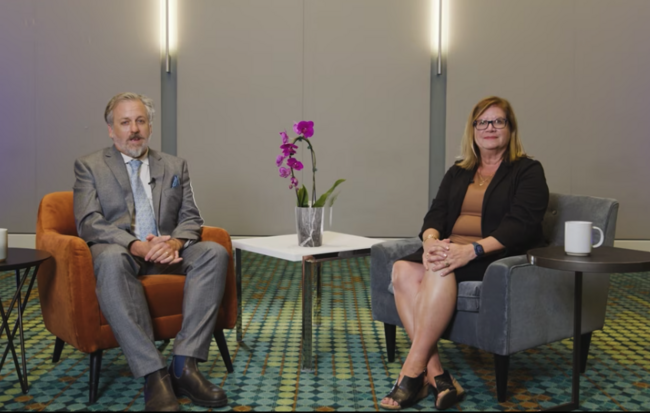
In this insightful discussion, Brittany Albright, MD, MPH, Co-Chair, Psych Congress Elevate, offers a comprehensive overview of the role that deprescribing plays in effective psychiatric care. Dr Albright reviews the risks of ongoing polypharmacy, identifies clinical indicators that signal deprescribing may be warranted, and underscores the utility of lifestyle interventions in supporting patient stability throughout the deprescribing process. She also emphasizes the importance of shared decision-making and open communication to ensure patients feel confident in their treatment plan.
Key Takeaways for Clinical Practice:
- Psychiatric polypharmacy (≥2–3 medications; primary care and psychiatric settings) requires routine evaluation at every visit, with deprescribing considered when medications are ineffective, poorly tolerated, associated with side effects (weight gain, sexual side effects, metabolic risks, abnormal movements), or when medical comorbidities or life circumstances change.
- Individualized deprescribing plans should prioritize patient goals, symptom burden, and preferences while incorporating lifestyle interventions throughout.
- Cross-titration and tapering strategies should be gradual and patient-led, leaving room for variable withdrawal timelines, and supported by close follow-up to monitor withdrawal symptoms and relapse risk.

Read the Transcript:
Brittany Albright, MD, MPH: Hi, I'm Dr Brittany Albright and I'm an addiction and interventional psychiatrist from Charleston, South Carolina. I own Sweetgrass Psychiatry and I'm also an affiliate assistant professor with the Medical University of South Carolina.
I'm proud to report to you today from the first ever Psych Congress PA Institute, which has been an amazing, very energizing conference. It been such a delight to interact with all my physician associate colleagues. They are absolutely integral to what we do as psychiatric clinicians.
Psych Congress Network: What factors guide your decision to deprescribe or cross-titrate medications for patients with multiple psychiatric comorbidities?
Albright: One of our main roles as psychiatric clinicians is deprescribing. All too often, we'll see patients that come in on multiple psychiatric medications. In fact, the average in even primary care offices, and especially psychiatric offices, is our patients being on at least 2, often 3 different psychiatric medications.
The reality, though, is often our patients struggle with multiple psychiatric comorbidities, and multiple medications are therefore necessary. However, if a patient is not responding well to a medication, if it's not adequately serving their needs, if they're having side effects, if there's new medical comorbidities, if there's a change in their life circumstance, we need to be evaluating their medication regimen at every single visit and looking for opportunities to deprescribe.
Unfortunately, polypharmacy can convey some risks and often that's side effects such as weight gain, sexual side effects, metabolic risk factors in general. We also have to be aware of abnormal movements.
Therefore, if a medication is not serving a patient, and especially if a patient does not perceive that that medication is helping them, we should aim towards deprescribing and possibly cross-titrating to a different treatment plan that might fit the patient's needs.
PCN: How do you approach building an individualized deprescribing plan that balances gradual taper strategies with maintaining clinical stability?
Albright: When developing a plan for an optimal psychiatric medication regimen for a patient, especially if they struggle with multiple psychiatric comorbidities, first I want to know, what are the patient's goals? What are their preferences? What are the symptoms that are bothering them most? Also, I want to know, how can we optimize their wellness?
A plan is not just about psychiatric medications. A plan must include lifestyle factors. That's why I employ the WILD 5 solution, which was developed by Saundra Jain, MA, PsyD, LPC, and Rakesh Jain, MD, MPH. I love talking to my patients about the 5 core elements of WILD 5, particularly when I'm deprescribing.
Deprescribing can be a very sensitive time where [the patient is] likely going to experience withdrawal symptoms from the medication. We also have to worry down the line of relapse of their primary mental illness as well. That's why I need my arsenal of wellness interventions.
What is WILD 5? Well, it's 5 different components that enhance our patient wellness. Here are the 5:
- Sleep. We need to ensure that they're getting adequate restful sleep and also just assessing their sleep cycle in general, making sure that they're following great sleep hygiene practices. I often order sleep medicine consults and sleep studies too because that can often play a role.
- Nutrition. Are our patients getting adequate nutrition in the form of fresh fruits and vegetables, lean meats, and also avoiding processed foods? Are they getting an adequate caloric intake? Not just ensuring that they're getting enough calories, but also ensuring that they're not getting too many calories, because we know that excess adiposity can worsen mental health outcomes as well.
- Exercise. One thing I always say is it is truly malpractice if we're not prescribing exercise to every single one of our patients. It's absolutely crucial to wellness. Now, just writing a prescription for exercise does not work. So how I navigate this in my practice is I try to use motivational interviewing to elicit what physical activities my patients enjoy. Your patients will tell you every time what works best for them. Then we use SMART goals where we start off in a very manageable way. Well, hey, maybe just go on a quick walk around the block. Or at least for me as a busy mom, when my kids were really little, it was just parking farther away. It was taking the stairs at work instead of taking the elevator. So very simple solutions such as that.
- Mindfulness and meditation. Taking time to be intentional every day, to be present, to be engaged in your thoughts, trying to empty your thoughts, just trying to be in that moment and not worrying what's going on around you in the outside world for that brief window of time.
- The fifth component of WILD 5 is my absolute favorite, and it's social connectedness. We are a species that need to be around our kind, and there's no substitute for close friends and loved ones. As part of WILD 5, I encourage my patients to connect with at least 2 loved ones, friends, or even strangers every day. Even sometimes just having a simple conversation with someone you encounter in the grocery store can bring a lot of joy to your life. I'm not talking about social media connections—I’m talking about picking up the phone, calling a loved one, meeting up with someone for a dinner or a coffee.
All of these 5 elements will really help our patients during the deprescribing process.
Now, how do I actually do deprescribing? Often that entails cross titration as well. My answer is actually really simple: My patient is in charge. I allow them to take the lead. In our appointments, we discuss a variety of options. I also explain to them, “I've had some patients who can discontinue this particular medication you're on within a week and have no ill effects. I have other patients where it might take them a year. Let's start off really slow and then how about I follow up with you in a week?”
I also have the luxury of being in private practice where I can follow up with my patients closely. I also encourage my patients to reach out to me over the portal if it's not going well because there's no exact science with this—everyone’s physiology is entirely different and I'm here to support them. A quick message over the portal letting me know how they're doing is very helpful to me and also gives them the confidence that they're not going to be stuck with really terrible withdrawal symptoms.
Brittany Albright MD, MPH is a Harvard-trained, triple board-certified psychiatrist with clinical expertise in interventional psychiatry, addiction psychiatry, and obesity medicine. She completed her adult psychiatry residency at the nation’s top ranked program, Massachusetts General Hospital and McLean Hospital and a fellowship in addiction psychiatry at the Medical University of South Carolina, where she serves as an Affiliate Assistant Professor in the Department of Psychiatry & Behavioral Sciences. Dr. Albright is the Founder and CEO of Sweetgrass Psychiatry, South Carolina’s largest physician-owned psychiatry practice with three locations.
© 2026 HMP Global. All Rights Reserved.
Any views and opinions expressed above are those of the author(s) and do not necessarily reflect the views, policy, or position of the Psych Congress Network or HMP Global, their employees, and affiliates.