How Antipsychotic Medications Affect Sleep
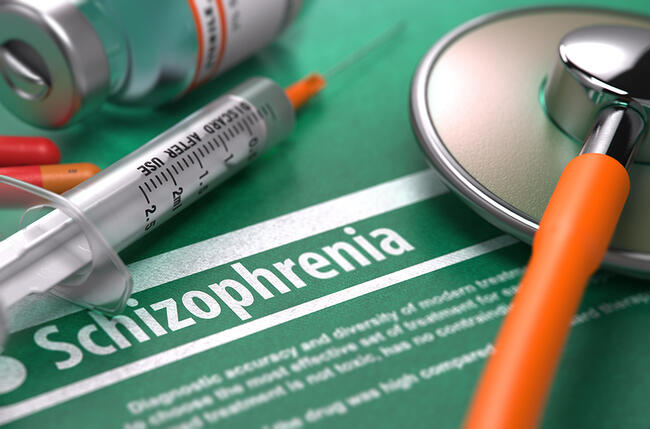
In this video, Greg Mattingly, MD, Co-Chair of Psych Congress, discusses the interaction between schizophrenia and sleep disorders. Dr Mattingly offers some concrete guiding questions to use in a clinical setting to evaluate a patient's sleep and how to adjust medications in order to help that patient get better sleep. He also provides some updates on how sleep apnea is treated and why patients shouldn't fear a sleep apnea diagnosis.
For more expert insights, visit our Sleep Disorders Excellence Forum.
Read the Transcript
Greg Mattingly, MD: I am Greg Mattingly, an associate clinical professor at the Washington University School of Medicine, president of the Midwest Research Group and co-chair of Psych Congress. I'm here today to talk to you about schizophrenia and the impact of antipsychotic medications when it comes to sleep.
We know that antipsychotic medications can be restorative for sleep for certain patients, but we also know that they can be damaging for sleep for others. We know that certain patients, the toll of sedation, somnolence the next day can be an unwanted toll. We also know that antipsychotics can increase the metabolic burden and weight gain in susceptible patients. This can further aggravate issues around sleep, in particular the issues around sleep apnea.
So, there are several things I want us to step back and think about as we were taking care of our patients who have schizophrenia. Number one is the patient struggling with difficulties falling asleep. In those cases, a medicine with some sedating properties can be beneficial. Is the patient struggling with fragmentation of sleep where they wake up in the middle of the night, they do not have restorative sleep. In that case, I want you to step back and say, do they have snoring? Do they have difficulties but are not getting a deep, restful, meaningful sleep? Do they have difficulties waking up the next morning where they may have residual effects of sedation? We'll sometimes find that changing from one agent to another can be very beneficial when it comes to daytime fatigue associated with the medication. We sometimes find that adding something with a slight sedation properties at night helps people fall asleep.
But if both of those strategies have failed, I want you to go back and ask your patient, do you have deep sleep? Do you have restorative sleep? Do you ever startle yourself awake? Does a friend or a family member ever say that they hear you snoring? They hear you sometimes gasping for breath in the middle of the night? We know that somewhere between 25 to 40% of patients with schizophrenia will also have sleep apnea. So for many of my patients, referring for a sleep study has been one of the most beneficial things I've done in my clinical practice.
Now, one of the things that scares us all, we all remember those images of the big mask with the big hose coming out of it. That is not the way we treat sleep apnea anymore. We now have availabilities of small nasal pillows that said at the bottom of your nostril, they maintain airway pressure, they maintain oxygenation, and they give you deep restorative sleep. So think about are you falling asleep? Think about are you staying asleep? Think about are you waking up with daytime residual fatigue? Look at medication adjustment, but then also look at physical health conditions such as sleep apnea for your patients.
Thank you for joining me today for this discussion of the importance of sleep in patients with schizophrenia and other chronic mental health conditions. I hope this is meaningful to your clinical practice.
Greg Mattingly, MD, is a physician and principal investigator in clinical trials for Midwest Research Group. He is also a founding partner of St. Charles Psychiatric Associates where he treats children, adolescents and adults. A St Louis native, he earned his medical degree and received a Fulbright scholarship while attending Washington University. Dr. Mattingly is board certified in adult and adolescent psychiatry and is a Diplomat of the National Board of Medical Examiners. He is an Associate Clinical Professor at Washington University where he teaches psychopharmacology courses for the 3rd year medical students. Dr. Mattingly has been a principal investigator in over 400 clinical trials focusing on ADHD, anxiety disorders, major depression, bipolar disorder and schizophrenia. Having served on numerous national and international advisory panels, Dr. Mattingly has received awards and distinctions for clinical leadership and neuroscience research. Dr Mattingly is the President for APSARD-The American Professional Society of ADHD and Related Disorders and is on the Scientific Advisory Board for the Workd Federation of ADHD.. Having served on the board of Headway House, a community support program and as a certifed evaluator for both the NFL and MLB, Dr Mattingly is firm believer in holistic mental health, eductaion and advocacy.
© 2025 HMP Global. All Rights Reserved.
Any views and opinions expressed above are those of the author(s) and do not necessarily reflect the views, policy, or position of the Psych Congress Network or HMP Global, their employees, and affiliates.