Differentiating Bipolar II Disorder From Other Psychiatric Conditions
“I think differentiating bipolar II disorder from major depressive disorder (MDD) is one of the most difficult things in psychiatric practice,” says Michael Asbach, DMSc, PA-C, Co-Chair, Psych Congress PA Institute.
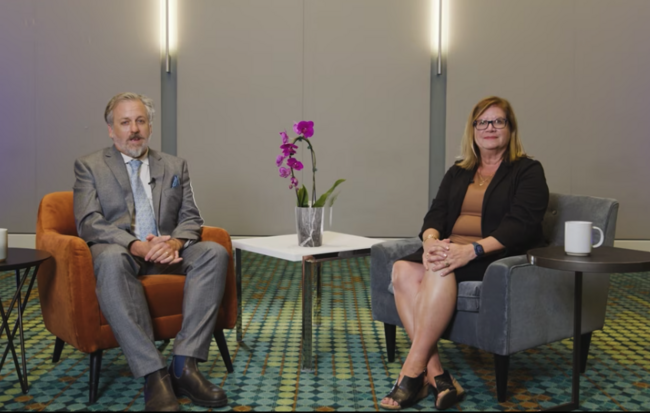
In this video, Asbach walks clinicians through some key clinical considerations for navigating diagnostic ambiguity when assessing patients for bipolar II disorder. In addition to offering strategies for distinguishing bipolar II from unipolar depression, Asbach highlights practical approaches for identifying bipolar II symptoms amid the presence of common psychiatric comorbidities.

Key Takeaways for Clinical Practice:
- Bipolar II disorder vs MDD (mixed features): Suspect bipolar II when depression presents alongside strong family history (high heritability), earlier onset, and recalled periods of elevated energy/productivity with possible consequences, noting that patients may underreport or romanticize hypomanic symptoms.
- Diagnosis timeline: Bipolar II disorder shows ~11-year diagnostic delay due to predominant depressive presentations and underreported mood elevation.
- Comorbidity challenges: High psychiatric/physical comorbidity can obscure hypomania; differentiate mood-state–linked inattention from enduring symptoms suggestive of anxiety, substance use, or attention-deficit/hyperactivity disorder (ADHD).
Read the Transcript:
Michael Asbach, DMSc, PA-C: Hi, my name is Mike Asbach. I'm a psych PA in Buffalo, New York, where I serve as the Associate Director of Interventional Psychiatry at DENT Neurologic Institute.
Psych Congress Network (PCN): What are the key clinical differences that help differentiate bipolar II disorder from unipolar depression, especially in cases where major depressive disorder (MDD) presents with mixed features?
Asbach: I think differentiating bipolar II disorder from MDD is one of the most difficult things in psychiatric practice. Patients typically present to our clinics depressed. It's very rare for a patient to come in indicating that they're hypomanic. Very often, patients that may have bipolar II disorder struggle to recall hypomanic symptoms, or they may view hypomanic symptoms as being positive. They may romanticize the periods of time where they were overly productive or had more energy. As a result, it's very difficult for us clinicians to delineate what is depression and what may be bipolar.
It's important for us to make the distinction because treatments may be very different for these patients. One of the most important things that we can do as clinicians is take a careful history and look at the family history, as bipolar II disorder has one of the highest levels of heritability out of all psychiatric disorders. A family history with multiple family members that may have affective illness should be an indicator that bipolar II disorder might be suspected.
Earlier onset of illness is also an indicator that would give a suspicion of a bipolar II diagnosis. Lastly, a careful history of symptoms of elevation. We may not be able to elicit from a patient whether they were hypomanic, but asking them about those periods of elevated energy, elevated productivity, and potential harmful consequences that happen during those periods can be quite insightful.
PCN: What is a typical timeline for diagnosing bipolar II disorder, and what challenges may arise given the high prevalence of depressive episodes and the frequent occurrence of comorbid conditions?
Asbach: Unfortunately, bipolar II disorder is defined by a delay in diagnosis, upwards of 11 years. There's many different factors that may play into this delay, including the predominant presentation of depression. Patients will often come to the clinic and not report symptoms of mood instability or elevation, but rather present with complaints of depression. This can be quite difficult for us as clinicians and all the more important that we make a very careful history looking at family history, but other factors that may contribute to indexing our suspicion of bipolar disorder.
Bipolar II disorder is also a condition where comorbidity is the rule, not the exception. Bipolar II patients have high rates of psychiatric and physical comorbidity. This can also lead to diagnostic ambiguity, as we may misinterpret symptoms of hypomania to be comorbid symptoms such as anxiety, substance use, or attention-deficit/hyperactivity disorder (ADHD).
It's important that when we see a patient that is reporting potential symptoms of instability, such as hypomania, that we drill down whether those symptoms may be enduring, such as inattention that may be there regardless of mood state and more consistent with ADHD, versus tied to mood, where inattention is occurring in periods of mood elevation.
Michael Asbach, DMSc, PA-C, serves as the Associate Director of Interventional Psychiatry at DENT Neurologic Institute, where he oversees the delivery of innovative and evidence-based treatments for patients with complex and refractory mental health conditions. With more than 12 years of experience as a board-certified psychiatric physician assistant and a Doctorate of Medical Science in healthcare leadership, Michael is dedicated to advancing the field of mental health care. In addition, Michael holds the role of medical liaison to the American Psychiatric Association on behalf of the American Academy of Physician Associates.
As the co-founder of The Non-Clinical Collective, Michael leads a medical education platform designed to support healthcare professionals in their non-clinical career development and wellness. Through this platform, Michael shares a deep passion for mental health advocacy, education, and engaging with a diverse and active audience. The mission is to foster a community where individuals can achieve meaningful and fulfilling careers through education and empowerment.
Combining a Doctorate of Medical Science in healthcare leadership with extensive clinical experience, Michael integrates expertise in healthcare policy, the business of medicine, and continuing education. A nationally recognized educator, Michael is actively involved in several professional organizations, including the American Academy of Physician Associates and the Association of Physician Assistants in Psychiatry. Their work reflects a commitment to excellence, leadership, and advocacy within the healthcare community.
© 2025 HMP Global. All Rights Reserved.
Any views and opinions expressed above are those of the author(s) and do not necessarily reflect the views, policy, or position of the Psych Congress Network or HMP Global, their employees, and affiliates.