Avoiding Legal Gray Areas in Cross-State Telepsychiatry
While telehealth offers a convenient approach to expanding care access, clinicians must navigate several ethical and legal boundaries that regulate their ability to treat patients across states, even virtually.
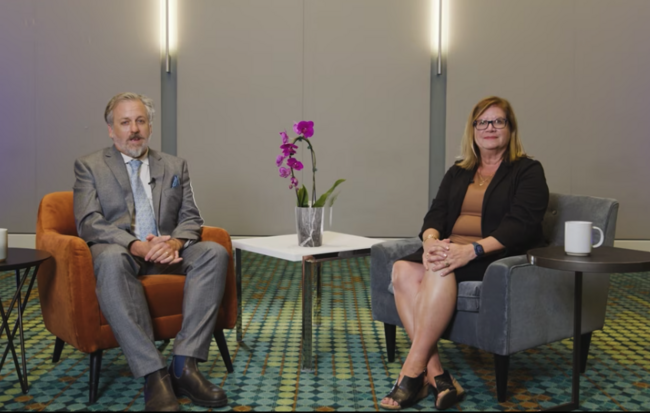
In this video, Psych Congress Steering Committee Member Edward Kaftarian, MD, dives into potential legal gray areas that clinicians may encounter when engaging in cross-state telepsychiatry. In addition to offering practical strategies for clinicians looking to maximize their ability to reach patients, Dr Kaftarian touches on the issue of controlled substances and how these prescriptions may be regulated across state lines.
For more telehealth insights, visit the Telehealth Excellence Forum.
Edward Kaftarian, MD: My name is Dr Edward Kaftarian. I'm a psychiatrist, board certified in forensic psychiatry and addiction medicine, and I'm on the Steering Committee for Psych Congress. I'm also the chairman and CEO of Orbit Health Telepsychiatry.
Psych Congress Network: With differing licensure requirements across states, especially in light of cross-state telepsychiatry, what strategies can clinicians use to expand access to care without falling into legal or ethical gray areas?
Kaftarian: So to those of us who are industrious and would like to see patients in various states, I would say, good for you, but you also need to be careful and understand that, in pretty much every case, you need to be appropriately licensed where the patient is located.
Let’s say a patient is in Illinois. You need an Illinois license in order to see that patient via telehealth. If they travel to another state, let's say Florida, and they are your patient, it doesn't excuse the fact that you don't have a Florida license. So you have to be very careful to make sure that you know where your patient is.
But in order to maximize your ability to reach patients, I think that it is a good idea to take a look at the Interstate Medical Licensure Compact, which is a way that gets you licenses quicker. There are also some states that have reciprocity, although not that many. That means that if you're licensed in 1 state, it counts toward being licensed with another, but there are a lot of rules around that and you have to be very careful to check the rules. But overall I would say that, in order to expand access to care, you need to make sure to have the correct licenses.
Also, you need to be aware of controlled substances and how your prescribing of those substances will be regulated. For example, if you have a patient who goes to another state and you’re not licensed in that state and you're not registered with the Drug Enforcement Administration (DEA) for prescribing for that state, then it's possible that if you call in a prescription, the pharmacy will not fill it. If they do fill it, you may be liable for practicing medicine outside of a license. So you need to be quite careful about both treating people [remotely] in terms of having appointments and also the controlled substances that you prescribe for people.
Edward Kaftarian, MD, is a preeminent authority in the field of Telepsychiatry. He holds a distinguished seat on the Telepsychiatry Committee of the American Psychiatric Association and is a member of the Steering Committee for Psych Congress, the United States' largest independent mental health educational conference. Additionally, Dr Kaftarian is a prominent speaker on the rules and regulations governing telehealth. Dr Kaftarian completed his psychiatry training at the prestigious Johns Hopkins University and holds board certifications in Psychiatry, Forensic Psychiatry, and Addiction Medicine.
© 2025 HMP Global. All Rights Reserved.
Any views and opinions expressed above are those of the author(s) and do not necessarily reflect the views, policy, or position of the Psych Congress Network or HMP Global, their employees, and affiliates.