Recognizing Key Differences Between TD and Drug-Induced Parkinsonism

What common misconceptions might prevent psychiatric clinicians from effectively differentiating tardive dyskinesia (TD) from drug-induced parkinsonism (DIP)?
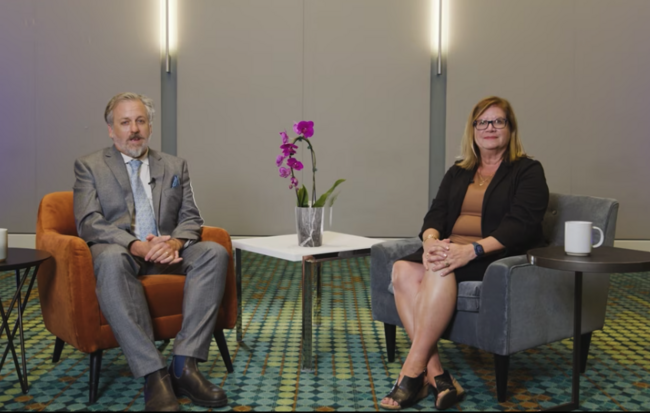
In this Q&A, Brooke Kempf, PMHNP-BC, Steering Committee, Psych Congress, and Jonathan Meyer, MD, Consultant, Psych Congress, outline the hallmark characteristics of DIP and TD, emphasizing that psychiatric providers are equipped to assess and manage both conditions. The clinicians also offer practical considerations for treating patients with co-occurring DIP and TD and address the role that telehealth may play in the assessment of these disorders.
For more TD insights, visit the Tardive Dyskinesia Excellence Forum.
Editors’ note: This interview has been lightly edited for clarity.
Key Takeaways for Clinical Practice:
- Tardive dyskinesia (TD) presents with abnormal, involuntary, jerky, nonrhythmic movements, whereas drug-induced parkinsonism (DIP) is characterized by regular, rhythmic movements, including tremor of the jaw or tongue.
- TD and DIP can be assessed, diagnosed, and treated within psychiatry, and telehealth evaluation is feasible when patients are positioned on a stable platform to perform standard exam maneuvers.
- When TD and DIP coexist, clinicians should prioritize treating the condition most impairing function, and amantadine may provide benefit for both without worsening TD.
Psych Congress Network: What common misconceptions should psychiatric clinicians be aware of when differentiating tardive dyskinesia (TD) from drug-induced parkinsonism (DIP)?
Jonathan Meyer, MD: I think sometimes people have a misperception that they can't differentiate these disorders, and that these patients are too complicated and have to be referred to neurology. I don't think that's the case.
Brooke Kempf, PMHNP-BC: I agree. In our profession, it is a diagnosis that we can assess, diagnose, and even treat.
Meyer: Absolutely. I think the big part is figuring out what's unique about DIP that we don't see in TD. To me, the hallmark of DIP is regular, rhythmic movements. Sometimes it's hard to assess slow movements and certainly if you're doing telehealth you have to figure out how to assess somebody for rigidity through the screen. But people with parkinsonism have regular rhythmic movements, and that's simply not characteristic of TD.
Kempf: With TD, there are going to be those abnormal, involuntary, more jerky movements that are not rhythmic in nature.
You also brought up another good point that made me think, one of the misconceptions that people have is that we cannot diagnose tardive dyskinesia via telehealth. A lot of us use telehealth in this day and age, so I don't want us to think that we can't diagnose through the screen.
Meyer: I think you can do a great exam for almost everything through the screen. Of course, if the person's holding their phone at Walmart, let me tell you, you're not going to get anything. But if you can get them in front of a stable platform, you can have them do all the maneuvers you normally do. The one part is if they say, “I'm rigid,” and you don't see a tremor, that could be a little bit of a difficult situation. But for the most part, you can do a good exam.
I think the point is just sit back and look if the movement looks rhythmic and regular. The one time DIP sometimes confuses people is when it's in the jaw or in the tongue. But it looks very different than TD as you mentioned—it’s not jerky or it's irregular. You can set your watch to look. The tongue or the jaw is moving regularly. You notice it.
PCN: How do you approach treating patients who have both TD and DIP?
Kempf: The way that I look at it, I try to identify which one is impacting their functioning the most. That's the one that we need to target and try to treat first.
Meyer: I think that's it. There are some things which will make the DIP better, which make the TD worse, and vice versa. There's also a “get-out of-jail-free” card, one of my favorite medications, amantadine.
Kempf: Yes, with amantadine we can actually get benefits in both tardive dyskinesia and DIP.
Meyer: Exactly. So, if you have these people who you want to treat their DIP, maybe you can't lower the dose of their antipsychotic, this is a way that you can do that and help your patient without making their TD worse.
Brooke Kempf, MSN, PMHNP-BC, has worked as a psychiatric nurse at Hamilton Center in Terre Haute, Indiana, since she graduated from Indiana State University with an associate degree in 1994. Her passion for mental health was sparked as she worked as a charge nurse on the Inpatient Unit and continued to grow as she served in their outpatient setting while obtaining her bachelor’s degree from ISU in 1996. She was awarded the 2008 Hamilton Award for Outstanding Staff Member. Kempf was then able to obtain her master’s degree from the State University at Stony Brook of New York and is board-certified by the ANCC as a psychiatric mental health nurse practitioner. She currently practices as the Hospitalist for the Inpatient Psychiatric Unit of Hamilton Center Community Mental Health Center in Terre Haute, Indiana and is an adjunct lecturer for IUPUI’s PMHNP program, and was awarded the 2022 Daisy Award for Extraordinary Nursing Faculty.
Jonathan Meyer, MD, is a Voluntary Clinical Professor of Psychiatry at University of California, San Diego, and a Distinguished Life Fellow of the American Psychiatric Association. Dr. Meyer is a graduate of Stanford University and Harvard Medical School, and finished psychiatry residency and fellowships at LA General Medical Center. Dr. Meyer has teaching duties at UC San Diego, is a Senior Academic Advisor to the California Department of State Hospitals, and is a psychopharmacology consultant to the first episode psychosis program at the Balboa Naval Medical Center.
Dr Meyer has lectured and published extensively on psychopharmacology. Along with Dr Stephen Stahl he is co-author of the Clozapine Handbook published in 2019, The Clinical Use of Antipsychotic Plasma Levels released in 2021, and The Lithium Handbook published in 2023, all three by Cambridge University Press.
© 2026 HMP Global. All Rights Reserved.
Any views and opinions expressed above are those of the author(s) and do not necessarily reflect the views, policy, or position of the Psych Congress Network or HMP Global, their employees, and affiliates.