Avoiding Anticholinergics in TD and Deprescribing Approaches

At the 2025 Psych Congress Elevate in Las Vegas, Psych Congress Network sat down with Brooke Kempf, PMHNP-BC, Psych Congress Steering Committee, and Jonathan Meyer, MD, Psych Congress Consultant, to unpack why anticholinergics are ineffective—and potentially harmful—in patients with tardive dyskinesia (TD).
In this insightful discussion, the clinicians provide an overview of the neurobiological mechanisms that make anticholinergic agents inappropriate treatment options for this patient population. They also offer practical strategies for safely tapering anticholinergic medications and encourage the use of shared decision-making to address patient concerns during the deprescribing process.
For more TD insights, visit the Tardive Dyskinesia Excellence Forum.
Save the date for the 10th annual Psych Congress Elevate in Las Vegas, NV, from June 3 to 6, 2026! For more information and to register, visit the meeting website.
Editors’ note: The following interview has been lightly edited for clarity.
Psych Congress Network: Why should anticholinergics be avoided for the treatment of TD? How do you approach treatment for patients with TD who have been prescribed an anticholinergic?
Brooke Kempf, PMHNP-BC: First and foremost, anticholinergics are not approved treatments for tardive dyskinesia and can actually make tardive dyskinesia worse. The indicated treatments for TD are vesicular monoamine transporter 2 (VMAT-2) inhibitors. That would be the appropriate treatment.
But what do you do if you have somebody identified with tardive dyskinesia and they are already on an anticholinergic medication?
You don't want to stop that medication abruptly. This is a case where you're going to titrate them off of that anticholinergic. But coming back to that, could you explain why anticholinergics are not appropriate to use in tardive dyskinesia other than it just makes tardive dyskinesia worse?
Jonathan Meyer, MD: There’s a balance between acetylcholine and dopamine in certain cells in the striata. If you have Parkinsonism, for example, it means you have too few dopamine signals, so things are out of balance. The way we even that out is by blocking some of the acetylcholine signal so things are in balance.
If we have TD, we have too much of a dopamine signal. If we lower the acetylcholine signal, we really throw things further out of whack. It actually says in the package insert for benztropine that it is not to be used for tardive dyskinesia, as it may make it worse. That's why anticholinergics are not the solution for the problem for people with TD.
They also don't prevent TD either. Don't use them that way.
I think the big idea is you don't stop the medication abruptly because you get cholinergic rebound. Then I think it's just talking to the patient and deciding. Sometimes when people are very ill and you make 2 drug changes at the same time, they don't do well. You can't figure out what it is.
My preference is to talk to them and say, “I think getting rid of the benztropine will make your TD somewhat better. Would you like to do that first? Or would you like to add the VMAT-2?”
Kempf: Absolutely. Because some of these patients have been told that, “I have to be on this medication if I'm on an antipsychotic.” They're very nervous about coming off of that. So, go with whatever they choose.
I also say, “We don't have to do this overnight. We can take our time. You've been on it for some time now. Yes, I want to get you off, but we can take our time doing that.” I’ll check in with them and have them report back to me.
I also let them know about the side effect burden that they may have not even associated with the anticholinergic. We know anticholinergic medications cause constipation, dry mouth, urinary retention, and that brain fog—the cognitive deficits that they could be experiencing that they don't even associate with the anticholinergic medication. Sometimes once they hear that, they're a little bit more accepting of wanting to come off that.
Meyer: Yes, there's no hurry here. You have to take the long view. Let's manage the TD if they want that first, and then later on we'll discuss with them about getting off the benztropine. And if it takes 6 months, I don't care. As Brooke says, it benefits their brain, it benefits the cognition.
That's why Brooke and many clinicians like myself have said please stop giving people anticholinergics, because it causes cognitive impairment and we have better ways to treat a lot of these drug-induced movement disorders.
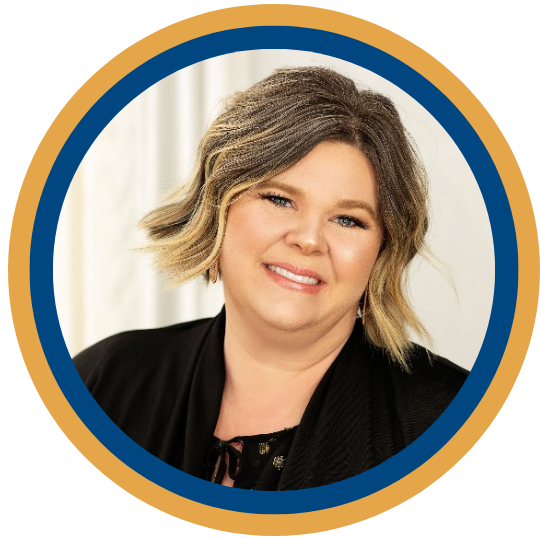
Brooke Kempf, MSN, PMHNP-BC, has worked as a psychiatric nurse at Hamilton Center in Terre Haute, Indiana, since she graduated from Indiana State University with an associate degree in 1994. Her passion for mental health was sparked as she worked as a charge nurse on the Inpatient Unit and continued to grow as she served in their outpatient setting while obtaining her bachelor’s degree from ISU in 1996. She was awarded the 2008 Hamilton Award for Outstanding Staff Member. Kempf was then able to obtain her master’s degree from the State University at Stony Brook of New York and is board-certified by the ANCC as a psychiatric mental health nurse practitioner. She currently practices as the Hospitalist for the Inpatient Psychiatric Unit of Hamilton Center Community Mental Health Center in Terre Haute, Indiana and is an adjunct lecturer for IUPUI’s PMHNP program, and was awarded the 2022 Daisy Award for Extraordinary Nursing Faculty.
Jonathan Meyer, MD, is a Voluntary Clinical Professor of Psychiatry at University of California, San Diego, and a Distinguished Life Fellow of the American Psychiatric Association. Dr. Meyer is a graduate of Stanford University and Harvard Medical School, and finished psychiatry residency and fellowships at LA General Medical Center. Dr. Meyer has teaching duties at UC San Diego, is a Senior Academic Advisor to the California Department of State Hospitals, and is a psychopharmacology consultant to the first episode psychosis program at the Balboa Naval Medical Center.
Dr Meyer has lectured and published extensively on psychopharmacology. Along with Dr Stephen Stahl he is co-author of the Clozapine Handbook published in 2019, The Clinical Use of Antipsychotic Plasma Levels released in 2021, and The Lithium Handbook published in 2023, all three by Cambridge University Press.
© 2026 HMP Global. All Rights Reserved.
Any views and opinions expressed above are those of the author(s) and do not necessarily reflect the views, policy, or position of the Psych Congress Network or HMP Global, their employees, and affiliates.