Psych Congress PA Institute Welcome Session Urges PAs to Lead as ‘High-Science Clinicians’
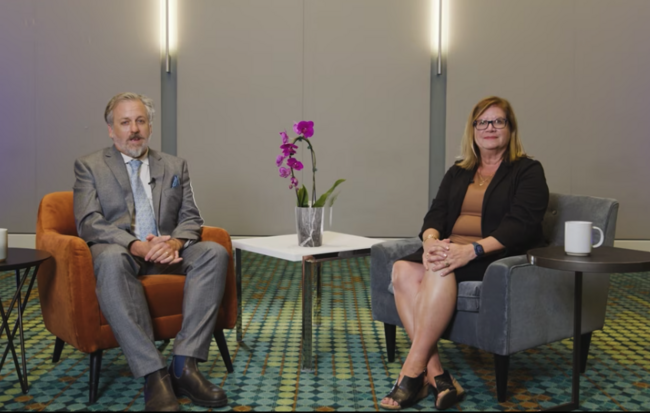
“If we understand the science, it makes us better clinicians” said meeting Co-Chair Mike Asbach, DMSc, PA-C, alongside co-presenter Craig Chepke, MD, DFAPA, Chief Medical Officer of Psych Congress, during the welcome session at the inaugural Psych Congress PA Institute in Orlando, Florida.
The session, “Bridging Neuroscience and Clinical Practice: Translating Neurobiology into Patient Care,” provided an in-depth look at the neurobiological underpinnings of major psychiatric conditions with the goal to bridge the gap between theory and clinical practice.
Asbach began the talk with a historical overview of psychiatry’s origins. From its genesis in Victorian Era asylums to the growing pressure during the early 20th century to treat rather than just house psychiatric patients, the “serendipitous” discovery of chlorpromazine in the 1950s catalyzed psychiatry’s evolution from “moral treatment” to an understanding of mental illness as having a component of disordered brain biology.
Early accidental breakthroughs led to deeper examination of the brain and eventually the dopamine hypothesis of schizophrenia and the monoamine theory of depression, foundational theories that informed modern psychopharmacology.
Theories, however, must be approached with caution, the presenters noted.
“To truly grasp the theories of how our medications may work—and how to use them wisely—we need to understand the neurotransmitters, receptors, and pathways they interact with,” Asbach and Chepke emphasized. In absence of clinical trial data, a deeper understanding of neurobiology can help clinicians make “reasonable hypotheses” about how medications will affect certain patients.
Asbach and Chepke then led attendees through a thorough neurobiology crash course, reviewing topics like the different types of receptors targeted by psychotropics, an overview of the common neurotransmitter families, neuronal anatomy, and attributes of medication-receptor binding.
A particularly notable question that the presenters aimed to answer was, “Why do some medications produce different effects?” They explored the difference between affinity, or how tightly a ligand binds to a receptor, versus efficacy, or the functional effects of a ligand at the receptor. They also introduced a discussion of agonists, which directly stimulate a receptor fully or partially, and antagonists, which prevent an agonist from stimulating a receptor.
Asbach and Chepke presented the treatment of schizophrenia as one example to understand how different classes of medications can produce different effects, based on differing mechanisms of action. D2-binding antipsychotics target dopamine pathways throughout the brain, resulting in some targeted symptom treatment but also producing a number of unwanted side effects. In contrast, M4/M1 agonists reduce dopamine release only in striatal areas associated with psychosis because due to the high concentration of M1 and M4 receptors in those regions. Because these receptors are not as widespread in the brain as dopamine receptors, there is less “collateral damage.”
Understanding receptor pharmacology now will prepare the psychiatric field for precision psychiatry, the presenters predict.
“The exciting thing about psychiatry, if we’re looking to the future, is that the next thing isn’t going to be another SSRI,” said Asbach. “Now we’re moving more towards an understanding of the brain as a circuit. Instead of ‘fixing the problem,’ we’re looking at bringing the brain back to homeostasis.”
The session ended with a call to action for the audience of practicing psychiatric PAs: “The PA profession must rise to the occasion and establish themselves as high science clinicians.”
For more updates from the Psych Congress PA Institute, visit the meeting newsroom here on Psych Congress Network. Registration to attend the meeting virtually is still available; visit the meeting website for more information.