Learning, Teaching, Growing: Building a Sustainable Career as a Psychiatric NP
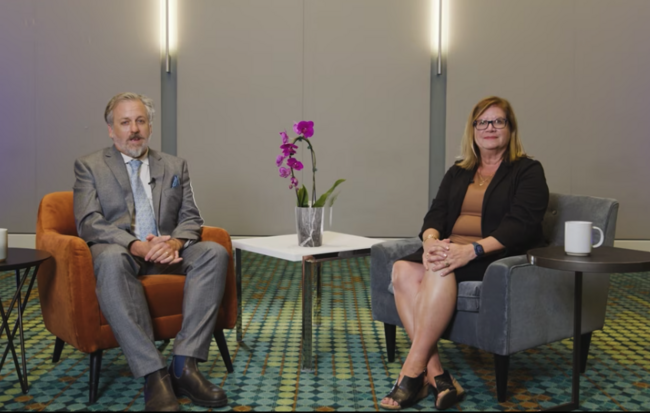
At the 2026 Psych Congress NP Institute, meeting Co-Chair Andrew Penn, MS, PMHNP-BC shared practical guidance for psychiatric nurse practitioners building long-term careers in mental health care settings in his session “Lessons from the Front Lines: Building a Successful Career in Psychiatric Nursing,” co-presented with fellow Co-Chair Julie Carbray, PhD, PMHNP-BC, PMHCNS-BC, FAAN.
In this exclusive conference interview, Penn highlights the value of daily, patient-driven learning in clinic, using real cases to reinforce knowledge of unfamiliar diseases and medications. He emphasizes actively seeking mentorship and using teaching opportunities to deepen expertise. He also outlines early warning signs of burnout—such as patient resentment and irritability—and discusses strategies to maintain balance, including managing workload demands and avoiding overextension across roles.
Key Clinical Takeaways
- Psychiatric NP clinical practice benefits from daily, case-based learning in clinic—identify unknown disease/drug exposures and review immediately (eg, internet, PubMed) to improve retention and build longitudinal knowledge through repeated patient encounters.
- Mentorship & professional development require actively seeking mentors and engaging iteratively (reading recommended materials, discussing gaps), with teaching (eg, clinic talks, CE) accelerating expertise by exposing knowledge gaps.
- Burnout in the mental health care setting presents early as patient resentment, exhaustion, and irritability, often reflecting system pressures (high demand, limited time), and can be mitigated by maintaining work variety without overextension and preserving sustainable workload balance.
Read the Transcript
Andrew Penn, MS, PMHNP-BC: Hi, I'm Andrew Penn. I'm a psychiatric nurse practitioner. I'm also the Co-Chair of Psych Congress NP Institute, a professor at UC San Francisco School of Nursing, and the Director of Clinical Nursing Operations for Salma Health.
Psych Congress Network (PCN): For psychiatric NPs just starting out, what are the highest-impact habits or behaviors that could set them up for long-term success in their careers?
Penn: I like to think that most NPs leave their training a little bit hungry, and some people see that as a shortcoming of the training process. The reality is, I think, no matter how many years you're in school, the more you're in school, the more you learn, the more you realize that there is so much you don't know. And that's great, that's actually an opportunity.
One of the best pieces of advice I got in my training was, every day when you go home from clinic, think about your day and think about something that came up that maybe you didn't know the answer to, or maybe you hadn't heard of that disease or that drug. Go look it up right then and there because as an adult learner, you're never going to be more primed to retain that information and to learn it than when there's a clear need to understand it. This is why adult learners need to have context.
So, if you've got that patient and they come to you on a medication that you've never heard of or they have an illness that you're not familiar with, take a few moments, go do a little internet search, go on PubMed, and learn a little bit about that. The amazing thing is if you do that enough times, you'll retain that information. So, next time a different patient comes in with that drug, you'll say, "Oh yeah, I remember I had a patient like this once,” and that's how you really build that sort of knowledge base for yourself.
But really just keep learning. Don't think that just because you're done with school, you're done with learning. You're only just starting. I would say 95% of what I know, I was not taught 20 years ago. I've learned it in the time since.
So, learning requires that context and that can be the patient giving you context or it could be because you have to teach something. A lot of times you'll be asked to teach something, and it may be something as simple as giving a talk to your clinic or giving a talk to residents or maybe doing a continuing education talk. You may think, "Well, I'm not an expert on that. I know a little bit about it, but I don't know. I'm not an expert." There's your opportunity to develop expertise. So, it's a paradoxical thing. You think you should become an expert before you become a teacher, but the way you become an expert is by teaching. So, teaching, for me, forces me to learn things—I might have a basic understanding of something, but it's teaching that makes me realize, okay, these are the things I don't know that I need to understand better so that I can explain it to the people in my audience. And for me, that's actually exciting. That's how I've deepened what I know.
PCN: How can clinicians identify the right mentors, peers, or communities that will support both their clinical growth and personal well-being?
Penn: Here's the thing about mentorship. Mentors don't come to you. You go to them and you identify mentors as people that maybe you like what they seem to know, what they seem to have learned about, or who they are as people. You may have a colleague in your clinic who you just really like the way they are with patients. You're going to be strongly influenced by the people you spend time with.
So, if you identify that person as somebody you want to learn from, be deliberate about that. Tell that person, "I'd really like to learn more about patient care from you. How can I do that? " And have that conversation, but they're not going to come to you. They're not going to come to you and say, "I'd like to mentor you about how to do better patient care." You're going to identify that person, you're going to put the effort in, and you're going to be active in that learning. When they tell you, "You know what? I would read this book or I'd read this article,” go read that book or read that article. Because if they're putting in the time to give you that offering, you should accept it. Even if you don't fully understand it, read it, watch it, whatever it is, and then go back and have that conversation. Say, there were some things I really liked about this and some things I just didn't understand. Can we talk more about that?
So, it's that active process on the part of the person who wants to be mentored, which will develop that relationship. Most people who are in positions to mentor actually love mentoring, but they're not going to force themselves on somebody who doesn't want them. So really, it's an active process, and I think sometimes people imagine that the mentor is going to come to them, and that's rarely the case.
PCN: Burnout is a major concern in mental health care—what are the early warning signs clinicians should watch for, and what strategies have you found most effective for preventing burnout over time?
Penn: So, to me, the early warning system for burnout is when you start resenting patients. When you start thinking patients are going out of their way to make you miserable, you're probably getting burnt out because patients have enough of their own problems without trying to make problems for you. That's not what they get out of bed and decide they're going to do in the morning is make your life more difficult. So, when you start getting into that place where you're getting exhausted, resentful, irritable, that's a red flag.
Now some of that may be coming from the systems that you're working in. A lot of times that is a red flag, not because there's something wrong with you, but because you're working in a system that doesn't actually permit you the space and time to do this work well. You've got too many demands put on you and that stress is starting to show cracks in the way you deliver patient care.
It's a very hard job that we do. It's very hard for most people to do it full time. Many of us have a variety of different jobs that we do and that helps. It helps to break up the sort of monotony, if you will, but it can also cause us to be spread very thin. So, we're trying to go to 3 different jobs or something like that all part-time, and that also can lead to people not feeling really invested in where they work, they just sort of feel itinerant. I think it's important to have some variety in your work-life balance, if you will, but also don't spread yourself so thin that you're kind of exhausting yourself going from task to task because that's also a recipe for burnout as well.
PCN: How do you approach boundaries with employers or healthcare systems, especially when there are competing demands or pressures that may not align with best clinical practice?
Penn: I would say you got to know your own value. You have to understand what sort of value you bring to a practice, an institution, know what kind of revenue you're bringing in. That is an important part of your conversations is that if you're bringing in a certain amount of revenue, how much of that is coming to you in the form of a salary or a total compensation package? But that's important. I think a lot of times people don't realize what they actually bring to a company or to an agency, and it's important to know that. What roles do you play that nobody else can play? You're not interchangeable, right? So, think about how you bring value to that organization and have that be a part of the conversation.
At the same time, you got to be reasonable because there's a lot of things that go on behind the scenes that you may not be aware of. When you're just treating patients day by day, you're not thinking about who's running and maintaining the electronic health record (EHR), or who's doing billing, or who's taking care of your malpractice insurance. A lot of that stuff gets taken care of when you're working for an agency. Many people discover this when they go into private practice, how many of these sort of parts that they never really thought about when they were working for somebody else that they now have to deal with. But really, I think knowing your own value, knowing what you bring to patients and knowing what that is worth is important.
PCN: If you could give one piece of advice to a new psychiatric NP to help them build an effective, fulfilling career, what would it be?
Penn: I would say, first of all, don't stop learning. You're always going to be learning. If you're watching this video, you're probably already curious and that's a good start. So, keep learning. The other thing I would say is don't hyper-specialize too early in your career. If you start from your first job out of school, working with children with a very particular illness, you may become very expert in that. There's nothing wrong with that, if that's your passion. But if you're like, "I'm not sure what I want to do. I think I might want to work with adults. I might want to work with children. I might want to work with seriously mentally ill. I might want to work with less seriously mentally ill." Don't hyper-specialize too early because what'll happen is you'll develop a resume that really points to one area of profession.
So, if you can be a generalist at the beginning, if you can see a lot of patients, there's value and volume. Seeing a lot of different types of patients, different ages, different demographics will help you really become that sort of Swiss army knife that we really have to be as clinicians. Later on in your career, if you decide this subspecialty, this population I really, really like, go for it. You can do that, but I would caution against doing that too early in your career.
I'm Andrew Penn. Thanks for joining me today. I look forward to seeing you next year in 2027 for NP Institute, our fifth year, in Boston, Massachusetts.
Andrew Penn, MS, PMHNP, is a professor in the University of California, San Francisco, School of Nursing where his teaching has received the UCSF Academic Senate Distinction in Teaching Award, among other recognitions. Trained as a psychiatric/mental health nurse practitioner, he directs clinical nursing operations for Salma Health, an early stage psychiatric interventional treatment clinical company. As a researcher, he has collaborated on psychedelics studies of psilocybin and MDMA in the Translational Psychedelics Research (TrPR) and the Carhart-Harris labs at UCSF. A leading voice in nursing, he is a cofounder of the Organization of Psychedelic and Entheogenic Nurses (OPENurses.org), advocating for the perspective of nurses in psychedelic therapy, he has published on psychedelics in the American Journal of Nursing, Frontiers in Psychiatry, The Journal of Humanistic Psychotherapy, and JAMA. An internationally invited speaker, he has lectured at SXSW, Aspen Health Ideas Festival, TEDx, the Singapore Ministry of Health, and Oxford University and can be found at Andrewpennnp.com.
© 2026 HMP Global. All Rights Reserved.
Any views and opinions expressed above are those of the author(s) and do not necessarily reflect the views, policy, or position of the Psych Congress Network or HMP Global, their employees, and affiliates