Psoriatic Disease and the Domino Effect of Comorbidities
© 2025 HMP Global. All Rights Reserved.
Any views and opinions expressed are those of the author(s) and/or participants and do not necessarily reflect the views, policy, or position of The Dermatologist or HMP Global, their employees, and affiliates.
Every year on October 29, the global community comes together for World Psoriasis Day, uniting patients, health care providers, researchers, and advocates in over 70 countries.1 This year’s theme is focused on psoriatic disease (PsD) and comorbidities, and it sends a powerful message. PsD is not “just” a skin condition. It is a chronic, immune-mediated inflammatory disease that affects the entire body and carries a heavy burden of systemic complications. Understanding, addressing, and preventing these comorbidities is critical to improving both quality of life and long-term health for the millions living with PsD worldwide.1
Beyond the Skin
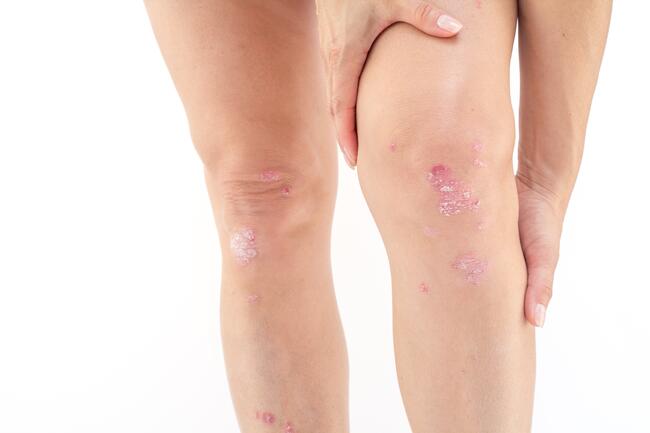
PsD includes both psoriasis and psoriatic arthritis, affecting an estimated 2% of the global population. While psoriasis is often visible as inflamed, scaly patches on the skin, and psoriatic arthritis presents with painful, swollen joints, these manifestations only hint at the broader disease process. PsD is a systemic inflammatory condition, meaning the immune dysfunction underlying it impacts multiple organ systems beyond the skin and joints. Despite advances in treatment, many patients with PsD continue to face unmet clinical needs. Persistent disease activity is common, appearing as ongoing low-level inflammation or remission/flare cycles that impair quality of life and contribute to long-term disability.2
Research has consistently shown that people with PsD face higher rates of serious comorbidities.2 These include:
- Cardiovascular disease: People with PsD have a higher risk of heart attack, stroke, and other cardiovascular events, often beginning early in the disease course.3
- Metabolic syndrome and diabetes: Chronic inflammation increases the likelihood of obesity, insulin resistance, high blood pressure, and dyslipidemia, all of which contribute to type 2 diabetes and vascular disease.4
- Mental health disorders: Rates of depression, anxiety, fatigue, and cognitive dysfunction are significantly elevated, affecting daily life and overall well-being.5
- Other immune-mediated diseases: PsD is associated with conditions such as inflammatory bowel disease, uveitis, and nonalcoholic fatty liver disease, highlighting its systemic nature.6 Together, these comorbidities create a domino effect, or a cascade in which one condition worsens another, compounding the overall disease burden and accelerating mortality.1
Progress and Persistent Gaps in Care
The past 30 years have seen remarkable advances in PsD care. The development of biologics and small-molecule inhibitors targeting specific immune pathways, such as tumor necrosis factor, IL-12/23, IL-17, and IL-23 inhibitors, has transformed treatment. Many patients now achieve skin clearance or remission of joint symptoms that were once unimaginable.2 Yet significant gaps remain:2
- Remission without medication is rare. Sustained, drug- free remission beyond 5 years is not achievable for most patients.
- Precision medicine is lacking. Current treatment guidelines rely on population-level data, while real-world patients often have multiple comorbidities that complicate therapy choices.
- Access barriers persist. Step therapy policies require patients to try and fail cheaper drugs before accessing advanced therapies, delaying effective care and increasing risks of long-term complications.
- Tissue-specific disease mechanisms are underexplored. The skin, joints, gut, vasculature, and brain all respond differently to inflammation and therapies, yet treatments often assume uniform disease biology.
These challenges highlight the significance of comorbidities in discussions about PsD management.
The Future of Research: Precision and Integration
Looking forward, advances in medical technologies promise to revolutionize how PsD and its comorbidities are managed:2
- Molecular mapping: Technologies such as single-cell sequencing and spatial transcriptomics are uncovering how immune responses differ across tissues, revealing new therapeutic targets.
- Artificial intelligence: Machine learning models trained on clinical, imaging, and genetic data are being developed to predict disease progression, comorbidity risks, and treatment responses.
- Integrated care models: The emerging concept of “IMIDology” seeks to bring together dermatology, rheumatology, gastroenterology, cardiology, and mental health to treat PSD not in silos, but as a systemic, interconnected condition.
- Lifestyle and holistic care: Future studies will explore how lifestyle interventions, such as diet, exercise, and mental health support, interact with immunologic therapies to reduce overall disease burden.
These approaches may ultimately shift the field from aiming for remission to envisioning true cures, while also mitigating the ripple effects of comorbidities.
Breaking the Domino Effect
The occasion of World Psoriasis Day highlights that PsD is life-long, systemic, and deeply interconnected with other health conditions. Recognizing and addressing comorbidities is not optional; it is essential to improving outcomes, extending life expectancy, and restoring quality of life.
References
- IFPA. World Psoriasis Day 2025. Accessed August 28, 2025. https://www.ifpa-pso.com/global-actions-overview/world-psoriasis-day
- Chinchay L, Song K, Stark J, Ward NL, McInnes IB. Challenges and opportunities in psoriatic disease: an integrated view of the future. J Rheumatol. 2025;jrheum.2025-0264. doi:10.3899/jrheum.2025-0264
- Polachek A, Touma Z, Anderson M, Eder L. Risk of cardiovascular morbidity in patients with psoriatic arthritis: a meta-analysis of observational studies. Arthritis Care Res (Hoboken). 2017;69(1):67-74. doi:10.1002/acr.22926
- Atzeni F, Gerratana E, Francesco Masala I, Bongiovanni S, Sarzi-Puttini P, Rodríguez-Carrio J. Psoriatic arthritis and metabolic syndrome: is there a role for disease modifying anti-rheumatic drugs? Front Med (Lausanne). 2021;8:735150. doi:10.3389/fmed.2021.735150
- Mathew AJ, Chandran V. Depression in psoriatic arthritis: dimensional aspects and link with systemic inflammation. Rheumatol Ther. 2020;7(2):287-300. doi:10.1007/s40744-020-00207-6
- Daugaard C, Iversen L, Hjuler KF. Comorbidity in adult psoriasis: considerations for the clinician. Psoriasis (Auckl). 2022;12:139-150. doi:10.2147/PTT.S328572
Related Content