











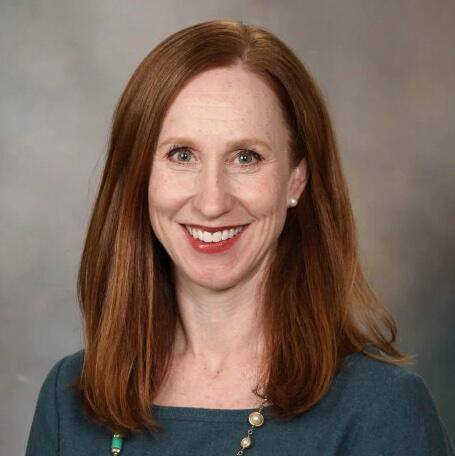
Joshua Steinberg, MD, on Complex Cases in IBD
Dr Steinberg discusses his presentation at the AIBD APP Institute of two complex cases, one of a patient with acute severe ulcerative colitis and another on a patient with penetrating and stricturing Crohn's disease.
Joshua M. Steinberg, MD, is a board-certified gastroenterologist & the Director of IBD at Gastroenterology of the Rockies and a Clinical Instructor of Medicine at the University of Colorado School of Medicine in Denver, Colorado.
TRANSCRIPT:
Hi everybody. I'm Josh Steinberg. I'm a gastroenterologist and IBD specialist and the director of Inflammatory Bowel Disease at Gastroenterology of the Rockies in Denver, Colorado. I was so glad to be here today to kick off AIBD this week, specifically with the AIBD APP Institute focus on a clinical education for our advanced practice providers.
Today I gave a talk on complex inflammatory bowel disease and specifically highlighted two complex cases, one of ulcerative colitis and one of Crohn's disease to discuss with our APP attendees today. So we first focus on acute severe ulcerative colitis, and this is an important clinical condition that we should really be able to recognize acutely. So these are patients coming in with severe diarrhea, typically characterized by at least 6 bloody bowel movements a day. There's other criteria that can also be considered such as low albumin anemia, but essentially patients who are coming in with more constitutional symptoms as well, like fevers or tachycardia, patients with high inflammatory burden.
These are patients that are going to require inpatient management and it should really be considered a medical emergency. So if a patient is coming to you with signs and symptoms of acute severe UC, you're going to admit them to the hospital. Some important clinical pearls. First we're going to get a baseline assessment, so that's going to include labs. So getting baseline CBC, CRP inflammatory markers, as well as stool studies to rule out infection, including C diff. They're also going to need a baseline flexible sigmoidoscopy, not just to assess their disease severity and activity, but also to rule out CMV colitis, which is common in our patients with acute severe UC. And certainly in patients who might be at risk of toxic megacolon or perforation when their disease and inflammatory burden is very high. We're going to want to get a baseline image of their abdomen with a plain film, x-ray or CT.
And then we start inpatient management with medical therapy, which is going to include firstly IV corticosteroids. And we're going to want an engage our colorectal surgery colleagues early and appropriately because these patients are very high risk for colectomy and while we're treating them with IV steroids and we have them getting fluids as needed, electrolyte repletion and nutrition as needed, hopefully orally, we're also going to want to keep them on venous thromboembolism prophylaxis. So that is key that patients with high inflammatory burden with acute severe ulcerative colitis are high risk for venous thromboembolism. So despite their urgency in bleeding, bloody diarrhea, we're still going to want them on medical prophylaxis unless they have massive hematochezia that's going to necessitate an urgent colectomy. So if a patient is to respond to IV corticosteroids by day 3, typically wonderful, we're able to transition them to oral steroids and then have a plan in place to start a more definitive advanced therapy like a biologic agent in the outpatient setting if we're able get them well enough to leave the hospital.
If they do not respond to IV corticosteroids by day 3, that's when we're going to start to think about rescue or salvage therapy, which historically is going to include infliximab, particularly if they've had no prior exposure to an anti-TNF agent or IV cyclosporine, which may be limited depending on your particular institution's practice and experience. And we know now there's emerging data actually looking at Janus kinase inhibitors such as tofacitinib in the setting of acute severe UC. And hopefully if they respond appropriately to those salvage or rescue therapies, then we can discharge them once it's appropriate and then maintain them on treatment to obtain and attain a deep clinical steroid free remission.
Some patients will require surgery, and surgery can be lifesaving. So colectomy again, there's indications for this such as hematochezia, perforation, toxic megacolon, or certainly those patients who don't respond to appropriate medical therapy.
So that was our acute severe uc patient. Next we talked about a severe Crohn's disease patient. So this was a patient in his forties with prior bowel resection in the setting of Crohn's disease, previous exposure to advanced therapies such as infliximab, as well as vedolizumab. So this prior biologic exposure who's then presenting to you 5 years later with more obstructive type symptoms. So pain and bloating with meals, nausea and vomiting, and that patient after you get a baseline assessment that would include the typical labs, but also imaging. So small bowel dedicated assessment to include CT or enterography or potentially intestinal ultrasound, which you may have at your institution. This patient actually developed a small bowel obstruction as well as abdominal fluid collection. So both fibrostenotic stricturing complications as well as penetrating complications. And this type of Crohn's patient with severe disease that includes intestinal fluid collection or abdominal fluid collection, as well as obstruction, is really going to require a multimodal approach.
So not only vying for appropriate medical therapies, but also involvement with interventional radiology to drain fluid collection, particularly if it's a bit larger, so 3 centimeters or larger, and it's feasible to drain as well, as our colorectal surgeons. So once we're able to appropriately maintain and assess their patient's sepsis with the fluid collection and treat their stricture, whether it's fibrotic or inflammatory with medical and or surgical therapy, then we're able to discharge once they're doing well and start and maintain medical therapy such as an advanced therapy. This patient in particular, because they had prior TNF exposure as well as other advanced therapy exposure, was ripe to start a novel agent such as an IL 23. So this particular patient started risankizumab and did well as an outpatient. Thanks very much.
© 2025 HMP Global. All Rights Reserved.
Any views and opinions expressed are those of the author(s) and/or participants and do not necessarily reflect the views, policy, or position of the AIBD Network or HMP Global, its employees, and affiliates.
Related Content



The NP/PA Institute is dedicated to educating and informing advanced practice providers on clinical topics and practical issues to support the profession and improve the quality of care for patients with inflammatory bowel disease (IBD).
The AIBD NP/PA Institute is designed for Advanced Practice Providers who specialize in Inflammatory Bowel Diseases, to further their education and increase their knowledge to achieve better patient outcomes. Explore cutting-edge research, innovative treatment options, and new therapeutic methods, while remaining focused on the fundamental principles and terminology associated with IBD.
October 17-18, 2026 | New York | Register Now
November 12-13, 2026 | Virtual | Register Now






