

From Innovation to Implementation: Rethinking Access in Idiopathic Pulmonary Fibrosis
As new therapies for idiopathic pulmonary fibrosis (IPF) emerge, healthcare stakeholders must navigate the balance between innovation and evidence-based coverage decisions. This webinar brings together clinical, regulatory, and payer perspectives to examine how value is assessed in rare diseases like IPF, beyond traditional endpoints. Topics include the implications of breakthrough designations, the role of real-world evidence, and novel measures of clinical benefit.
Presenters:
Elizabeth Volkmann, MD, MS
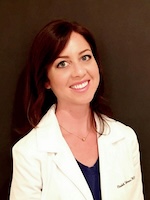 Dr Elizabeth Volkmann is an associate professor in the Division of Rheumatology at the University of California, Los Angeles, where she serves as the director of the UCLA Scleroderma Program and the founder and co-director of the UCLA Connective Tissue Disease-Related Interstitial Lung Disease (CTD-ILD) Program. Her research focuses on the identification of novel biomarkers that predict response to ILD-targeted therapies. Dr Volkmann endeavors to develop personalized treatment algorithms for patients with ILD grounded in solid translational science. She also has an enduring interest in exploring how the gut microbiome contributes to the pathogenesis of ILD and systemic sclerosis.
Carole Tremonti, RN, MBA

Carole currently serves as vice president of CancerLinQ and Strategic Partnerships at ConcertAI, where she leads initiatives that integrate AI-driven insights into clinical decision-making and population health management. Her work has helped transform data access, accelerate product adoption, and improve care quality across major health systems. Throughout her career—including leadership roles at Dana-Farber Cancer Institute, Project Ronin, and SimBioSys—Carole has built a reputation for driving strategic growth, clinical excellence, and meaningful innovation in patient care. She also contributes to the broader oncology community as chair of ASCO’s QOPI Certification Committee, faculty for ASCO’s Quality Training Program, and editor for the Journal of Clinical Pathways.
Video Transcript:
Dr Elizabeth Volkmann: Welcome to our webinar, From Innovation to Implementation: Rethinking Access in Idiopathic Pulmonary Fibrosis. My name is Dr. Elizabeth Volkmann, and I'm a rheumatologist at UCLA, where I care for patients with interstitial lung disease. And I'm delighted today to be joined by Carole Tremonti who is the Vice President of CancerLinQ at ConcertAI. We have a number of interesting learning objectives today. So, we will first discuss how stakeholders can balance the urgency of innovation in idiopathic pulmonary fibrosis, or IPF, with the need for clinically meaningful evidence to inform coverage decisions.
Next, we will explore how value is assessed in payer decision-making for rare diseases like IPF beyond traditional trial endpoints like the FVC, with consideration for breakthrough designation, real-world impact, and nontraditional measures of clinical benefit.
Finally, we will identify strategies to optimize patient access while ensuring appropriate use of emerging IPF therapies through a collaboration that includes aligning on clinical value with payer expectations. And we will have plenty of time for questions during this session at the end.
So, let's talk a little bit about IPF. This is a chronic progressive fibrosing interstitial pneumonia of unknown etiology. It's classified as a rare disease, but its global prevalence is actually increasing. So, the estimated adjusted prevalence rate is between 2.4 to 2.98 cases per 10,000 persons in North America. If it is untreated, the median survival is only two to three years after diagnosis, which is actually worse than most cancers. But even with available therapies that we have today, the median survival estimates range from only two to five years. Hence, current management strategies only modestly increase life expectancy.
What are the key clinical features of IPF? Well, they include irreversible scarring of lung tissue, which leads to inevitable progression of lung disease. Accompanying this are declining respiratory symptoms such as breathlessness, cough, and fatigue, and these patients have premature mortality. We see a number of management challenges come to light when we care for these patients. So, very often, these patients will have a delayed diagnosis, and this is because IPF is a rare disease. So, when a patient presents with shortness of breath or cough, more common causes of these symptoms are often determined to be the etiology, such as, you know, heart failure or COPD and asthma. These delayed diagnoses can lead to delayed treatment initiation. Oftentimes, these patients aren't referred to specialists in a timely manner. And then, finally, even when they are referred to specialists, we can see an underutilization of available treatments. And then, lastly, and we'll get into this more during the talk, there can be disparities in access to care.
IPF imposes a high economic burden on patients, payers, as well as health care systems. So, for example, these patients will have increased hospitalizations, high utilization of specialist care, and significant end-of-life costs. The annual per-capita cost of patients with IPF in North America, according to a systematic review, is estimated to be about $20,000, with hospitalization accounting for a large portion of these costs. Patients often require multiple hospital admissions as the disease progresses. And these figures reflect a real growing burden that demands both innovative therapies and smarter coverage solutions.
And I'm curious, Carole, how you perceive this economic burden in the context of your specialty in managing patients with rare diseases?
Carole Tremonti: Yeah, it's interesting when you think about the cost of treating a patient with such a nuanced disease because it is going to be very expensive, simply because of the rarity of it. And when we think about these diseases, something we try to account for is to use real-world evidence to think about what are the predictable costs of treating someone with a disease like this? Meaning, what we know a standard will be. And then, in that way, when we are thinking about what will the burden be and how do you talk to patients about this, but also approval for it, can you come up with an arrangement where it's some type of a bundle treatment, for example, or a bundle cost to be able to manage someone with such an, again, nuanced component, especially when you're thinking about care towards the end of life. And I do think that this is an opportunity for rare diseases when you think about how can real-world evidence, other components around the patient's diagnosis, help us to shape signals of when we may transition to a more intense supportive care management treatment option versus continuing going through the normal care modalities. It's very, very difficult. But, in rare cases, as I'm sure you understand, Dr. Volkmann, that multidisciplinary team being aware of what's happening in a patient in a given point in time can really impact the overall spend. So, again, the way we think about this in rare diseases is truly what is the predictable components of that care that we can reliably understand will be a spend? And then, collaborating around that to be able to provide the best support to try to curtail the spend.
Dr Elizabeth Volkmann: No, that's a really interesting perspective. And you highlighted a great point in that the multidisciplinary team is really required to care for these patients, particularly as the disease progresses because they need such frequent monitoring. They often have hospitalization. And then, again, towards the end of life, the supportive care is quite important to their overall quality of life and well-being.
Carole Tremonti: Yes, we've seen in oncology, for example, the implementation of using nurse navigators for people with complex conditions has significantly decreased symptom management burden, hospitalizations, and emergency department visits. And in another—in a case like this, I would imagine that really having someone who’s highly specialized to be able to provide support would be really paramount of importance.
Dr Elizabeth Volkmann: I completely agree with you because oftentimes if these patients are only followed by a pulmonologist, they simply don’t have the time or office staff resources to dedicate to managing some of these troubling symptoms before they escalate to the point of the patient needing a hospitalization. So, again, that multidisciplinary approach is so important.
So, you know, unfortunately for IPF, the treatment landscape has been stagnant for a number of years. In fact, in more than a decade, there hasn’t been a new approved treatment. There were two antifibrotics that were approved in 2014, and these remain the only approved pharmacotherapies for IPF. These agents were found to slow the rate of decline in the FVC. But, unfortunately, they don't help prevent acute exacerbations, and they do not alter underlying disease processes, nor improve survival to a meaningful extent. In addition, unfortunately, both of these drugs have significant adverse event profiles. So, they can cause disturbances such as nausea or diarrhea, which are so difficult for patients to cope with that they actually lead to discontinuation rates of more than 40% for both drugs. And I'm curious, Carole, in your world, how that, you know, percentage compares to some of the agents that you're familiar with?
Carole Tremonti: Yeah, so in my—the world that I represent—we heavily lean into these and treat through them aggressively, even if that means a hospitalization or, you know, even a same-day clinic visit. Because, unfortunately, by the nature of disease, it's more important to continue the treatment. And so, we will, again, support patients however we can to get through it and avoid the requirement of coming off of the treatment. It's critical, as you know, the further along you can get through a treatment, the longer impact it will have. And so, we don't see 40% rates, but that's by force.
Dr Elizabeth Volkmann: Right. Yeah, and I think the other thing is that sometimes when patients are making these decisions, they weigh, you know, the risk of the side effect with the overall benefit. And since these agents don't improve survival or quality of life, they are kind of like, “Well, why would I put up with these side effects?”
Carole Tremonti: Yeah. So, I can see that because they’re debilitating and they mean you cannot work. That, you know, they mean that you cannot go on with your normal day-to-day life. And if it isn’t going to have a change in their outcome, I can completely understand that.
Dr Elizabeth Volkmann: Yeah, but these agents are largely underutilized. It's estimated that only 10% of patients with IPF are receiving an antifibrotic after their diagnosis. And there's a number of reasons for this. Aside from the side effect burden, these medications have large out-of-pocket costs. There's also issues related to social determinants of care and access to care, as well as payer utilization management restrictions. And I'm wondering if you have any thoughts on the latter two there?
Carole Tremonti: Yes. Social determinants of health are a very big factor in a patient's success. You can actually very much use components. I heard actually a very cool piece of work, a research team that looked at someone's mortgage—that looked at mortgage failure rates and tied them to clinical outcomes and the success of people's clinical outcomes. And they were directly correlated. It was very interesting. So, if you think about it from this perspective and even payer utilization management, really understanding someone where they're coming from before they begin treatment and then upfront identifying where they may have gaps and being able to provide support. And it can be something as small as transportation to and from to get to receive treatment. That can be the difference in someone's success or failure in staying on a complex treatment like this for a complex disease.
Dr Elizabeth Volkmann: No, that's helpful. So, just to summarize, we have two antifibrotic therapies that are approved for IPF. Both of them have minimal clinical benefit and are largely associated with intolerable side effects. And, because of this, they are not utilized to the extent that they should be. And there’s additional barriers to their use, including these things like cost burden and social determinants of health.
So, the prior authorization process for these medications will include confirmation of the IPF diagnosis, and this typically has to be made by a specialist, usually a pulmonologist. Oftentimes, we'll have to submit pulmonary function test results, such as FVC values, as well as provide evidence that the patient has interstitial lung disease on a high-resolution chest CT. The health plan will review to determine the medical necessity and lack of contraindications. And then, a decision is made, and the patient and provider are notified of this. If it is denied, an appeal may be necessary. And even when the medication is prescribed, there's definitely monitoring that has to occur for ongoing reauthorization to confirm benefits to justify these costs.
Carole Tremonti: This completely falls right in line with what you raised in the beginning of the conversation today around delays in therapy, delays in time to treatment. The prior authorization, while necessary for very expensive drugs in particular and very rare, also is a burden to treatment. And we do see that very, very frequently. And you also see societal barriers between people with different levels of insurance coverage and the number of data elements that can be required to submit something and how challenging that is. Not just for the burden of pulling the information together but then collecting the data, getting the appointment for the CAT scan can be the delay, just to provide evidence that really is already there. And then, the appeal component as well. There are payers who their process is to deny all claims first and to go through an appeal process. So, this is an area of focus. It's an area of political lobbying that's occurring, you know, across all rare diseases to the federal government. Hopefully, a place in which we will see some movement growing forward to be able to loosen requirements, especially in those diseases where a delay in care truly does mean a life and death decision for some people, a true loss of time in life.
Dr Elizabeth Volkmann: So, the rarity and complexity of IPF can complicate the long-term treatment assessment and coverage. So, even though the prevalence of IPF is low, it is increasing over time. And it's estimated that over 100,000 people in the US today live with IPF, and this creates challenges in developing robust, generalizable data sets. So, for example, there are limited head-to-head data and complex unpredictable progression patterns that can complicate the long-term modeling of the treatment benefit for this rare disease. And this may also affect coverage decisions and also affect guideline development in terms of the FDA labeling. So now, let's move into some interesting questions.
Carole Tremonti: Yeah, so I think based on everything that you've shared, what I'm really hearing is a limitation in information available to really provide us with some directional support for clinical evidence. And I do see this as an opportunity where what is available in a clinical trial may not necessarily inform the day-to-day realities. Clinical trial data is excellent because it really gives us that scientific rigor. However, it's also often conducted in a vacuum. And it's a place in which we can take real-world data, data that gives us a more robust picture around a patient to tell us not just how did the treatment work, but long-term, how was that treatment effective? So, we talked about the necessity of symptom management throughout this process and identifying those signals earlier on so that we can obviate the need for high-cost services such as hospital admissions, even ER visits, or more expensive medications to cover symptoms that have gone too far unchecked. And then, now they really require a lot of supportive services. But I think this is a big opportunity here, especially in such a limited population, of taking and collating the additional evidence from our medical records that will give us additional color around how best might we better support patients with IPF—not only with the treatment that will slow or abate their disease, but what symptoms do you need to plan for proactively in advance? And that may not be something that we have really a big insight into now. However, going back to the concept of bundle payments, like, thinking about if this is a high-use service, okay, let's incorporate claims information that we know about those services and learn from it. And then, better be able to plan the trajectory of someone's treatment journey. I think that's a space where this will be very, very helpful. And again, coming back to the concept of using a predictable cost of care of what might we think we are going to see? And then, therefore, planning a treatment plan more effectively. What do you think about using RWE as someone who treats these patients?
Dr Elizabeth Volkmann: No, it's a great question. And we often don't get enough real-world evidence when we're presented with a new intervention or product. And I think that this can really shape how I prescribe a medication if I were to have this information. So, for example, we mostly rely on this traditional model of looking at randomized controlled clinical trials, which we know that, you know, the patients who do trials are often very special patients, right? These are patients that don't have many comorbidities. They have access to usually an academic medical center where the trial is conducted. They have very rigorous follow-up through that trial. There's really no barriers to care because all of their visits are paid for by the sponsors. And so, sometimes what we see in terms of randomized controlled trial data doesn't always translate into the real world where we have these other barriers and issues with access to care. So, for me, if there are real-world data sets that can demonstrate sort of similar efficacy signals that what we see in trials, to me, that’s a really strong, strong point for this is something that I know that will work in a population of patients that’s more broad, and not just this special clinical trial cohort.
Carole Tremonti: Definitely. You know, your point—and I couldn’t agree more—your point about not understanding what happened to patients who might have comorbidities and not being able to bring that conversation to the table is really important. And I do think that that's a space where real-world evidence can be very helpful and very useful in shining some light on what additional management may look like in the future.
Dr Elizabeth Volkmann: So, nerandomilast, it's very exciting, has secured breakthrough therapy designation for IPF following positive phase two results. So, this is a selective inhibitor of phosphodiesterase 4B. And phosphodiesterase 4B plays a key role in inflammation and is highly expressed in structural cells involved in the fibrotic process. So, with both antifibrotic and immunomodulatory effects, nerandomilast has dual mechanism of action that helps distinguish it from other antifibrotic therapies. So, the previously approved antifibrotic therapies largely just target fibrotic pathways whereas nerandomilast has both antifibrotic and immunomodulatory properties. And this Breakthrough Therapy Designation recognizes that therapies for serious or life-threatening conditions that show preliminary clinical evidence can have substantial improvement over existing options. And so, this designation enables closer collaboration with the FDA and hopefully will help streamline the development and review process to accelerate access to these therapies. And I think in your world, you're probably pretty familiar with this Breakthrough Therapy Designation. What does this mean to you, Carole?
Carole Tremonti: That's a really great question. And what we see is actually a lot of pushback from clinicians when there is a new therapy that has a Breakthrough Designation. But they really are thinking about the data and the rigor behind the data and that balance because often a new therapy with a Breakthrough Designation also comes with a very high price associated with it, which can be very challenging for a payer to support. So, what we've—and ways in which we have looked at this and try to support it, is that, again, this is a space in which AI can be very helpful to oncology. Where you can actually create models that will predict—because the models can incorporate a lot of ancillary data that may not have been available in the clinical trial to say, okay, at this therapy, applied to this situation, this simulation is likely to be as comparative—really doing comparative effectiveness research—for what has existed is tried and true. And can bring through a lot of additional data that would not otherwise be available. That being said, the question comes up of how do you evaluate that data? And in an aspect like this, you really have to think about how much data is available and is the sample size enough to help you derive clinical decision or clinical judgment? And that's the challenge, right, where you have a Breakthrough Designation, which often can be created off of a very small number of patients. So, you don't have the huge picture. However, if you can supplement that with enough evidence that will support comfort in providing a provider or giving a provider a sense of comfort relative to scientific rigor, I think that's what you have to do.
Dr Elizabeth Volkmann: Yeah. No, and I think this, you know, this traditional model that we have where we rely so much on, like, the P-value, is it significant? And when you have these smaller data sets, you often don't have enough statistical power to prove significance. But I think, as you said, if you can supplement this real-world data, then it can help, again, give you a picture that can prove whether that therapy is going to be helpful or not.
Carole Tremonti: Agreed. And I am starting to see amongst insurance companies or payers, an interest in understanding how better they can use RWE to really supplement the information that they already know. Because there is more data in RWE than there is in scientific research. We're just not being—we're not very adept yet at harnessing the opportunity that exists there. Yeah.
Dr Elizabeth Volkmann: And it really raises an interesting point too because now that most health systems use electronic medical record data, there's actually a wealth of information from a patient’s chart that you would never get in a clinical trial, right? Because you can probably get other assessments that are not captured in terms of a clinical trial that could inform how that therapy is working. And, I’m curious if you’ve used any of that data or thought about that in terms of real-world evidence?
Carole Tremonti: Oh, we definitely are. I mean, that's where a lot of nuanced information about social determinants of health relief services and symptom burden relative to treatment and the descriptions of it. Many practices with an electronic health record are now starting to use ambient AI agents to document their notes. What's about that if those on the call are not familiar with it, it means a voice—your voice and your conversation with a patient is being recorded to dictate your note. When you can hear the patient's logic as well and the patient's feedback, you're able to collect more nuanced data that can really inform the experience of a patient and add to that real-world evidence. Not just how much of it there is, but how rich that information is. And we are seeing that as being very, very useful and very helpful. Understanding the decision-making around why a patient may say yes to one thing and no to another really is so informative.
Dr Elizabeth Volkmann: So, I want to take you through the results of the phase three trial that was recently published in the New England Journal this past May. Again, this was a trial of over 1000 patients with idiopathic pulmonary fibrosis, and they were randomized to either receive two different doses of nerandomilast, either 18 milligrams or 9 milligrams twice daily, or it's a placebo, and they were followed for 52 weeks. Patients were allowed to be on background antifibrotic therapy at enrollment, which is considered standard of care. And, in fact, 78% of them were on some kind of background therapy. Forty-five percent were on nintedanib and about 32 percent were on pirfenidone. Nerandomilast met the primary endpoint of the trial, which was the absolute change in FVC from baseline to 52 weeks. And that was a statistically significant change.
And then, very interestingly, at that higher dose of nerandomilast, these patients experience a mean FVC decline, which was lower, which is better, than the placebo arm. And again, this was statistically significant with a P-value of <.001. So, among patients already on antifibrotic therapy, nerandomilast provided additional clinical benefit indicating its potential role as an adjunct for those who have a partial response or even as an alternative for individuals who are unable to tolerate current treatment standards.
So, on the graph on the right here, this is from the paper, the New England Journal article I mentioned, showing the change from baseline in forced vital capacity at week 52. And so, in the Panel A, this is the overall trial population. Panel B are just those patients who are not taking antifibrotics. And then, C are patients who were taking background nintedanib, and D is patients—those who were taking background pirfenidone. And across the board, you can see the treatment arms are the colored bars in green, and then the gray bars are placebo. So, in all of these panels, what you can see here are significant differences between those who received the treatment and those who were randomized to placebo, again, in the overall trial population, in the patients who weren’t taking any background therapy and then even in those who were.
The other exciting thing about this trial is that nerandomilast maintained a favorable safety profile. So, there was actually only a 6.1% discontinuation rate due to adverse events even at the high dose. The most common AE was diarrhea. And the incidence of diarrhea was higher among patients taking background nintedanib compared to those who were not. The AEs led to treatment discontinuation, as I said, of about 6.1% of patients in the 18 milligram groups. And then, serious adverse events occurred at similar rates between both the active and placebo arms. And no new safety signals were identified that were any different than what was seen in the phase two trials.
So, in this table here, you can see the list of most frequent adverse events, and they include diarrhea, cough, upper urinary tract infection, as well as nasopharyngitis. And then, in terms of events leading to interruption, diarrhea was the most common. In terms of permanent discontinuation, again, you can see any reason. And then, due to diarrhea is listed there. And, finally, the serious adverse events, fatal adverse events were, you know, similar across all the different treatment arms.
So, Carole, in terms of the safety profile, how would you view that?
Carole Tremonti: That's such a great question. You know, we’re seeing quite advancement, right? The four figures you’ve shown on the first slide when we were discussing the section, it was really obvious that this was an advancement. At the same time, you can understand because of the side effect profile that this may not be a treatment that is readily sought after or readily adopted by patients, going back to the severe management. But you can also see this really rigid prior authorization criteria that is important to be diagnostically very accurate, but can really also delay the treatment and the therapy itself. And I would be—if I was a patient, I can understand being reticent to this. But, again, you know, if we think about this and we're coming back to the predictability of what it's going to take to support someone going through this therapy, if we understand what the impact will be, and it's very clear, right? It is very clear of what someone is going to experience. We can be more proactive in the method in which we collaborate with clinicians to help them better prepare their patients and to better prepare the case to get the treatment approved in a more rapid pace. And in that way, we won't have delays. And, hopefully, we'll be able to better plan and not have a patient experience, you know, significant out-of-pocket costs related to symptoms that are not managed effectively or appropriately. So, I mean, truly, this is one of those situations in which being ahead of the curve is everything. And you see this often in cases of patients with hemophilia or also in patients who have an oncology diagnosis of some sort where we already know the detrimental impact of the treatment. And so, we proactively manage it upfront. And it is assumed to be part of sort of the cost of doing business to treat someone with this disease. Does that make sense in IPF as well?
Dr Elizabeth Volkmann: Definitely. Yeah, definitely. And I think the other thing to note was that, again, most of the patients in this study, almost 80%, were taking background antifibrotic therapies, which can cause this GI morbidity. And so, it sometimes can be very difficult to parse out, you know, what is related to nerandomilast versus the background therapy. And so, I think that my instinct is that most of the adverse events that we're seeing here were probably related to the background therapy. And it would be interesting to see, you know, just in that pure nerandomilast group—again, it was a small percentage of patients in the study who weren't on background therapy—maybe they had a better, you know, GI profile.
Carole Tremonti: And, really, understanding the reasoning around adherence, why or why not. This is, again, a space in which close monitoring by a nurse navigator or, you know, a role like that, in which there is someone truly engaging with a person to understand what barriers are in their way on an individual day to continuing their treatment. You see that a lot. But if someone's not adherent for a number of reasons—it can be financial toxicity. It can be a symptom that they're experiencing. It can be symptom burden. But if you don't understand the reasoning around adherence, it's very difficult to treat through it is where my perspective is landing on this. I, really, where I think about things like this is, in rare diseases, value is not what occurs within the clinical trial. It's what happens outside of this. And I'd love for you to speak a bit more about the robust picture of symptom burden that patients with IPF do routinely experience.
Dr Elizabeth Volkmann: Yeah. So, these patients, you know, they don't just experience shortness of breath and cough, which in and of itself can be very troubling. But because they are so impaired in their life, doing simple things like activities of daily living can be quite challenging. So then, they're having to rely on a caregiver. And some people are fortunate enough to live with a caregiver who has the time and the energy to help. But, many times, these patients have to hire someone to help them or utilize a network that is very difficult to put together at this stage of their life when they may not have been prepared to establish this kind of support system around them so early in their life. And, in addition, there's a whole emotional aspect that goes along with the physical symptoms. So, patients can often feel extremely depressed and hopeless because they know they have a fatal disease or they worry that they’re becoming a burden to their family. And I have had many patients over the course of my career that get to this point where they don’t want to live because they feel like everyone else’s lives around them have been affected so much that they feel like it would be better if they exited. And that, I—you know, I've never had that experience myself but just empathizing—I can imagine that would be one of the most challenging things to experience. Patients can have fatigue. So, in addition to breathlessness, it can be difficult for them to just, again, go about their life. And sometimes these patients become very isolated socially, not just because of fatigue and depression, but also, you know, when they go out in public, if they're coughing, oftentimes people will think that they have an infection. And I think we learned a lot about this during the pandemic where, you know, people, even that wore masks, like, they often were stigmatized in some way. “Well, why are you going out in public if you could have a cough and you might have COVID and you might get me sick?” When, in fact, they're out in public and they have a cough because they have this chronic difficult disease. So, these are some of the things that I think about. And I'd love to hear your thoughts as well.
Carole Tremonti: This is very interesting because often these elements are collected during the clinical trial, but they may not necessarily be reported as an output of the clinical trial. But it's data that exists. Well, when that happens, if it's not published, then downstream, clinicians can't use that data to be real-world evidence to inform how on the clinical trial patients were treated through this. And when you do have such debilitating disease—and, to your point, these are younger people who don't have the same support system who are not used to understanding what it's like to manage a disease burden—I really appreciate that the bottom of this rectangle rhombus is anxiety. Because that feeds the baseline of all of this. That you cannot breathe and, therefore, to your point of being isolated or being looked at differently, it just only increases and exacerbates the symptoms, the very, very real physical and psychological symptoms that are a component of this disease. And it is life-changing and it is isolating. And when you have treatments that are only subpar in their effectiveness for managing your symptoms, you can see someone falling into a very depressed state. We have to very much consider how to support individuals like this. You know, I think what's very important for us is that the way that we have traditionally tried to capture this information for patients is not necessarily effective in understanding their treatment journey. So, to the point that we were just making of, you know, standard quality of life measurements may not capture the nuance of what's actually happening to someone on a day-to-day basis, that isolation that you speak of, right? Inability to work. What is the stress to the family system or to the home system in general? Because there's other work that can't be done, even housework, even childcare. What is that? You know, are we capturing that and do we understand that? Completely, in addition, is how does their life get impacted in ways that is not necessarily financial but is rate limiting relative to effectiveness. What is the burden of that depression and anxiety and what about that individual’s life completely changes? The real-world evidence is often limited or unavailable but that is changing now. We have—even our EMRs are giving access to unstructured data forms, which we would not be able to use for investigation previously. So, you know, adherence is difficult. But, again, I think moving forward, we will see more color in this space to better understand the barriers to adherence. But I do agree the biggest challenge is the unpredictable nature of these diseases make it difficult to model what should a good treatment plan look like? And so, within this, in the same way, other disease states have adopted more close management to have more effective treatment. I think that that is an untraditional method that could be applied in this situation to really gather better data. You know, really gather better data about adherence, gather better data about life burden, about symptom profiles, beyond just physical symptoms, but also really mental and social factors as well. Because if we don't think in and bring to light, like, this impacts to our society as a whole, then it's very difficult for us to have a meaningful conversation with a patient and try to continue their encouragement of managing a very burdensome and difficult process.
Dr Elizabeth Volkmann: I completely agree. And, you know, I help design clinical trials. And one of the things that we always think about are what are our key secondary endpoints? These are usually endpoints such as quality of life measures, assessments of dyspnea and cough. But there are limitations of these measures, and they don't fully capture the whole picture for the patient. And as you said, sometimes they don't even get published or they get lost and kind of overshadowed by primary endpoints. But I would say that there's a real need to develop better patient-reported outcomes for these patients so that we get a more complete picture about how their life is changing when they're on these therapies.
Carole Tremonti: I think that's really important. And you're getting to my next question that was for you is, specifically for payers, how can they help support clinicians in getting access to the information that's needed for both sides, right? To really understand, okay, how do you fulfill and support the entire process because, one way or another, you know, a payer is ultimately paying that bill. But they might not—you, as a clinician, may not have the information that you need to really support the picture for them. So, how would you design clinical trials differently, or what would you add to them to help have this additional real-world evidence?
Dr Elizabeth Volkmann: No, it's a great question because, in that previous slide, we talked about the prior authorization process for things like nintedanib and pirfenidone that largely rely on these objective data like the FVC and confirming a CT scan. And they use those same metrics to decide whether you can continue giving the medication if the FVC is getting worse or the CT shows radiological progression. But what they're not asking for are, you know, how is the patient feeling? What is their six-minute walk test distance? Are they desaturating more? Are they using more oxygen? And usually all of this information is in the note that you write for the patient or it should be. And I would imagine that you could use something like AI to extract data from the note that might be really helpful for a payer because usually we're sending them the note along with these objective tests as well. But I realize that it might be quite difficult to read through a whole note for every single patient. I'm sure the people that work in these companies have huge case loads. But I think if we can innovate how we integrate that data into decision-making, then it's possible for clinicians and payers to work together. Because it's also not fair to put everything on the clinician, right? Like to be, like, okay, write an elaborate letter for every patient you see with the key points, not even knowing whether the payer is going to be interested in the points that you're highlighting. So, I do think that there needs to be a collaboration between the two so we can establish, okay, what are the meaningful markers that you need to see to determine whether to authorize this or not? And that has to be a collaboration. And it can't happen just on a case-by-case basis. It would be nice if there was a framework for it.
Carole Tremonti: Well, and I think that that might be part contributing to the challenge, right? If a payer is looking at things on a case-by-case basis, it's not possible for them to collect the nuances that may be happening in each case. But they may be subtle, so you may be missing it. Whereas if we could really look at data en masse, we would be able to pick up those trends. And I'm curious if there's a space for registries to be helpful here, of really capturing nuanced data across diseases or even patient advocacy groups doing the bulk of navigation and negotiation on behalf of a population. It’s very hard to be an advocate, when you’re sick, for yourself. It’s very, very difficult to do that.
This has been such a wonderful conversation, and I so appreciate your insight and your time. We've really talked so much about how you can take innovation and translate real-world impact onto what's so important and being open and transparent and collaboratively figuring out directional signals between clinicians and payers. And, even for pharmaceutical manufacturers, really understanding their responsibility in collecting data that will be useful downstream and publishing it to make it available. How also through proactive planning and really shared common definitions and engagement in real-world evidence that will help to streamline coverage, minimize those delays to treatment, and be sure that patients are getting that timely access to care that they need. Tools such as prior authorization and step therapy, while very thoughtful ways of containing costs, can really often at many times, especially in rare, difficult diseases, need to be balanced with understanding how difficult and challenging the manifestation of the disease is itself. And waiting, truly, is a life and death situation. But how we might get around that is really leveraging real-world data to inform our policy, inform our speed to access and effectiveness, to also really understand more outcomes-based profiling for how we cover patients and how we might cover specific diseases and therapies. You know, we really need to be smarter. We need to use our data and be thoughtful and patient-centered in our approach. And when you keep the patient first, you always will do the right thing. So, thank you so much for your time. And at this point, we would love to hear from the audience for any questions that you may have for either one of us. Thank you for your time today.
Thanks for listening to our session today. This is a really great talk. I'm grateful for Dr Volkmann and her time today. I think in thinking about, you know, this really interesting world of IPF, but also that we are in the space of big data. My question to you is, what types of real-world data would be most valuable when evaluating a post-launch and a coverage decision perspective? So, if I think about it from my perspective, what's really important is understanding what does the symptom profile look like? What is the tolerance of someone when they’re on a particular treatment, especially over an extended period of time. Are there impacts to quality of life from patient-reported outcomes? What elements would you see as being very important?
Dr Elizabeth Volkmann: No, I agree with you. I think those are all excellent points. You know, when we think about the data generated for a trial, most of these trials involve looking at things like lung function and some secondary outcomes like the PROs or mortality. But in terms of real-world data, we know that if we can slow the decline in lung function in these patients and prevent progression of the disease, they may require less supplemental oxygen. They may have fewer hospitalizations, fewer exacerbations down the line. And I think all of those are measurable outcomes that can be obtained from electronic medical record data that are hard outcomes. So, they're objective. We know when someone's oxygen requirements go down or we delay them from going on oxygen. That's something that we can capture in the EMR, the same with hospitalizations. And these types of outcomes have real impact for payers. So, you can imagine hospitalizations are quite expensive for these patients because they often require ICU-level care. So, this could be cost-saving for the payer if we're able, again, to reduce the reliance on hospitalization to manage these patients.
Carole Tremonti: Definitely. That would be really challenging. And I'm curious within that—because we're thinking about real-world data, and many of us have some type of wearable that we wear—is there any incorporation at this point in time? So, for example, some can provide oxygen saturation, for example. Is that helpful if it's being captured in an ePRO kind of a way?
Dr Elizabeth Volkmann: No, I think that's a great point. And I've actually started eliciting that information from my patients, including the oxygen saturation but even their step count. Because we know that people who exercise and move more can often have better outcomes. And we do perform things like the six-minute walk test in the clinic where we’re measuring how long someone can walk over the course of six minutes and whether they desaturate. But I find what’s really insightful about a patient's experience with their disease is how much they're moving around in their life. Because, oftentimes, patients will unconsciously stop moving, stop walking, and doing things because they feel breathlessness. And that's an uncomfortable feeling. And the only way to know that is to assess their step count. And most people have these wearable devices. So, I record that type of information in my note. And I think increasingly other providers will start to do this. And even clinical trials are now beginning to offer these types of devices to patients.
Carole Tremonti: Oh, I mean, which is an excellent way of capturing objective data. But real world, real time when they're not in front of you. Within that vein of thought, a question came in from the audience of how often are pulmonary function tests—being a measure, right, of what you can do—recommended on OFEV or pirfenidone and the addition of nerandomilast.
Dr Elizabeth Volkmann: Great question. So, typically, most providers will perform pulmonary function tests every three months for these patients. And it usually coincides with the day of their visit so that you'll get the integrated information, the physiology of the patient, along with their self-reported symptoms that day. But sometimes a disease like idiopathic pulmonary fibrosis can progress very quickly. And in these cases, we might do more frequent pulmonary function testing, sometimes every month. And then, you know, sometimes a patient might have a spurious value. Maybe they had a cold or they went to a different PFT site and they could have a marked decline in their FVC. And then, we might repeat it. But, on average, we're getting these tests every three months for patients.
Carole Tremonti: Okay. Thank you very much for that. And back to what we were thinking about coverage in this space. How can providers—what can providers do? So, you were just talking to us about other elements that you're putting in your note. So, what could a provider do to really provide appropriate details in prescribing in their documentation to potentially streamline the approval process because these are expensive drugs.
Dr Elizabeth Volkmann: Right, what I find is that in my documentation, I, as a rheumatologist, use a lot of different drugs in my practice, not for ILD but for other diseases, off-label. And so, I often am writing notes knowing that that note is going to make it into a payer’s hand to decide about the authorization of a drug. So, I try to make things really clear. I have an objective section of my note where I'm clearly showing the latest data, but then also the preceding data. So, I'll have the whole gamut of pulmonary function tests, and if there's a decline, I will comment on that. And if there's like an MCID or a minimal clinically important difference in one of these metrics, I will say that. So, this patient meets the MCID for FVC in this disease. Again, with the CT, instead of just showing what the radiology said in the report, I will comment, in bold, this is an increased radiological progression from prior. And the same with symptoms. And then, when I get to my assessment and plan, I'll say IPF. And then, I'll say whether it worsened and in what measures it worsened. And I find that this can be very helpful because no one has time to read elaborate notes. But if they can go to certain sections of the notes where they’ll know there will be objective data and clearly see that there’s some worsening, I think it can help that process.
Carole Tremonti: I definitely agree with that, you know, summative statements of, “And this is really what we're seeing here and why there's a need for a change.” I think that's very, very interesting and also very helpful. And then, also in the time of thinking about that, though— so, great, let's say we get our agent that we'd like to use prescribed and approved. How do you then think about tolerability, especially when you're thinking about a new therapy that was just approved, the nerandomilast. I'm never going to say that correctly. But that is, you know, it's very much known for its gastrointestinal side effects. So, how do you—how does that happen? How do you compare that then after it's a new agent with those that have already existed tried and true?
Dr Elizabeth Volkmann: A great question, Carole. You know, the question of tolerability is quite important when we think of nintedanib and pirfenidone, which were not well tolerated. But I think the wonderful thing about nerandomilast is that even when combined with nintedanib, it had a good safety profile. So, there were cases of diarrhea, but they were not as frequent as in the nintedanib study. And also, they did not lead to treatment discontinuation.
Carole Tremonti: Well, that's really important. So, that means it was tolerable, right? So then, that you're really speaking to that point. And treatment discontinuation is a definite marker of success is what I would say, especially when you need to be on something for the rest of your life. When you’re thinking about combination therapy within this—so, you just brought it up, right? When you’re thinking about combination therapy and involving nerandomilast and other existing antifibrotics, have you had experience with challenges in getting coverage when you feel like you need to add additional step to the therapy? And if you have had challenges in getting coverage, how have you been able to circumvent those? So, I will think about it in the lens of, in oncology, we often need to be able to add an additional therapy or try a different combination therapy. And we have a lot of challenges in being able to surface that information and to be able to not just surface it, but also to defend it. And I am very curious if that will happen here, especially with an agent that was only approved about three weeks ago.
Dr Elizabeth Volkmann: Yeah, no, I think it's another great question as well. And I think that— you know, it was approved three weeks ago, but there's been a lot of excitement about this going on since the publication of the data back in May. And I think there's been also greater awareness about the unmet need because it's been so long since there has been an approval for IPF. You know, we've waited more than 10 years for another drug to be approved that I feel like the uptake is going to be hopefully much quicker. Because I also think there’s greater awareness about IPF now, largely because of the trials that were done 10 years ago, bringing this disease to light to the world of pharma and to the payers. Because previously there were no therapies for this disease state.
Carole Tremonti: Thank you so much for surfacing all of this information and for teaching all of us and really just discussing what your real day-to-day experience has been in bringing drugs like this to market, but in serving the broader IPF community. And thank you to our audience as well for your attention today, as well as your questions. Please stay tuned for more information coming out about additional webinars, and otherwise, we hope you have a wonderful day.
This is a non-accredited activity.
© 2025 HMP Global. All Rights Reserved.
Any views and opinions expressed are those of the author(s) and/or participants and do not necessarily reflect the views, policy, or position of First Report Managed Care or HMP Global, their employees, and affiliates.