

Real-World Applications of Fixed-Duration Therapy in CLL: Accessibility, Cost, and Patient Preference
In this interview, Dr Sameh Gaballa of Moffitt Cancer Center discusses the expanding landscape of chronic lymphocytic leukemia (CLL) therapy, highlighting the role of fixed-duration regimens, real-world implementation challenges, and patient-driven treatment decisions that shape optimal sequencing in clinical practice.
Read the Transcript:
Welcome to First Report Managed Care. My name is Juliet Gallagher, and today I'm interviewing Sameh Gaballa.
Before we get started, if you wouldn't mind just introducing yourself, stating your name, title, and any relevant experience you'd like to share.
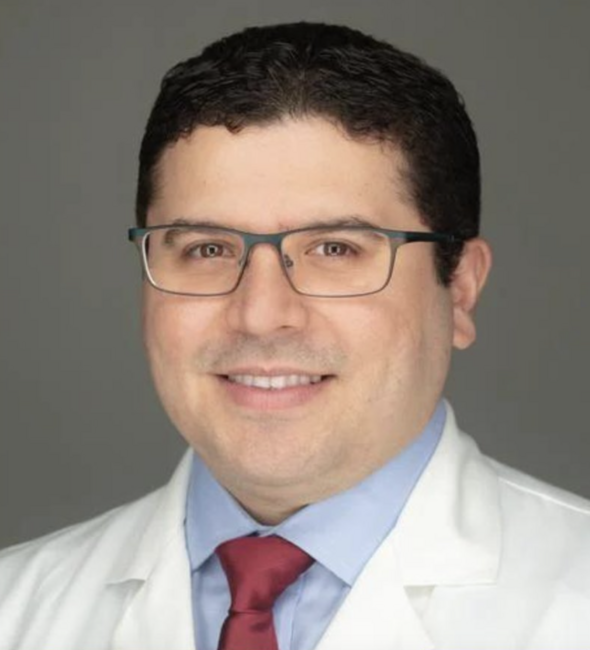
Sameh Gaballa, MD: My name is Sameh Gaballa. I'm an associate member at Moffitt Cancer Center in Tampa, Florida. I focus mostly on patients with lymphoid malignancies, including different types of lymphomas, chronic lymphocytic leukemia (CLL), as well as CAR T-cell therapy.
Great. So, how has your experience informed your view on the optimal sequencing of therapies in CLL, particularly fixed-duration vs continuous options?
Dr Gaballa: We're getting more and more options. Obviously, we now have continuous BTK inhibitors, which you would do until disease progression or unacceptable toxicity, or you could do fixed-duration therapies.
For the fixed-duration therapies, after the CLL14 study, venetoclax/obinutuzumab was approved. Last December, the data were presented with the AMPLIFY study, which had 3 arms. There was a triplet regimen with acalabrutinib, venetoclax, and obinutuzumab, and then there was a doublet with all-oral, fixed-duration therapy with acalabrutinib and venetoclax. There was also a chemotherapy arm that was not really relevant here.
Now, that's an additional option. You could do an all-oral BTK therapy plus venetoclax, all-oral, fixed-duration therapy, and skip the infusion. Obviously, we don't know how that would compare to venetoclax/obinutuzumab. There are ongoing trials, including the MAJIC study, which will try to answer that specific question.
How do we sequence that? There are situations where I would not do fixed-duration therapy, for example, someone with a TP53 mutation. These patients typically would relapse relatively soon after stopping therapy. For those patients, I prefer just to keep on a BTK inhibitor, and since we're going to do continuous therapy, it doesn't really make sense to add an infusion on the ramp-up with venetoclax and all that stuff. Typically, for those patients, I would prefer a BTK inhibitor.
There’s no fixed-duration therapy that I would specifically favor for someone who is mutated IGVH. Those patients tend to have very long remissions with just fixed-duration therapy. You can consider a fixed-duration therapy in any of those situations.
Sometimes you'll get a patient with atrial fibrillation issues, bleeding problems, and anticoagulation, etc. For those patients, it's not a contraindication to use a BTK inhibitor, but we do have other options. For them, I typically would shy away from a BTK inhibitor unless I have to, unless there are not a lot of options. I have a discussion with the patient. For some patients, I'll strongly go one way or another. There are some other patients where I would have a discussion with them and give them an option.
Some patients will prefer a fixed-duration therapy. Others will prefer the easiness and less complicated nature of continuous BTK inhibitors, where you don't really need to have monitoring, infusions, ramp-ups, and all of that stuff.
Can you comment on how real-world patient populations—such as those with comorbidities, elderly, or rural populations—impact your therapy selection in CLL?
Dr Gaballa: Initially, venetoclax with obinutuzumab was done in patients with comorbid conditions. You can definitely use it in patients with comorbidities. If you have someone in a rural area or somewhere similar, as long as they have access to a place that can do the ramp-up and the monitoring, it should be okay.
When it came out, a lot of the oncology practices and community practices did not really want to get into the ramp-up. They didn't really have all of the resources, but now most of the centers, including rural areas, have established guidelines and practices and are able to do the ramp-ups locally. That's not a barrier. It used to be a barrier, I would say maybe 5, 6, or 7 years ago, but nowadays I'm seeing more and more community oncologists where I would ask them, "Hey, are you able to do the ramp-up with venetoclax and the monitoring and all that?" Most of the time, they do.
If they don't, if it's really rural and they don't have the capacity to do these monitoring visits and the ramp-up, then the BTK inhibitor is the easiest because it's basically a pill that you prescribe. You monitor the patient for toxicity, and that's it.
From your perspective, how does venetoclax-based therapy compare with BTK inhibitors when evaluating both clinical and economic impact, particularly for fixed-duration use?
Dr Gaballa: So, for venetoclax/obinutuzumab, there have been data out there looking at the economics and whatnot. I think, in the long run, it is more cost-effective to use a time-limited therapy with venetoclax/obinutuzumab, even if there's a higher upfront cost. In the long run, because these patients are not going to be on continuous BTK inhibitors, eventually, there's definitely an economic advantage to going on a fixed-duration therapy compared to continuous therapies.
Are there particular CLL patient subgroups—based on age, comorbidities, or molecular markers—for whom you see added value in a fixed-duration approach?
Dr Gaballa: [I see added value for] patients with CLL with atrial fibrillation, bleeding issues, or anticoagulation issues, or those with mutated immunoglobulins. For those patients I would prefer fixed-duration therapy. For a TP53 mutation, I would prefer not to do a fixed-duration therapy.
What barriers do you see in implementing fixed-duration therapies more broadly?
Dr Gaballa: It's making sure that there is a center that's able to administer the therapies and do the monitoring visits and the infusions. [It's also important that] the patient has a caregiver that will be able to bring them back and forth to the infusion center, they're able to do the ramp-up with venetoclax, and do the lab checks. That's really the main barrier.
Obviously, a BTK inhibitor-continuous is very easy. You don't have to do any of this. There's no infusion center. There is monitoring, but not as frequent. There's no ramp-up, there are no tumor lysis syndrome (TLS) issues, so it's much easier to do a BTK inhibitor.
Have you observed payer hesitation around fixed-duration therapy adoption? If so, what clinical or economic evidence would help address those concerns?
Dr Gaballa: I have not any had any issues with it. It's in the National Comprehensive Cancer Network (NCCN) guidelines, and it's US Food and Drug Administration (FDA)-approved, so I have not had any payer issues. If anything, the fixed-duration therapy is probably less expensive in the long run, so I've definitely not had any payer issues.
What differentiating value does a time-limited treatment strategy offer to patients, providers, and the health care system as a whole?
Dr Gaballa: If it's a long run, it's more economical, it is effective, and it does not have any added toxicity; I don't think that would be a bad option. Sometimes patients prefer fixed-duration therapy. I had a patient tell me, "I feel like I want to have my life back, whatever that means, by being off therapy completely."
I've had other patients where they're traveling the world all the time, whether for business or leisure, and are doing the ramp-up. For 2 months, they have to come back and forth for either infusions or monitoring or ramp-up. That's not really applicable to them. So for them, it's easier to do a BTK inhibitor, even if it's continuous. There are some patient preferences there, but I think, in general, most patients prefer the fixed-duration therapy.
Great. Those are all the questions that I have. Is there anything else you'd like our audiences to take away from this conversation?
Dr Gaballa: I think it's great that we have all of these options, and that CLL therapy has really moved into targeted agents and nontoxic treatments. It's come a long way. I think the next question will be, how does fixed-duration oral therapy compare to fixed-duration oral therapy plus obinutuzumab?
This way, we could eliminate the need for coming to infusion centers and getting IVs if the fixed-duration therapy is at least as effective as venetoclax/obinutuzumab. I think that would be a huge advantage there.
Fantastic. Thank you so much.
© 2025 HMP Global. All Rights Reserved.
Any views and opinions expressed are those of the author(s) and/or participants and do not necessarily reflect the views, policy, or position of First Report Managed Care or HMP Global, their employees, and affiliates.