

Insights into the 2024 Payer Landscape: Enhancing Patient Care Opportunities
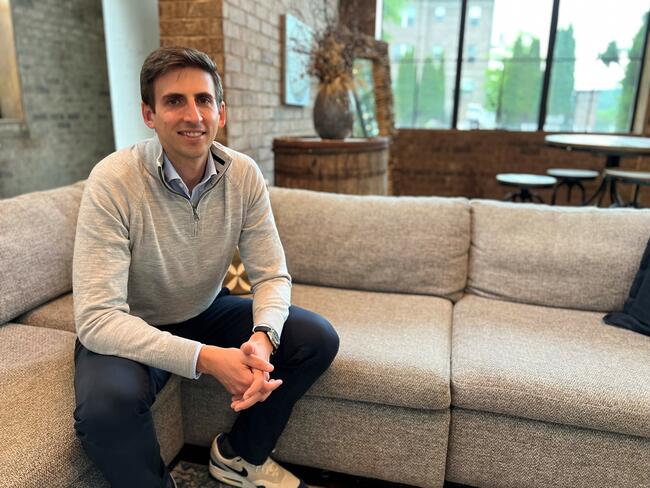
Guest speaker from the Asembia AXS24 summit emphasizes the need for early payer involvement in drug development and highlights the challenges and complexities surrounding drug coverage in an interview with First Report Managed Care. Luke Greenwalt explores the impact of recent macro-economic trends on the health care and life sciences industries, particularly focusing on rising consumerism in metabolic diseases and obesity.

Read the Full Transcript:
Luke Greenwalt: Good morning, my name is Luke Greenwalt. I lead IQVIA Market Access Center of Excellence. I've been in the business for 25 years and I've had many hats on during that time—sales, marketing, market access. Basically, if there's a hat you need to wear when you're commercializing a product, I’ve had it on at one point or another in my career.
How would you describe the current state of collaboration among payers, manufacturers, and the costs associated with patient care? Do you see opportunities for enhancement?
Luke Greenwalt: Yeah, I would describe the space as very complex, right? There are many different challenges that exist, but there's also a lot of opportunity that sits within those challenges.
When we take a step back broadly and look at where the industry is going over the next decade, the amount of focus that is going into rare and orphan disease, specialty products, oncology, let alone obesity and metabolic disease, are pushing the boundaries of what pharmaceutical medicine has traditionally meant in our industry. So, when I look forward, I see both questions and a lot of opportunity with that as well. And that goes well beyond pricing and evidence. It's thinking about how are the relationships in state or industry really changing? Well, just here in 2024, it's the title of the talk.
It's a brave new world as we look to the future.
When should a payer be involved in the drug development process to secure coverage for medications?
Luke Greenwalt: The earlier, the better. And these agreements for value-based care can be very complex.
There's lots of questions regarding what who's doing the measurement, who holds the risk. Neither payer nor the manufacturer want to hold the risk. There are questions regarding structure.
There are also longer-term policy questions that fit into this as well around best price impact, how that gets pulled through to consumer out-of-pocket with some of these medications, and what are the payer controls that are being put in front of them as well. So, there's a lot of dynamics to it and it takes time to work your way through those questions and understand what the implication of those questions actually are.
Are there ways to help payers better understand the data and the information presented when they are brought into the process at any stage? Or are there other factors that play a role in drug coverage?
Luke Greenwalt: Yeah, there's certainly a lot that that's going to happen. We are seeing a pickup in the M&A activity broadly. Coming out of COVID-19 things slowed down a little bit as there.
It's just general concern in the environment. I think from a hospital and from a provider and from a pharmacy perspective, there's a tremendous amount of burnout that happened over the last few years.
So, you have more and more stakeholders and individuals who are exiting the system because they're just fed up. And that puts more compression on those who are remaining. Just over the last few years, we've had 2,500 retail pharmacies close. It's [in] urban America and it's [in] rural America. So, it's in areas where there's already disparities of access to care, [which] is being exaggerated as well.
Other trends that I think that are really critical and we'll be calling out is that we're looking broadly at pricing as [far as] what's happened over the last decade. Where are the price increases actually happening? And it may be a different story than what has traditionally been told. Retail and specialty pricing, the pharma industry takes a knock on these products.
They’ve actually been remarkably flat, let alone the net price to be realized because after all of the discounts that are being provided, where's price increasing happening? It's in the highly innovative areas where they're going to smaller and smaller patient populations that have a higher need.
What do prices accrue? That's a very, very difficult question for our system. And from a payer's perspective, it's not just that there's one or two of these products that are coming. In 2023, there were 29 products that launched with a price threshold greater than $200 ,000 per year per cost of treatment—29.
That's more than launched in all of 2000 to 2014 combined. In one year. And you look at it and project that out—that's where this question is coming and the ability to be able to answer that is important for the industry and policymakers alike.
How have recent macro-economic trends influenced the health care and life sciences industries, particularly in terms of investment, research, and development opportunities?
Luke Greenwalt: On average, it takes 13 years of research and development to bring a chemical entity to the market. That's a tremendous amount of investment that's happening to be able to do that, let alone all of the products that don't make it that far. So, what goes into a price? The question you want to ask is how do we get patients more involved? One of the trends that we call out is rising consumerism in metabolic diseases and obesity, which really represent a change in archetype for products coming into the market. I believe that this is the true first truly consumer-driven class of medications that we're seeing [an] impact [from] social media. [When] you think about the impact of celebrity influence—they’re on the front of People magazine. What other drugs and classes [can do that]? There are none. Maybe [there’s] a rational exuberance of regards to what these products are doing in the market, [and] or complex economics and payer coverage.
As we look to the future, you think about the number of comorbidities that an obese patient has. The average patient over the age of 65 has about 5 comorbidities: heart disease, cardiovascular disease, renal disease, osteoarthritis, sleep apnea. There are many different ones that you can get. So, you think about the complexity of metabolic disease and what are the concentric circles that sit on that as we think about how patients are going to be treated for this.
As a wonderfully complex question that's going to impact every stakeholder, patient, payers, and pharma—as [we] worth through that question.
Do you feel that bringing patients into the development process can provide additional opportunities for coverage? Can you identify ways patients can get involved?
Luke Greenwalt: Let's look at launch drugs for this segment. And in the talk, we have a segment called Modern Launch. And my teams are fortunate to be able to sit on the data that we do. I have analyzed 1,500 launches going back 15 years. Basically, if it's come into the US market, we've watched it. I personally have worked on dozens of launch products.
My teams have worked on hundreds. For products that launched in 2023, we have never seen greater levels of payer control than what we're seeing for launch products today. 75% of patients in their first year of launch are unable to overcome a payer control to get onto a product that was prescribed to them—75%. That means only 1 out of 4 patients for launch products broadly across to all therapeutic classes are able to get onto those products.
When we think about payer control, it's understandable why it's there, right? Trying to control the growth of spend and access to new medications because they may not be proven in the market yet. [There’s] real-world evidence not established yet for some of these new products. There's demand, right? There's physician demand that is trying to get patients onto these products that is not being met. So, there's a gap that exists. For the commercial space, at least, the industry, the life sciences industry, can use copay cards, right, or patient service programs to help a patient navigate that.
So, we see the manufacturers increasingly stepping in to offer transitional assistance, meaning that you're not covered, but we're going to help you get onto the product either through a full cost buy-down or a voucher or a bridge program that's enabling the patient to gain access to that product that was prescribed to them by their health care provider. So, taking the payer out of the loop because the payers are not paying for it. Over the last 5 years, across all of these launches—and there's [about] 300 launches included in this analysis—50% of all first-year demand is fully offset by the manufacturer. That is the gap that's being created.
There's lots that we can say about [how] that’s changing how products are coming to the market. So, when we talk about this brave new world of this next decade, this is one of the trends influencing that.
But how do we, as an industry, approach that? There are patients that need to get onto these medications that are unable to do so. So, are there new evidence standards that can be created? Is there more evidence that can be generated earlier in the lifecycle? Are there, other alternative mechanisms by which to get these patients onto treatment. We’re starting to see all of these pieces come together because of that question that you just asked. How do we navigate this? The complexity of the system, the economics of this, the demand, the new innovation that's coming in—there's a lot of forces at play.
How do you feel about patients across the United States facing challenges with medication coverage, leading them to choose between paying out of pocket for essential medication to enhance their quality of life or forgoing prescriptions due to affordability issues?
Luke Greenwalt: You know, if you've been through multiple agents and you've had a couple of treatments along the way, and they kind of work, or maybe they didn't work. [Then,] disease progresses, and becomes more challenging as we age. The new medications coming through are often designed to help with those situations. But how do you balance the cost of introducing new costs into the system? And what does that look like? Those are really hard questions. And then you get back to this question of understanding the economics that are happening. It's often not about getting the right medication to the right patient at the right time. It should be, but it's not.
Enter into this question of value, affordability, rebates, channel, control—all of those are real influences into that decision.
What are the emerging trends you’re aware of in the life sciences sector? What are the most crucial areas for innovation and adaption?
Luke Greenwalt: So, going back to these questions of launch—there are exceptions to some of these launch trends that are doing exceptionally well. The RSV vaccines were able to get early coverage, but they also prevent much more costly pieces into the system that if someone gets sick and they go into the system, that's a high-cost burden. So, treating one patient with that versus the hundreds of patients that you can treat to prevent them to move into that, it's a value proposition that's really easy to understand. Obesity. Obesity, it is controversial, right, whether or not the coverage is going to be there.
You mentioned a few minutes ago that, consumers are using this for cosmetics. Both Eli Lily and Novo Nordisk have come out very firmly and said these should not be used for cosmetic weight loss. They should be used for serious cases of obesity.
But how as a payer, do you determine whether or not it's a serious case of obesity or a BMI index? How do you contract based off of the weight of the patient versus their height and to calculate that BMI index? That information is not broadly available, so it's difficult to pull some of these pieces together.
For something that would make sense, I can understand why to do that, but the system to actually be able to pull those pieces together doesn't exist.
Do you believe involving patients and payers more in these conversations could lead to potential improvements?
Luke Greenwalt: Not in the short-term. Translating real-world evidence and clinical trial information into patient-understandable information is really important. That happened with obesity, and you activated many, many, many consumers on this. The same can happen with obesity in other clinical areas. The patients who suffer from diseases, know firsthand the experience that that has on their lives.
So, how do you translate information from a clinical perspective or a real-world evidence perspective into patient-reported outcomes that's meaningful for the patient? Well, it can really make a difference regarding the level of advocacy that patients have for themselves.
What do you hope the Asembia audience gains from attending your session?
Luke Greenwalt: There's so many dynamics that are at play in the market today. We're going to talk about modern launch, we'll talk about policy, we'll talk about margin pressures, we'll talk about drug pricing, and talk a little bit about Gen AI and the impact that technology is having on the industry. All of those, however, add up into a compression of the economic life cycle that's happening.
Launch is taking longer. You've got margin pressures that exist for products when they're into the market. And at the end of a product's lifespan, you now have the Inflation and Reduction Act that is essentially truncating the economic life of a product.
So, if that window is getting smaller, and is decidedly not good for the industry. However, it does allow you to have clarity regarding what your strategies should be moving forward. It's how do you think about life cycle pricing, not launch pricing. How do you think about the contracting of access and getting that and the value of that over the lifetime of the product, not what it is and necessarily any given particular point of time. How do you build your clinical trials and clinical study in real-world evidence so that all of that's happening sooner in a product? That means a lot more investment coming in by the industry in order to accelerate that value to happen earlier. So, those are all pieces just from the Inflation and Reduction Act, let alone as we start thinking about the rise of consumerism, the impact that technology in Gen AI has on our ability to generate value faster, and maybe cut years off of the clinical development of a product. So, it's not 13 years, like I mentioned a few minutes ago, maybe it's 10? That change in investment all matters as we think about where we're going over the next decade.
© 2024 HMP Global. All Rights Reserved.
Any views and opinions expressed are those of the author(s) and/or participants and do not necessarily reflect the views, policy, or position of First Report Managed Care or HMP Global, their employees, and affiliates.