After EMS: Midnight Special
This article is part of an ongoing series from Mike Rubin. In this series, he’ll reflect on his career and share practical retirement advice for emergency medical personnel. Catch up on articles you missed.
My son the medic took an ASLS class last month. Rob has always been good at alphabet courses. I should know; I was his instructor. Now he’s mine. I meant to ask him what the heck ASLS is, but we both got busy. Actually, Rob got busy and I took a nap.
I’d never heard of ASLS. I assumed it was another advanced life support course, but advanced what? Sepsis? Seizures? Salmonella?
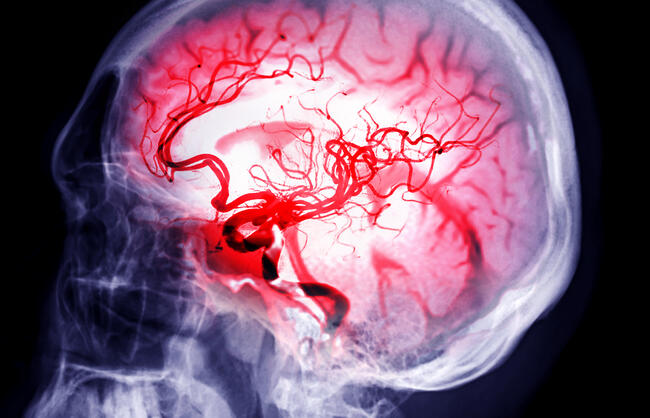
Stroke. That’s what the first S is for. So what happened to the stroke part of Advanced Cardiac Life Support (ACLS)?
It’s still there, but the AHA added the Advanced Stroke Life Support course because you can’t have too much stroke training. Or toaster-repair training. They save lives, which is rare and special. So is being the only paramedic for two days of ACLS with nurses. I might have griped about using the same book for consecutive refreshers, but the clinical side of me enjoyed another chance to explore differences between hospital and prehospital mindsets.
During the usual, utterly unrealistic practice scenarios, when students ask teachers for initial impressions of imaginary patients before reciting contrived application of meds and machinery, the only lab work I verbalized was blood glucose. That’s all we could do in the field. My nurse friends had many more options, including something called a D-Dimer. Sounds like a dealer from Breaking Bad. I don’t remember what the D stands for, but I think we should add A, B, and C Dimers just in case.
It’s hard feeling unambiguously special in EMS. You meet so many people having horrible days, it’s easier just to be grateful for good health. Then there’s the struggle to preserve civility as society warps around us. If I were still a working medic, I’d be concerned about patients and partners provoking each other over nonmedical nonsense. We sure could use a vital sign that warns of aggravation.
I know what didn’t feel special about EMS: rain, snow, 100-year floods, other kinds of floods, days and nights that stayed cold ... are you seeing a pattern? I’m okay with dry weather that comes with a heat index; otherwise, I’ll wear too many layers and sweat a lot going up and down stairs.
I sweated much less when I was in the corporate world, because elevators worked and didn’t lack space for the tragically supine. That was one good thing about my first career, but it wasn’t as special as EMS. I’ve had plenty of idle time to consider such things.
What made me feel special about EMS, and what I miss most, is the challenge of doing a job normal people don’t want. By normal, I mean those who wouldn’t get up in the middle of the night for a sick stranger who’s somewhere on the sanity spectrum from benignly disorganized to sociopathic. An ex-partner of mine was stabbed to death by the latter three years ago. We sometimes forget what dangerous forms sickness can take.
To those still answering calls, especially after midnight, I salute you. I also envy you, but the public and I are better off if I pursue retirement and leave caregiving to you, the abnormally special. Come join me—in spirit, at least—when you just can’t do it anymore.
Mike’s Exit Poll #11: What work schedule is best for you?
I preferred old-fashioned eight-hour shifts with or without rotation. Overnights were best because there were fewer bosses, better calls, and plenty of wacko partners to help test boundaries. The only part I disliked was one agency’s rule against napping, even when nothing occupational was happening. That’s like a rule against snacking. I can’t imagine not snacking while not napping.
I enjoyed being part of the secret society that worked after dark, except during one New Year’s Eve commute when a driver on the wrong side of the road took aim at my engine block. We both veered right with a sense of urgency and avoided colliding by the length of a longboard. Sometimes being special is just being lucky.
Mike Rubin is a retired paramedic and the author of Life Support, a collection of EMS stories. Contact Mike at mgr22@prodigy.net.