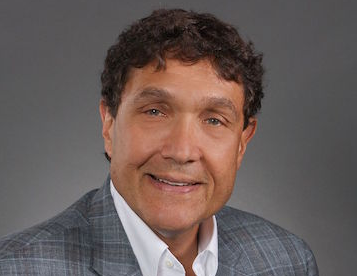
Jonathan Bernstein, MD, on Chronic Spontaneous Urticaria
Dr. Jonathan Bernstein is a professor at the University of Cincinnati in the Department of Internal Medicine and the Division of Rheumatology, Allergy and Immunology, as well as partner of Advanced Allergy Services and of Bernstein Clinical Research Center. He took the time to speak with the Allergy & Immunology Learning Network about the complexities of diagnosing and treating chronic spontaneous urticaria (CSU).
Q: Would you begin by explaining the current understanding of immunologic and nonimmunologic mechanisms that underlie chronic spontaneous urticaria and how this informs your differential diagnosis of patients?
A: The pathogenesis of urticaria is quite complex and it's based on the mast cell itself, which has hundreds of thousands of receptors on its surface, and many of these receptors are activated through different pathways, both IgE-mediated pathways and non-IgE-mediated pathways. Many of the therapies that we have developed today target IgE receptors on the surface of mast cells. And we know that if you block IgE in the peripheral blood, that you will remove IgE, but also downregulate high affinity IgE receptors on mast cells and cause mast cell stabilization. And that reduces the release of bioactive mediators like histamine and other mediators that cause the symptoms that we see with hives, which are wheals and flares.
Now, the skin is an important organ. It's the largest organ in our body, and the epithelium is extremely important. When epithelial cells are disrupted they release alarmins, some of which are responsible for itch, like IL-31, IL-25, and TSLP. But there's also non-IgE-mediated pathways, and there are receptors that can be activated on mast cells like transient response potential receptors or MERG PRX2 receptors. These can be activated by different physical stimuli, chemical stimuli, medications, or it can have a direct activation of mast cells.
Several things that can activate mast cells directly, like these physical stimuli or even drugs like opiates. Understanding that process is what we try to do clinically, mostly centered around how people respond to medications like H1 antihistamines and how they respond to biologics.
Q: Can you explain the difference between urticaria and chronic spontaneous urticaria?
A: The definition is that of evanescent wheals, wheals that come and go on different parts of the body, with or without angioedema, soft tissue swelling, present longer than 6 weeks. That's chronic urticaria. It's debilitating. The chances of finding a specific underlying cause when it's been going on that long is extremely low. Patients may have already tried elimination diets and eliminating things from their environment, and it doesn't work. That's why they end up in your office. They may even top medications, associating them with the urticaria. Our job is to dispel those dissociations because they can be harmful in the management of other comorbid conditions.
This is all discussed in our guidelines from 2014, the Joint Task Force Guidelines of the American Academy of Allergy, Asthma, Immunology, and American College of Allergy, Asthma, and Immunology. It's also being updated in the current guideline, which should be released at the first quarter of 2026. Experts in urticaria that are helping to develop these guidelines. These are evidence-based guidelines using GRADE methodology. And the recommendations are really best evidence for the evaluation and management of patients with chronic spontaneous urticaria.
Typically, CSU does not result in systemic anaphylaxis, where people have throat swelling or respiratory issues, although some of these patients might have some muscle and joint pain. We know that this is not an atopic disease. These are spontaneous welts that disappear out of the blue, come and go—they are very annoying, very uncomfortable, keep you up at night, prevent you from sleeping well, prevent you from working efficiently in the workplace.
Q: Which diagnostic evaluations are truly necessary, and how do you avoid overtesting?
A: Well, you avoid overtesting by understanding the natural progression of urticaria and what it is. Sometimes people do unnecessary testing because they make money on it, I'm sorry to say, but that's not the right approach. We have clear recommendations on how to approach these patients and how they should be evaluated and managed. We do skin testing to air allergens but skin testing to foods is futile and not productive.
If there's something in a history or in characteristics of the lesions—if they're not completely evanescent, have some discoloration after they disappear, there's other systemic symptoms and they're not responsive to antihistamines—sometimes a biopsy is worthwhile just to see if they have evidence of an urticarial vasculitis, but there's a wide differential diagnosis for these types of conditions.
Q: How do you use biomarkers to help guide treatment decisions?
A: Well, in just the initial assessment of patients with urticaria has been recommended always to get a complete blood count with differential and maybe a C-reactive protein and TSH, and that's just to rule out some more commonly associated diseases.
The CRP has also been shown to be useful if it's high, because we know that these patients might be less responsive to H1 antihistamines. Looking at the CBC, looking at low IgE, looking at low basophils, these patients tend not to respond as well to medications like omalizumab. If we are seeing patients and it looks like they have chronic spontaneous urticaria, we start them on step 1 therapy, which is optimizing H1 antihistamines up to 4 times the recommended dose. And some clinicians use leukotriene modifying agents.
Suffice it to say that if after maximizing treatment, they still have persistent hives, then it might be worthwhile at that time to get some additional tests before you start advancing them to biologics or small molecules. So normally what I do is get a total IgE. I get a thyroid peroxidase level, and I'll get something called a CU index, an assay that measures autoantibodies against FC epsilon receptor 1 alpha subunit. Those would help me understand more about what I can expect. It might even change my mind about how I prescribe medicines, because if they have positive biomarkers.
The biomarkers that we initially order can help determine what type of urticaria the patient has. Do they have uncomplicated hives that will more likely than not respond to either H1 antihistamines or advanced therapeutics, or do they have this more a complicated, difficult to treat form of hives that is more of an autoimmune urticaria? And that's where we are.
There's still a lot of controversy about whether these biomarkers should be incorporated into daily practice and whether they predict outcomes. Is it something we should use for decision-making analysis? I feel we should, but we need obviously more real-world data to support that, and I think that's forthcoming.
Q: You mentioned some biologics are now available to treat CSU. Tell us more about these therapies.
A: The biologic that we've had since 2014 is omalizumab. We have different endotypes, type 1 and type 2B. Type 1 is more of an autoallergy, where people make allergic antibodies to cells. And those patients actually have good response to omalizumab. But we also have type 2B, which is more of an IgG autoimmune response. These patients have low eosinophils and basophils, they have high autoantibodies, specifically against thyroid, and they have autoantibodies targeting Ig receptors. Those patients tend to have a poorer response to omalizumab. So the idea is that there's something interfering with that mechanism, and it's a different mechanism of action. We're learning about these different subtypes, what we call phenotypes of urticaria, and how they correlate with endotypes or the mechanisms and how medications respond.
We now have not only omalizumab, but also the biologic dupilumab, and now remibrutinib, which is a Bruton tyrosine kinase (BTK inhibitor.) The early data suggests that the biomarkers that would predict a good or poor response to omalizumab do not directly apply to these agents. We are still learning, now that they're approved based on real-world data, what populations would be optimal for selecting these patients.
Q: You mentioned an autoimmune profile in some patients with CSU, as well as Type 1 and Type 2B. Do the newer therapies offer more options for treating the more challenging phenotypes?
A: Yes. I think that if they don't respond to maximum doses of H1 antihistamines and they have more of this autoimmune profile, then I think it's appropriate to try the biologics or a small molecule. Even if they don't have an autoimmune profile, some of these patients for some reason don't respond to H1 antihistamines. That's type 1 CSU. And those patients might respond to omalizumab. But if they have these other biomarkers, then maybe they won't respond as well to omalizumab and one of the other treatments, like dupilumab or remibrutinib, might be more appropriate. And we shouldn't forget about cyclosporine, because there are still indications when this could be used as well. Some people can't have access to these advanced therapies because their insurance doesn't pay for it, and it's costly and there's a prior authorization process.
Q: How do you incorporate quality of life and patient-reported outcomes into your routine practice? And how do those scores affect your clinical decision-making about therapy?
A: We use scores routinely in clinical trials: UAS, urticaria activity score, and urticaria control tests, angioedema control tests, and also quality of life measurements, DLQI and chronic urticaria quality of life scores. They haven't been as well adapted to clinical practice, but they are very valuable.
There is an app called CRUISE that patients can download on their cell phones and they can actually measure their daily patient-reported outcome measures. That's very useful, not only for them to see if they're improving objectively, but also to share with their physicians to see how they're responding. So we really want to incorporate this more into clinical practice.
We talk about the concept of presenteeism, where people are there, they go to work, but they're just not there for a variety of reasons. Maybe they're distracted or they're cognitively impaired because they're taking high doses of sedating antihistamines. The journey of the patient with chronic spontaneous urticaria is long and torturous unless they encounter somebody who understands the disease and can rapidly expedite their evaluation and management.
Q: What emerging therapies or clinical trial findings do you believe will help to advance the care of these patients, especially those that are really challenging, such as patient with inducible urticarias and angioedema?
A: Our most recent approved therapies, dupilumab and remibrutinib, are exciting options, and we'll learn more about how to select these agents as information is forthcoming.
But that being said, there are probably more than 20 drugs that are being evaluated for chronic spontaneous urticaria. It's a pretty robust area in terms of drug development. One is the CKIT inhibitor; CKIT is a receptor on mast cells activated by stem cell factor. And if you can block the CKIT receptor, you can basically shut down mast cells and actually cause apoptosis. You can monitor that by measuring reductions in mast cell numbers in the skin, but also reduction in tryptase levels, which is an enzymatic biomarker for mast cell activation. And so far, the preliminary results look very encouraging in terms of controlling hives.
There other BTK inhibitors that are being developed similar to remibrutinib and there are the MERG PRX2 receptors; thse are receptors on mast cells that can be activated by neuropeptides, but also by medications and other physical stimuli. When sensory neuronal cells are activated, they release some of these neuropeptides that can activate mast cells. That's another class.
There are other biosimilars to omalizumab. And there are also some bispecific antibodies that target 2 different sites, IgE and the Ig receptor, but there's a number of different iterations of this and they look interesting in early stages of development.
Q: This is a very complex subject and a very complex disease. Is there anything you'd like to say in conclusion to your colleagues in allergy and immunology about how you work with patients who have these conditions?
A: It’s important to understand the pathogenesis of CSU, what type of tests are appropriate and not appropriate, and also to educate patients and reassure them that there's hope. They're going to do fine and that this is not a terminal illness and that it's not going to progress to anaphylaxis or a life-threatening event. Also, make sure patients are part of the process. Often, because of time limitations, doctors talk at patients and not with patients. We need to include patients in the dialogue. We have to understand patient's preferences and values. Patients have different tolerances or different anxieties and different preferences, and we have to understand that when we select therapies. I think patients understand if you can really break it down, and they can be very reassured and confident that you're going to help them with this horrible problem that they've experienced.
I think those are some of the important principles. But the most important thing when we take care of patients is to be their advocate and do things that are best for the patient, not best for our bottom line. And we have to treat patients according to guidelines appropriately. You can actually classify patients based one type of phenotype versus another and that provides a lot of useful information when we do get real-world data out there. So it's important that we do proper phenotyping so that we understand the patients who are going to respond optimally to one treatment versus another.