








Expanding Rural Clinical Research Access Across the VA
Marcus R Johnson, MPH, MBA, MHA, shares how targeted mentorship, leadership support, and policy-driven inclusion are transforming smaller and rural VA medical centers into thriving hubs for clinical research—enhancing diversity, access, and the real-world relevance of findings for veterans nationwide.
Please share your name, title, and a brief overview of your professional history.
Marcus R Johnson, MPH, MBA, MHA: My name is Marcus R Johnson, and I am the associate director for the Veterans Affairs (VA) Cooperative Studies Program (CSP) Network of Dedicated Enrollment Sites (NODES). In this role, I provide executive leadership and strategic direction for this clinical research network, which spans across 20 VA health care systems and 16 states and is an infrastructure that increases the accessibility of CSP research to veterans across these sites of care. My primary interests are in developing strategies for increasing operational efficiencies in clinical research and health care management and improving access to clinical research.
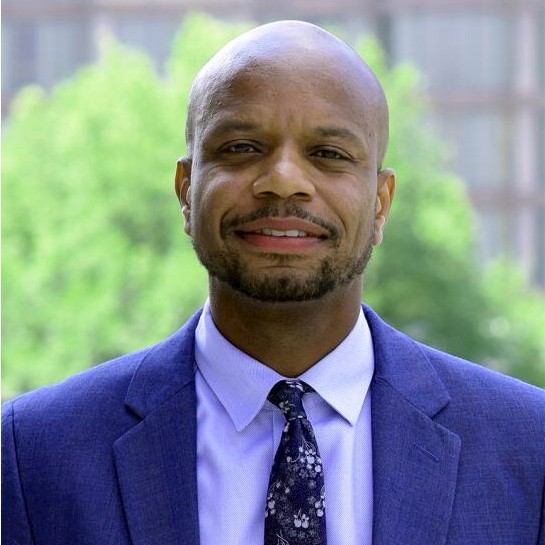 I received my master’s degree in public health (health behavior/health education) from the UNC Gillings School of Global Public Health and hold master’s degrees in business administration and health administration from Pfeiffer University. I have also served as adjunct faculty with the Department of Public Health, Brody School of Medicine, East Carolina University, and the UNC Gillings School of Global Public Health.
Please share a brief overview of the key findings from your research about addressing the challenges and barriers to rural veteran participation in clinical research within the VA health care system.
Johnson: Our key findings from the CSP “Advancing Capacity for Clinical Research through Engagement with Strategic Sites (ACCESS)” initiative demonstrate that the development and implementation of a comprehensive pilot initiative for engaging rural or lower complexity VA medical center (VAMC) sites to participate in CSP clinical research was both feasible and effective within the VA health care system.
This work provides a framework that other organizations can use to increase engagement with smaller and rural medical facilities, improving research access for rural community members. Additional research is needed to determine whether this approach is effective and applicable in other settings, such as military and other government health care systems, public and private health care systems, and clinical trial networks.
What were the most critical success factors in helping lower-complexity and rural VAMCs become viable clinical trial sites, and how can those lessons inform broader clinical research infrastructure development?
Johnson: The most critical success factors were mentorship from research administrators and study teams, support from facility research and Executive Leadership Teams (ELTs) to develop the required infrastructure for conducting high-quality clinical research, and the implementation of a program operational memo that required the consideration of smaller/rural sites for participation in CSP clinical research. Each of our strategic sites (lower complexity/rural sites) received one-on-one mentorship from an assigned CSP NODES mentor site. NODES staff and Research and Development leadership teams provided guidance on how to develop business and strategic plans to support the growth and development of clinical research infrastructure at these strategic sites.
These activities facilitated our strategic sites in determining critical success factors for their proposed clinical research programs. They identified key priority areas, prevalent diseases and conditions in their specific patient populations that would inform the types of clinical trials to pursue, and the necessary actions and steps needed to develop a financially sustainable clinical research program. Additionally, CSP staff conducted scheduled webinars over 12 months for attendees from our strategic sites (potential investigators and research leadership teams) to increase their knowledge and understanding of the CSP study lifecycle and the critical elements within each of its study phases.
Without the support demonstrated by the facility ELTs for the required resources to facilitate the success of our strategic sites (eg, protected time for clinician investigators to participate in research activities, clinical research exam room space, start-up funding for research staff), the success of this pilot program would not have been possible. Lastly, our use of an operational policy to require the consideration of smaller/rural sites for participation in CSP clinical research was paramount to the success of this program.
Oftentimes, our smaller VAMCs are not considered for opportunities to participate in clinical research as study sites because they have smaller numbers of potentially eligible patients than larger, higher complexity facilities. This situation puts them at a disadvantage during site selection activities for our studies as compared to larger sites, and more effort needs to go into ensuring that a variety of facility types (large, small, rural, and urban) are included in our studies to further improve the generalizability of our findings to broader populations.
Ultimately, the combination of these approaches was associated with 2/3 of our strategic sites being selected to participate in their first CSP studies, with our 1/3 site seeing a significant increase in the number of CSP clinical trials that they had been selected for before CSP ACCESS. Our use of a “practice + policy” driven approach to increase veteran access to CSP research was successful and has the potential to inform broader clinical research infrastructure development both within and external to VA.
With strategic sites now participating in more CSP studies, how do you anticipate this will improve the inclusivity and generalizability of research findings for rural veteran populations?
Johnson: The sole purpose of clinical research is to inform medical practice and health care delivery so that the health and well-being of our society are ultimately improved. The generalizability of clinical research findings is directly impacted by the diversity of participants in those studies, with enrolled participants needing to be representative of the study’s overall target population to optimize the translation of research findings into clinical care. Given that almost one-fourth of the US veteran population (24.1%) lives in areas designated as rural, their participation in clinical research is paramount to improving the generalizability of research findings to veterans in those communities. As our strategic sites participate in additional CSP studies and other types of VA research, our research findings will have greater generalizability for rural veteran populations and will increase the likelihood of improved health outcomes for those groups.
© 2025 HMP Global. All Rights Reserved.
Any views and opinions expressed are those of the author(s) and/or participants and do not necessarily reflect the views, policy, or position of Veterans Health Today or HMP Global, their employees, and affiliates.






