A Conversation With Avrom S. Caplan, MD
© 2025 HMP Global. All Rights Reserved.
Any views and opinions expressed are those of the author(s) and/or participants and do not necessarily reflect the views, policy, or position of The Dermatologist or HMP Global, their employees, and affiliates.
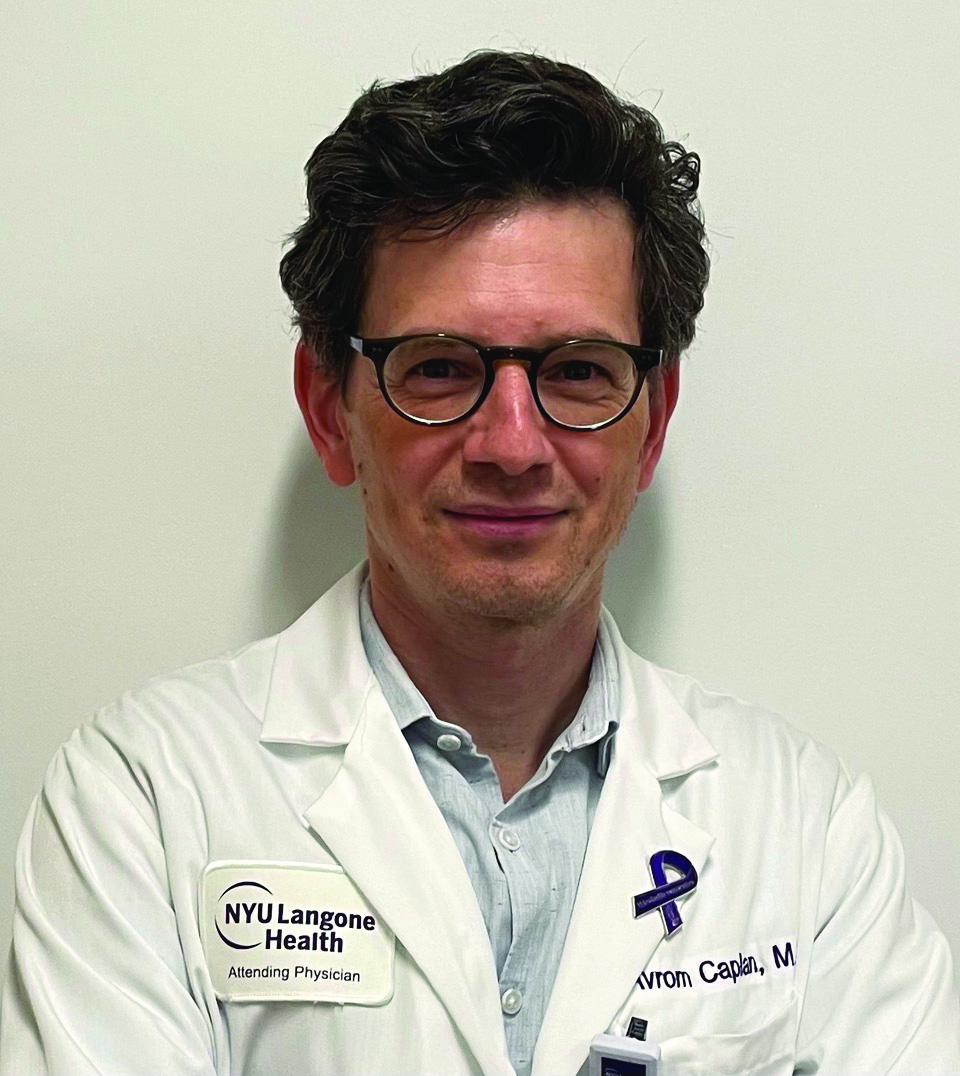
Q. What part of your work gives you the most pleasure?
A. It is the impact we as doctors can have on someone’s life, whether that be a patient who struggles with complex dermatologic conditions or by contributing to common knowledge through research efforts. It is also the impact we have on trainees as we teach them medicine and support their career goals. It is a real privilege to be a doctor and work in academics.
Q. Are an understanding and appreciation of the humanities important in dermatology and why?
A. Yes, I think this is very important to dermatology. The humanities offer insights into the human condition, teaching empathy, ethics, cultural competence, and critical thinking. Medicine cannot be boiled down to science alone. We need to incorporate lessons from the humanities and embed these lessons into our daily practice. The humanities remind us why we are doing what we do and provide us with resilience whether that be in times of unexpected complications of therapy, challenging to treat diseases, difficult patient encounters, or when we are working to meet expanded charting requirements. Additionally, as artificial intelligence (AI) is incorporated into medicine, the humanities become even more important for us to understand and appreciate. AI may be able to repeat lessons from the humanities, but the human connection is inherent in the doctor-patient relationship and is critical to medicine. From a personal perspective, I have a deep appreciation for the arts and humanities. Prior to medicine, I worked for a couple of years in one of the leading modern dance publicity firms in New York City, and then I worked in general management for a large theater in Brooklyn.
Q. Who was your hero/mentor and why?
A. I have been fortunate in my life and career to have multiple heroes and mentors. For my heroes, I will highlight my grandfathers. One of my grandfathers practiced primary care in Philadelphia, PA. He was a family man, yet he kept night and weekend hours for his patients who worked during the day, and from all accounts his patients highly valued his care. He also lived through a time that some schools kept quotas on the numbers of Jews who could be enrolled, but that discrimination did not stop him. My other grandfather was a chemist, a rock collector, a reader, and an artist. He loved bench work and chemistry. He too experienced discrimination, at one point being advised to change his last name to a less Jewish sounding last name to achieve more career success. He kept his bench job and his last name.
I have also been fortunate to have wonderful mentors. In the arts before I started my medical career, I had bosses who were outstanding mentors. Alice, Ellen, Mario, and Pat guided my early career development; taught me a lot about business; and displayed strong, thoughtful leadership. During my residency, I had many wonderful attendings and mentors both in medicine and dermatology. When I think of my mentors at various stages of my dermatology career, I think about Bill James, Misha Rosenbach, Rob Micheletti, and Victoria Werth. I still count them among my mentors as I continue to develop and build my career.
Q. What is the best piece of advice you have received and from whom?
A. During my residency, I was speaking with Bill James about a patient encounter, and without specifying the details of why this came up, Dr James said to me, “Avrom, as long as what you are doing is right for the patient, you will not be wrong.” That made a long-standing impression on me. Putting the patient first and always doing right by the patient is at the core of how I practice medicine, and sticking to this mantra helps keep me focused.
Q. Which medical figure in history would you want to have a drink with and why?
A. Jonas Salk. We know him as a polio vaccine pioneer. He did not patent his vaccine to ensure its worldwide distribution. I would be interested in hearing from him about his work, his career development, and his early life. I would also be interested in talking to him about current debates surrounding vaccines and scientific progress.