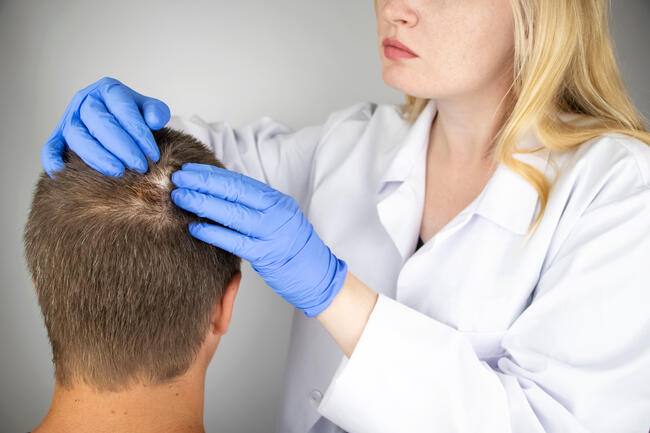
Managing Alopecia Areata With JAK Inhibitors: Timing, Response, and Long-Term Strategy
In this interview, Dr Brett King provides practical guidance on treatment initiation; response assessment; and strategies for dose adjustment, discontinuation, and switching of Janus kinase (JAK) inhibitors for alopecia areata (AA).
The Dermatologist: How do you determine when to initiate JAK inhibitor therapy in AA, and which clinical or disease features most strongly influence that decision?
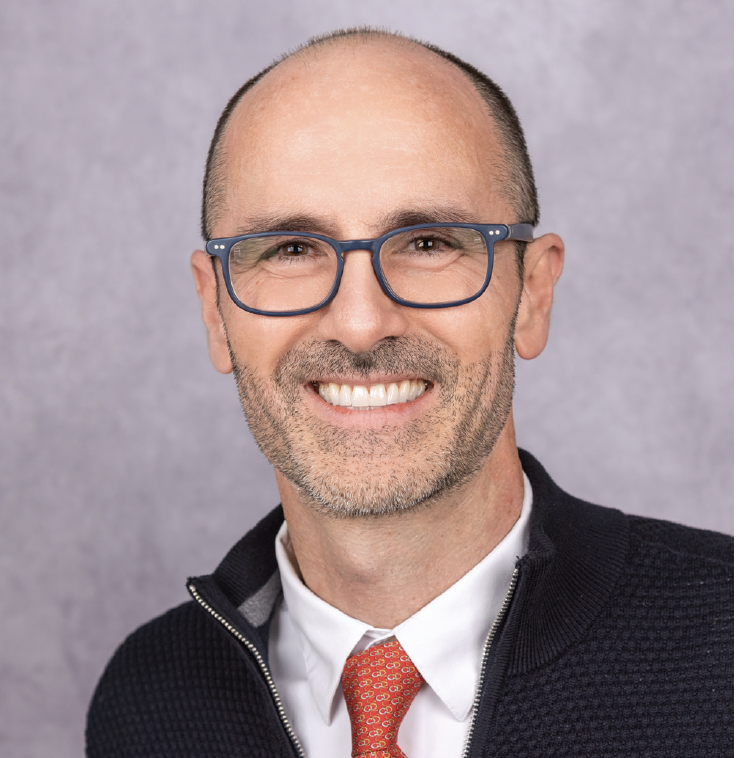
Dr King: There are 2 broad groups of patients who merit treatment with oral JAK inhibitors. The first is the group we most often think about—patients with severe AA. In clinical trials, severe disease is defined as 50% to 100% scalp hair loss. In practice, however, I believe a more holistic approach to defining severity is appropriate.
I use the Alopecia Areata Scale in clinic, which indicates that patients with 21% to 49% scalp hair loss who also have eyebrow or eyelash involvement, or rapidly progressive hair loss, or treatment-refractory disease, or significant psychosocial impact due to AA have severe AA. Using the Alopecia Areata Scale, many people with more than 20% scalp hair loss qualify for oral JAK inhibitor therapy.
The second group of patients who merit treatment with oral JAK inhibitors is those with 20% or less scalp hair loss who have eyebrow or eyelash involvement, or rapidly progressive hair loss, or treatment-refractory disease, or significant psychosocial impact due to AA. The reason is that there is no high-quality evidence showing conventional therapies are particularly effective for these individuals. Indeed, a randomized, double-blind trial of methotrexate 20 mg to 50 mg weekly followed by methotrexate plus prednisone (20 mg daily for 3 months followed by 15 mg daily for 3 months) showed only modest efficacy in patients with alopecia totalis/alopecia universalis after a full year of treatment, with no clear off-ramp from prednisone. That trial underscores an important point: Traditional systemic therapies are largely ineffective for AA, and oral JAK inhibitors represent the present and future of treatment for moderate-to-severe disease.
The Dermatologist: Based on available trial data and real-world experience, how should clinicians counsel patients on the expected timeline for hair regrowth after starting a JAK inhibitor?
Dr King: Setting expectations around time to response is critical. AA behaves very differently from diseases like psoriasis or atopic dermatitis, where improvement is often seen within weeks of effective therapy. With AA, some patients do experience dramatic regrowth by 3 to 4 months, but more commonly, meaningful regrowth happens over 6 to 9 months, and sometimes longer.
Clinical trial data, particularly from baricitinib, have given us useful benchmarks. A key early signal is a 30% improvement from baseline. For example, a patient who begins treatment with 100% scalp hair loss and improves to 70% loss by month 3 to 6 is very likely to achieve near complete or complete scalp hair regrowth by 12 months. Similarly, a patient starting at 50% loss who improves to roughly 35% loss by month 6 is very likely to achieve complete or near complete regrowth by 12 months. Data from the ritlecitinib clinical trial also clearly show that many patients require 6 to 12 months or even longer to achieve significant scalp hair regrowth.
This is why I strongly caution against abandoning or switching therapy before month 6, and ideally not before month 9, unless there is intolerance or an adverse event. Hair regrowth takes time. We must also optimize treatment early. Most of my patients leave the initial visit on both a JAK inhibitor and oral minoxidil. If someone’s practice is not to use oral minoxidil from the time of JAK inhibitor initiation and a patient’s response seems modest at month 3, then that would be a good time to add oral minoxidil (up to 2.5 mg to 5 mg twice a day) and, if possible, optimize JAK inhibitor dosing. Premature changes undermine long-term success. We must set treatment expectations early, and we must be patient.
The Dermatologist: What do we know about the effectiveness of JAK inhibitors for eyebrow and eyelash regrowth, and how should clinicians set
expectations when these areas are a primary concern?
Dr King: Eyebrows and eyelashes are central to appearance and expression, and so understanding response of these hair-bearing sites to JAK inhibitor treatment is paramount. The encouraging news is that regrowth curves for scalp hair, eyebrows, and eyelashes are remarkably similar. When regrowth occurs, it typically does so on the same 6- to 12-month timeline as scalp hair regrowth.
However, not every patient regrows all hair-bearing sites equally or at the same time. Some regain scalp hair but have incomplete eyelash or eyebrow regrowth, or vice versa. Some will regrow eyebrows and/or eyelashes over many months but will not regrow their scalp hair completely until after 1 year of treatment. This variability makes early counseling essential. I tell patients upfront: “I am hopeful we will regrow all of your hair, but we will not know exactly where you will land until 9 to 12 months or longer into treatment.”
Without that conversation, patients may become discouraged early, misinterpreting otherwise promising treatment response as treatment failure. Clear expectations help maintain trust and allow productive follow-up discussions.
The Dermatologist: What happens when JAK inhibitor doses are reduced or treatment is stopped, and how do you approach long-term maintenance?
Dr King: Hair loss carries enormous psychosocial and emotional cost, so dose reduction or discontinuation must be approached cautiously. The baricitinib trials informed us of the outcomes of dose reduction and treatment withdrawal. When patients who achieved near complete regrowth at 1 year reduced from 4 mg to 2 mg, nearly half experienced disease flare 8 to 24 weeks later.
Note the delayed timing after dose reduction. Unlike psoriasis or atopic dermatitis, AA flares may not appear for months after reducing the dose too much. My approach to tapering is not to taper or, if tapering is desired, to make very small changes in dose (15% to 25% dose decrease) and treat for 4 to 6 months before considering tapering further.
With treatment withdrawal in the baricitinib trials, 80% to 90% of patients relapsed within 6 months. That said, remission is maintained by a small subset of patients, typically those with shorter disease episode duration. These data support that early intervention may alter the natural history of AA. Unless pregnancy or intolerance necessitates stopping therapy, I favor gradual tapering (as described above) over 1.5 to 2 years rather than abrupt discontinuation.
The Dermatologist: In patients with partial response or loss of response, is switching between JAK inhibitors appropriate?
Dr King: Yes, and this is an essential point. Failure of one JAK inhibitor to regrow hair does not predict failure with another one. We recently published a series showing that patients who failed one JAK inhibitor responded to a second, third, or even fourth JAK inhibitor. This, of course, requires Zen-like patience because each JAK inhibitor trial takes 6 to 12 months, but ultimate treatment success is well worth the wait.
The message for clinicians is if at first (or second or third) you do not succeed, try, try again. Today, we have multiple options, including baricitinib, ritlecitinib, and deuruxolitinib, and more are coming. The message to patients should be: “This one did not work, but we have others, and we are not out of options.”
Disclosure: Dr King is an investigator and/or is on a data monitoring committee for AbbVie, AltruBio Inc, Almirall, Amgen, AnaptysBio, Apogee Therapeutics, Aquestive, Aslan Pharmaceuticals, Bristol Myers Squibb, CAGE Bio Inc, Concert Pharmaceuticals Inc, Eli Lilly and Company, Equillium, Galderma, GSK, Horizon Therapeutics, Incyte Corporation, InmageneBio, Janssen Pharmaceuticals, LEO Pharma, Merck, Nektar, Novartis, Otsuka/Visterra Inc, Pfizer, Q32 Bio Inc, Regeneron, Sanofi Genzyme, Soterios, Sun Pharma, Takeda, TWi Biotechnology Inc, and Ventyx Biosciences Inc. He is on speaker bureaus for AbbVie, Pfizer, Regeneron, and Sanofi Genzyme. He is a scientific advisor for BiologicsMD.
Related Content