Do Not Be Fooled By This Acne Look-Alike
Diagnosing Demodex Follicular Overgrowth
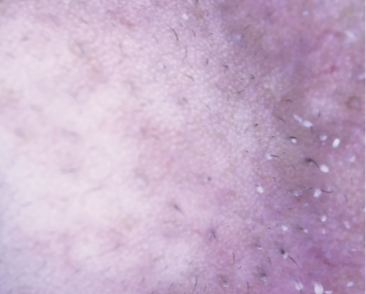 Demodex follicular overgrowth is a mimicker of comedonal acne, appearing clinically non-inflammatory and localized on the chin. It is independent of blepharitis, rosacea, and acne vulgaris. Demodex follicular overgrowth does not respond to topical retinoids. While the Demodex mite is found in the pilosebaceous unit of most people, in this condition, the mites proliferate in excess and cannot fit within the hair follicle. Demodex mites protrude outside of the follicle, resembling closed comedones. Skin examination with a dermatoscope clearly distinguishes demodex overgrowth from comedones. Topical ivermectin cream 1% applied daily for a few days resolves the problem. Alternative treatments include topical sulfur, permethrin 5% cream, oral ivermectin, and oral metronidazole.
Wayne Fujita, MD | Aiea, HI
Flexibility With Your Staff
Be flexible with your staff if you want to keep them. Several members of my staff have young children. Parents occasionally have emergencies, and I have found that being flexible, supportive, and understanding works better than being angry and punishing staff when they have last-minute occurrences. If someone must leave early or come in late, I do not have them use sick time or vacation days. I wish them well and tell them that I hope their day gets better. I also find that welcoming children into my office when emergencies happen, such as school closures or babysitter cancelations, keeps me from losing my employees and keeps them coming to work at times when they might otherwise need to stay home. Of course, we do not expect staff to bring in children with a contagious illness. Patients even seem to appreciate seeing our staff member’s children in the office.
Jo Herzog, MD | Vestavia Hills, AL
Sanitize Your Hands for Trust
 To build trust, I like to make it unforgettable that I used hand sanitizer before examining the patient. As I put the hand sanitizer on, I explain, “This is to protect you from doctor’s office germs like MRSA, flesh-eating bacteria, monkeypox, and whatever the last patient had,” with a grin to reinforce that I am, in fact, joking.
Steven R. Feldman, MD, PhD | Winston-Salem, NC