










Exploring Key Advances and Emerging Therapies in Gynecologic Oncology
Jessica Walchonski PA-C, MMS, UCLA Medical Center, Los Angeles, California, presented a comprehensive update on recent advances in gynecologic oncology, focusing on hard-to-treat populations such as low-grade serous ovarian cancer and recurrent platinum-resistant ovarian cancer, as well as evolving strategies in endometrial cancer, at the 2025 Oncology Learning Network APP Institute.
The session emphasized the importance of staying current with evolving therapies, managing toxicities effectively, and using collaborative learning to improve patient-centered care within gynecologic oncology.
Jessica highlighted trials including RAMP 201, KEYNOTE-B96, and DESTINY-PanTumor02, along with emerging studies that may expand options for ovarian and endometrial cancers.
Transcript:
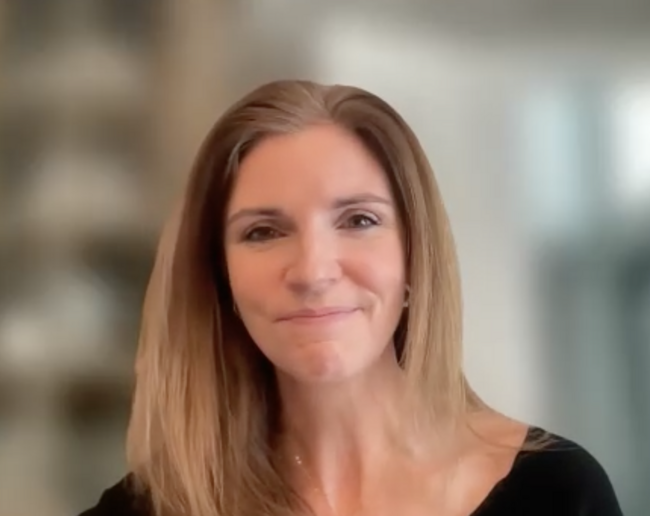
Hi, my name is Jessica Walchansky and I'm a physician assistant at UCLA in gynecologic oncology. I was so excited to present at this conference with the Oncology Learning Network APP Institute talking about all updates in GYN oncology.
This talk was super important because it kind of summarized what we did this last year in the GYN oncology world. A lot of populations that we don't have a lot of great options for, low grade serous cancer patients, ovarian cancer patients who are not normally chemosensitive compared to other ovarian cancers, we focused on that.
We looked at recurrent platinum-resistant ovarian cancer patients, which again, we know a lot of these patients are going to recur and so we want to make sure that we have a lot of options for them, a lot of tools in our toolkit. I was excited to talk about some of these updates in this past year. I also touched on a few things that are kind of on the horizon. Some things that we can look out for in the next few months, in the upcoming year that are also some exciting trials that are being focused on in the gynecologic cancer world.
During this conference, I was able to talk about some big trials that were done this past year, one of them being RAMP 201, which looked at an oral combination treatment for recurrent low-grade serous patients, patients who have already received chemotherapy and unfortunately recurred. We looked at dafatinib and avudometinib and we saw promising results, especially in patients with KRAS-mutated tumors. That was FDA approved for this patient population, which is exciting.
I also was able to briefly touch on KEYNOTE-B96. In KEYNOTE-B96, they looked at recurrent platinum-resistant ovarian cancer, and they looked at using weekly paclitaxel plus pembrolizumab plus or minus bevacizumab. And again, there were clinically significant results. And so this is a combination two that is promising in these patients where again, we don't have necessarily many treatment options after they've already tried multiple different lines.
Next, I did talk about the DESTINY-PanTumor02 trial. That is looking at trastuzumab-deruxtecan in gynecologic cancer world, cervical cancer, endometrial cancer, and ovarian cancer. We're using trastuzumab-deruxtecan in patients who have 3+ positivity of HER2 on IHC testing. The exciting thing about trastuzumab is that the side effect profile is pretty well managed. Patients tend to tolerate it pretty well. There are some more significant complications and possible adverse events that we have to monitor. I talk about that more in my presentation.
The other 2 that I briefly touched on are the ROSELLA trial and XPORT-EC-042. These are, again, trials that are still being run and they're kind of on the horizon. ROSELLA is going to be looking again at platinum-resistant ovarian cancer. The XPORT-EC-042 is actually a very exciting one. It looks at using a maintenance therapy in recurrent or advanced endometrial cancers and we really don't have a maintenance therapy for this patient population yet. Looking forward to seeing what happens with this trial and what comes in the next year out of it.
I think conferences like this are so important. Of course, staying up to date with knowledge and new trials and all of that is so important, but also being able to just collaborate with other colleagues in oncology. I might come to a conference or to a presentation thinking that I know how to manage something very, very well, an adverse event very, very well—but then I listen to other colleagues and hear all of their knowledge and learn. There are so many things that I didn't know about, where there's other ways to treat things and other ways to address patient concerns.
Conferences like this, and this one especially was so great because it helps communicate with patients, manage side effects more, and just making sure that we're treating patients the best that we can and really improving patient care. I was really excited to be a part of this.
Source:
Walchonski J. Evolving Strategies in Gastrointestinal, Genitourinary, and Gynecologic Cancer Care. Presented at Oncology Learning Network APP Institute; December 18-19, 2025. Virtual.
© 2025 HMP Global. All Rights Reserved.
Any views and opinions expressed are those of the author(s) and/or participants and do not necessarily reflect the views, policy, or position of LL&M, Oncology Learning Network or HMP Global, their employees, and affiliates.
Related Content



The APP Institute is a new offering from the Oncology Learning Network that provides microburst education to oncology advanced practitioners. The platform offers year-round digital non-accredited learning modules through animated short videos, multimedia interviews with key opinion leaders, interactive content to test your knowledge, and more!






