Pittsburgh EMS Reduces Sudden Unexplained Infant Deaths by 46.2% in 2025
After seeing a sharp increase in sudden unexplained infant deaths (SUIDs), the Pittsburgh Bureau of EMS stepped up efforts to provide life-saving resources to new parents and caregivers. These efforts resulted in a 46.2% drop in SUIDs in the city in 2025.
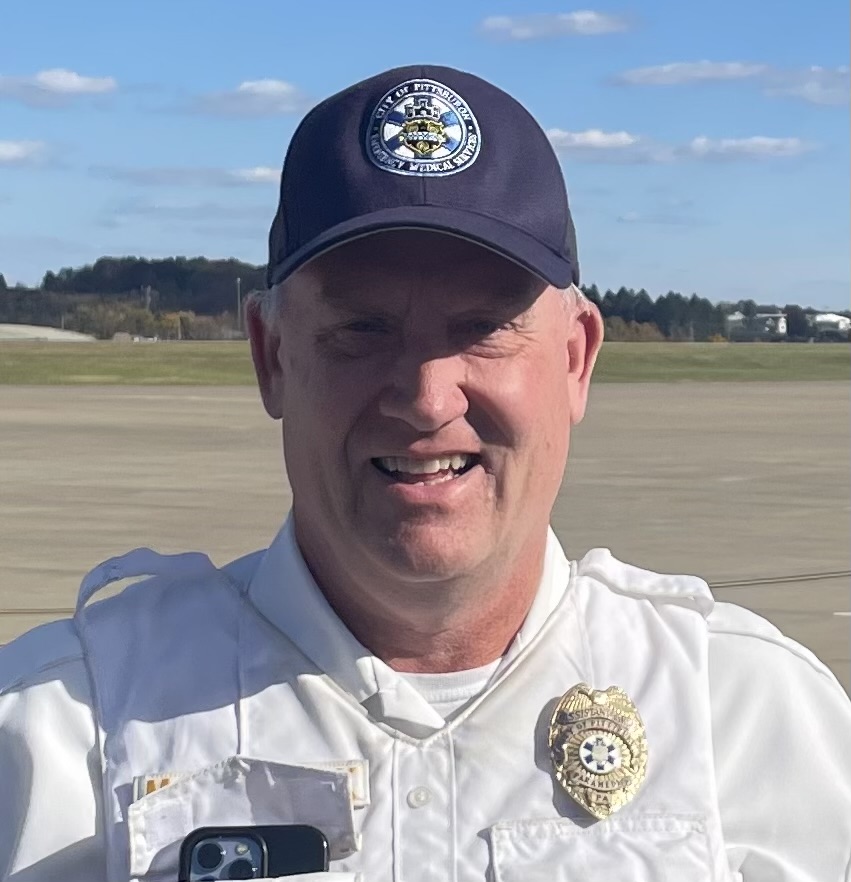
To learn how the Pittsburgh Bureau of EMS achieved these results, EMS World spoke with PBEMS Division Chief Mark Pinchalk in an exclusive interview.
EMS WORLD: You managed to achieve a 46.2% decline in SUIDs in Pittsburgh last year. How did you identify the problem and work to improve the statistic?
PINCHALK: Some SUIDs are just not explainable, but we saw that probably over half of them were related to unsafe sleeping practices—either co-sleeping, babies not sleeping in a crib or sleeping on furniture, and things like that.
 We're lucky that we identified the problem through our partnership with the Allegheny County Health Department and the Department of Human Services. We also have a great public health partner: The national headquarters for Cribs for Kids is in Pittsburgh, which I didn't know about before we started this project. We also worked with Healthy Start, which is a human services agency in Allegheny County.
We identified that unsafe sleeping arrangements were a big problem, and we wanted to interrupt it. This isn't a problem that we can resuscitate our way out of. It's rare that these kids haven't had extended downtime; they're usually unwitnessed asystolic arrests. It’s very rare that you can resuscitate one, and even then, they are usually neurologically devastated. So, the only strategy that made sense was taking a public health approach and trying to prevent the cases from happening.
EMS WORLD: Before you took these actions, what were the total cases you were dealing with, just to set this in context?
PINCHALK: In Pittsburgh, and in the greater Allegheny County area, we've seen a slow but steady increase over the last couple of years post-pandemic. We saw 13 cases in 2024. That doesn't sound like a huge number, but that's 13 preventable infant deaths, and Allegheny County saw a similar number. We wanted to really target and try to eliminate these, so we put together a public health intervention to try to reduce the incidents.
EMS WORLD: What is the background or physiology behind these deaths? Are there common causes?
PINCHALK: With sudden unexplained infant deaths—the more traditional term was "crib death"—some of them just don't have an explanation. But for a lot of them, like with co-sleeping, there is a high potential for the parent to accidentally smother the child during sleep. If they're not in a crib, on their back, by themselves, there's more risk. They can get their face up against a pillow, a blanket, or something else. There's a theory that they'll retain CO2 from doing that, which can cause them to stop breathing during the night and suffer cardiac arrest. We worked with Cribs for Kids on healthy sleep messaging: infants should always be on their back, alone, and in a crib. They call it the ABCs.
EMS WORLD: Did you have an official name for your campaign?
PINCHALK: Yes, we call it the Pittsburgh EMS Infant Safe Sleeping Initiative.
EMS WORLD: When did you start it, and what specific steps did you take?
PINCHALK: It's been around for a couple of years, but during the pandemic, it obviously fell off. We were doing it intermittently in 2022 and 2023. But when we saw this increasing number of cases, it became alarming. So, we made a big push on the project in 2025.
Basically, we ask our crews to do a couple levels of screening when they're on a call with an infant present. The most basic one is simply asking the family, "Hey, do you have a crib? And if not, do you want us to get you one?"
We have another form called an Infant 30-Second Safe Sleep Screening for personnel who are more invested in the program. It screens for unsafe sleep practices beyond just having a crib.
Through our partnership with Cribs for Kids, we qualified for a grant that gives us 12 cribs per quarter to distribute. They're basically Pack 'n Plays—not fancy cribs, but a safe place for the baby to sleep at night. If we identify a family that doesn't have a crib, the crews enter that data into the patient care report and upload the screening form. Within 24 hours, we'll deliver one of those cribs to the residence.
EMS WORLD: Is there much of an education process you go through with people?
PINCHALK: We try to keep it brief. We leave some literature with them and push the basics in the heat of the moment, the ABCs: the kid should be alone, on their back, in the crib, with nothing else in there, and really avoiding co-sleeping.
Our next step this year is to increase proactive community education. We have a new administration in the city that is very focused on public health and community engagement. We're also going to have additional literature available directly on the ambulances to hand out on calls.
EMS WORLD: You mentioned a 46% reduction. What data is this based on?
PINCHALK: It is based on total infant deaths. We exclude homicides or abuse cases, which fortunately we haven't seen over the last couple of years. We had 13 cases in 2024, and we saw a nice drop down to seven in 2025.
EMS WORLD: What have you learned from doing this?
PINCHALK: It's crucial to have good partners. We couldn't have done this on our own. It's important to take that public health approach—that's a part of EMS that we probably aren't involved in as much as we should be. We've always had a good relationship with our health department and human services, and we've done other public health programs like Leave Behind Narcan and a new Hepatitis A vaccine project for high-risk populations.
Take advantage of the other champions in your area and form public health coalitions. When we all work together to leverage and share resources, we can prevent bad things from happening instead of just dealing with the consequences.
EMS WORLD: Is this something you would recommend other departments look at?
PINCHALK: Oh, absolutely. I'm presenting this to the multiple municipal EMS agencies in Allegheny County so we can work with them. We also submitted this to the Pennsylvania Department of Health. They're in the process of updating the statewide protocols, and we submitted this as an optional BLS protocol. To the best of my understanding, the state is going to implement it.
We're working with our local and state partners to expand the program because these are quick and easy things to do. I always feel like if we prevent one kid from dying, that's a huge win.
EMS WORLD: Are there any other points you'd like to make?
PINCHALK: I just want to say I'm thankful to our personnel. I've got a small group of champions on the crew—I call them the "Coalition of Angry Mothers," because a lot of these mothers were working in areas where we were seeing more of these calls. I have a great coalition of champions, and I appreciate everyone doing either that brief screening or the more in-depth one.