Leadership Under Fire: Integrating EMS and Security in High-Threat Environments
Emergency medical services were not built for environments where violence is ongoing, access is contested, and safety is constantly shifting. Yet those conditions increasingly define the reality facing EMS leaders both domestically and internationally. Active shooter incidents, civil unrest, targeted violence, austere environments, and delayed law enforcement response are no longer rare outliers. They are part of the modern operational landscape.
In these settings, leadership is not theoretical. It’s immediate, personal, and unforgiving. Decisions are made with incomplete information, under extreme pressure, and with real consequences. The quality of leadership exercised in these moments determines not only patient outcomes, but whether responders themselves survive.
High-threat EMS is not simply conventional EMS performed with ballistic protection. It’s a fundamentally different operating environment that demands a recalibration of assumptions, priorities, and leadership behaviors.
When Traditional EMS Assumptions No Longer Apply
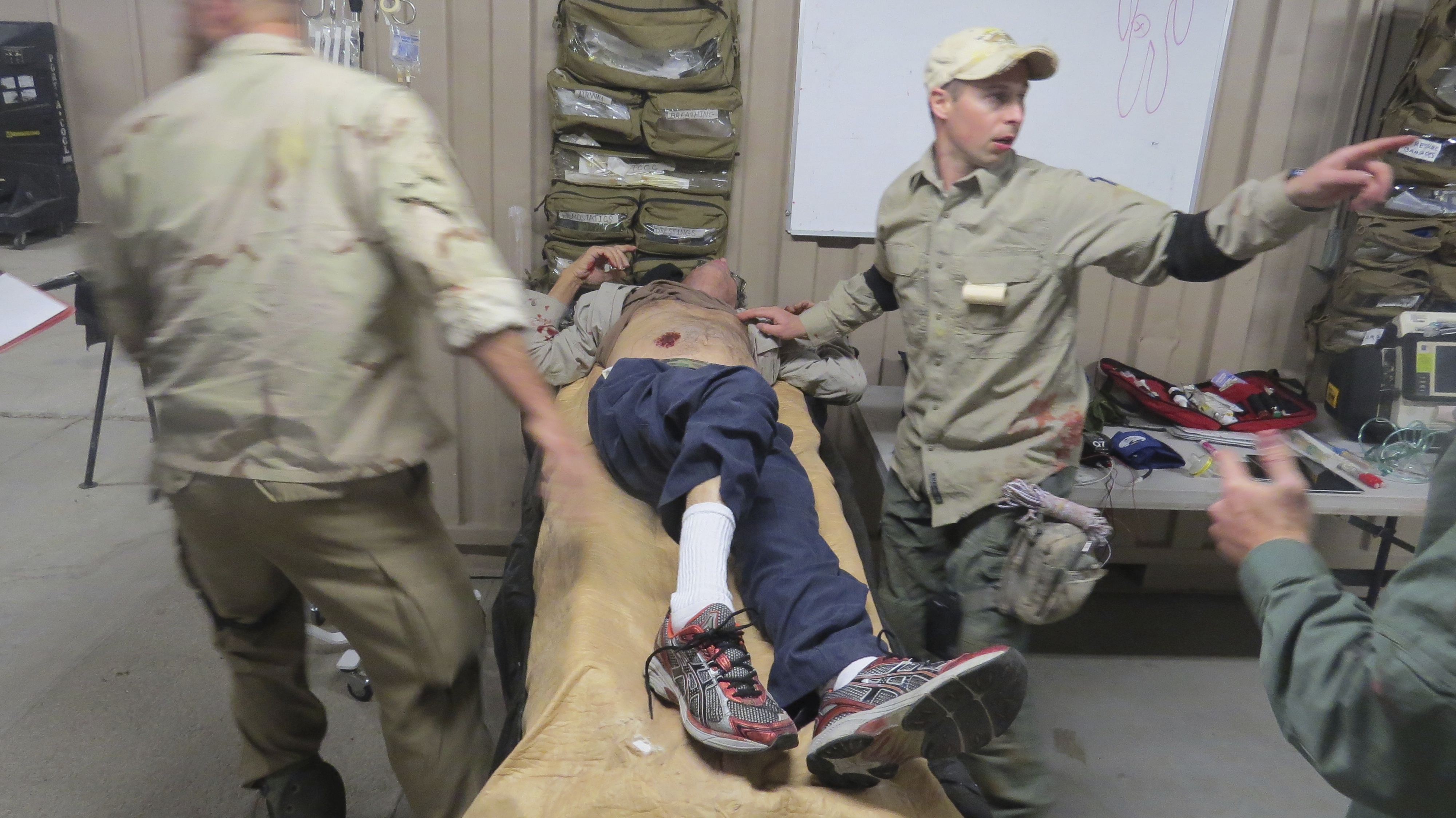
Early in my career, I carried a distinctly American view of EMS. I assumed that ambulances would arrive with standardized equipment, trained personnel, and predictable capabilities. I believed scene safety was something that could be established before meaningful patient care began. That belief was permanently altered in late 1998 on the streets of El Progreso, Honduras, where I had been assisting with humanitarian operations following Hurricane Mitch.
A male pedestrian had been struck by a vehicle and lay unconscious in the roadway. With only basic first aid supplies and a significant language barrier, I began rendering care to a patient who clearly exhibited multisystem trauma and substantial blood loss. As I worked, I remember looking up and thinking that the ambulance should be arriving any moment.
What arrived instead was a Toyota pickup truck bearing a red cross decal. Two individuals in civilian clothing stepped out, briefly assessed the patient, slid him onto a wooden backboard, secured him with two straps, and loaded him into the open bed of the truck. They climbed into the cab and drove away, leaving me standing in the street, stunned.
That moment was a wake-up call. EMS care was not universal. Standards were contextual. Resources varied dramatically depending on geography, infrastructure, and necessity. Outside the United States, systems function differently, often driven by pragmatism rather than protocol. Scene safety wasn’t a fixed condition that could be declared and controlled. It was dynamic, fragile, and constantly evolving.
From that point forward, I stopped viewing scene safety as a binary decision and began treating it as a continuous assessment that required constant reassessment as conditions changed.
Leadership When Care Must Be Delayed
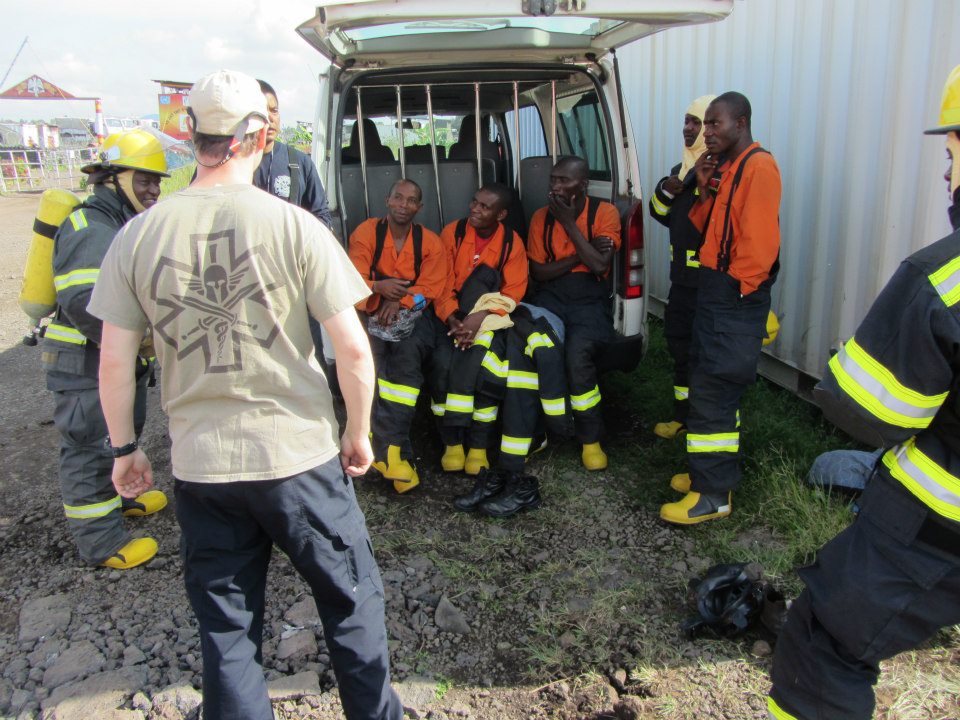
One of the most difficult lessons in high-threat EMS is accepting that not every patient can be treated immediately. This reality runs counter to the instincts and training of most EMS professionals, yet it’s reinforced repeatedly in operational and tactical medical training.
Exposing oneself to active hostile fire or an unsecured threat environment to reach a casualty may create additional victims rather than save lives. A medic who becomes a casualty is no longer an asset. In many situations, encouraging self-aid, directing buddy aid, or even providing an individual first aid kit to a patient from cover is the safest and most effective option.
This isn’t abandonment. It’s leadership.
Communicating these decisions is essential. Patients and team members must understand why care is delayed and what actions they can take in the interim. High-threat environments are often chaotic, loud, and cognitively overwhelming. Flexibility and ingenuity in communication become critical. Leaders may need to rely on simplified language, repetition, hand signals, or creative problem solving to bridge communication gaps.
Reconciling these decisions personally is never easy. Leaders must accept that imperfect outcomes are sometimes unavoidable. Leadership under fire requires prioritizing survivability over immediacy, even when it conflicts with deeply ingrained professional instincts.
Integrating EMS Into Protective and Security Operations
High-threat EMS can’t function independently of security operations. Survivability depends on integration rather than proximity. Medical personnel must be embedded in planning and execution, not simply staged nearby.
During my time assigned to diplomatic security teams on the United States Ambassador’s detail in Kabul, the medic role wasn’t a secondary consideration. Medical integration began during pre-mission briefs, where my responsibilities included identifying primary, secondary, and tertiary definitive care facilities for both the protectee and team members. Evacuation timelines, movement routes, and contingency plans were discussed before missions began.
This level of integration directly reduced response times and improved outcomes. Medical considerations informed tactical decisions rather than reacting to them after the fact. When medicine and security operate as parallel silos, risk increases. When they function as a unified system, survivability improves.
This lesson applies equally to domestic EMS operations. Integration with law enforcement, fire services, and other protective elements should occur long before a crisis unfolds. Waiting to coordinate until violence occurs is already too late.
Medical Decision-Making When Safety Isn't Assured
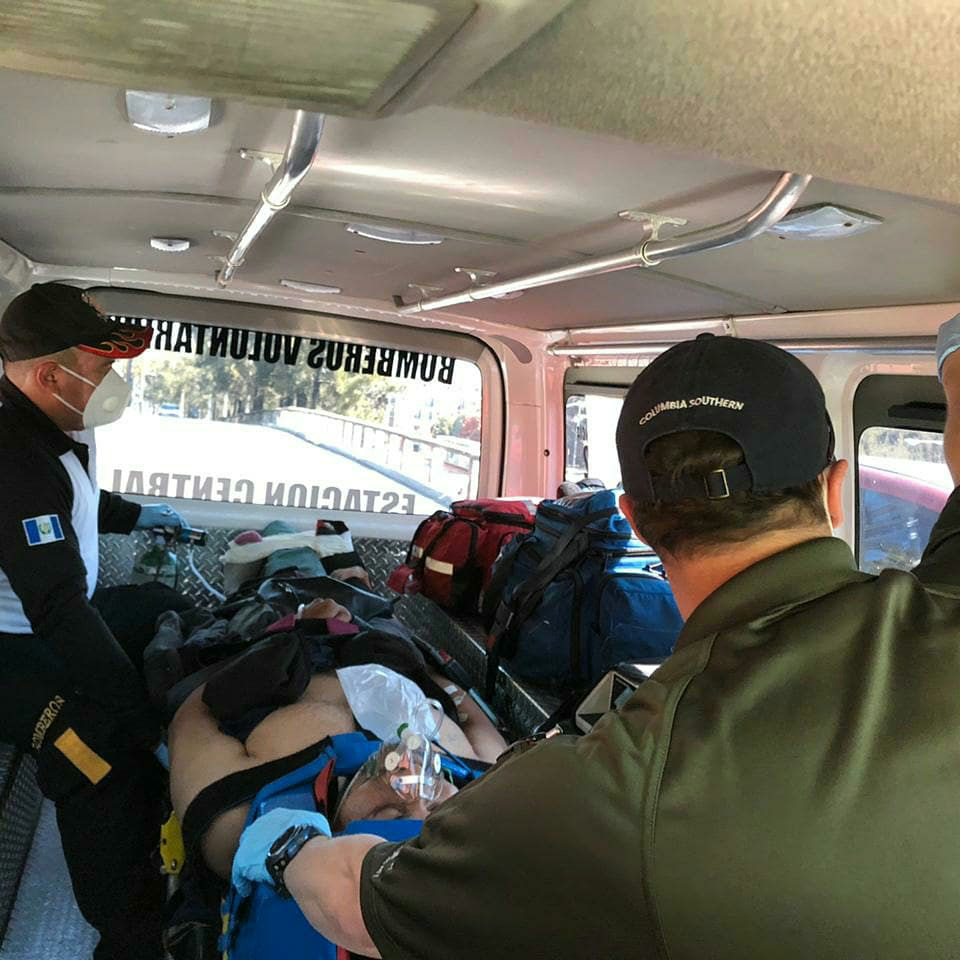
High-threat environments demand a recalibration of medical priorities. The goal isn’t comprehensive care. The goal is survivability and movement.
Care under threat focuses on immediate life-threats, hemorrhage control, airway positioning, rapid triage, and evacuation. Leaders must train teams to suppress the instinct to do everything and instead do what matters most in that moment.
This restraint is difficult for compassionate professionals. However, leaders must recognize that aggressive prioritization is not callousness. It’s discipline.
One of the clearest examples of this occurred during a maritime incident when another medic and I encountered four individuals clinging to a capsized fishing vessel. All four were severely hypothermic. One patient was critical and required nearly all of our combined efforts to keep him alive. The remaining three were compromised but capable of limited self-care.
We made the deliberate decision to enlist those patients in caring for themselves and each other while we focused on stabilizing and evacuating the critical patient. All four ultimately survived, but the lesson was lasting. When resources are limited, not all patients receive the same level of care. Leadership requires recognizing when restraint preserves lives.
Communication Failures in High-Threat Environments
Communication failures are among the most common and dangerous problems in high-threat operations. They are also entirely predictable.
I have experienced these failures firsthand while serving as both triage and transportation officer during operations in non-permissive environments. Failures included dead batteries, broken radios, incompatible communication systems, and excessive unstructured chatter that obscured critical information.
After-action reviews consistently highlighted the same issues. Without a single, streamlined communication platform shared by air, ground, and support elements, there is no common operating picture. Without discipline, information becomes noise.
Corrective actions focused on consolidating systems, enforcing radio discipline, standardizing casualty reporting, and strictly controlling transmissions. Subsequent operations demonstrated measurable improvements in clarity, patient movement, and responder safety.
Leadership under fire requires the courage to enforce communication discipline, even when stress tempts teams toward constant transmission.
Psychological Readiness and the Leader’s Burden
Repeated exposure to high-threat operations affects leaders in ways that aren’t always visible. Remaining effective requires deliberate habits, self-awareness, and humility.
Adhering to the OODA loop—observing, orienting, deciding, and acting—became essential to maintaining situational awareness. Just as important was remaining humble enough to receive critique and seek improvement. Leaders who become defensive or overly fixated on details often lose sight of the broader operational picture.
Emerging leaders should study real-world case histories, build peer networks that challenge assumptions, and pursue continual education. Learning from others’ experiences is far less costly than learning exclusively from personal mistakes.
Leaders must also recognize that psychological readiness is not a one-time achievement. It requires maintenance, reflection, and honest self-assessment.
Translating High-Threat Lessons to Domestic EMS
While not every EMS agency operates internationally or in conflict zones, the lessons of high-threat leadership increasingly apply at home. Active shooter responses, civil unrest, targeted violence, and delayed law enforcement access challenge traditional response models.
Key transferable lessons include dynamic risk assessment, unified command, disciplined communication, medical restraint, and leader presence. High-threat EMS is no longer a niche specialty. It is a preview of the future operating environment.
Agencies that invest in leadership development, interagency integration, and realistic training will be better positioned to protect both their patients and their people.
Trust as the Foundation of Leadership
If there is one leadership principle that defines success in high-threat environments, it’s trust. Trust your training. Trust your team. Be honest with your patients, your colleagues, and yourself. In environments where outcomes are often imperfect, trust enables decisive action, clear communication, and ethical clarity.
Without trust, teams fracture under pressure. With it, they endure.
Conclusion
High-threat EMS leadership is no longer confined to overseas deployments or specialized units. Its lessons are increasingly relevant to domestic EMS operations facing violence, instability, and uncertainty.
Leadership under fire demands integration, restraint, communication discipline, humility, and moral courage. It’s not about heroics. It is about survivability, judgment, and trust when conditions refuse to cooperate.
The next incident may not allow the comfort of traditional assumptions. Leaders who understand that reality, and prepare accordingly, will be best positioned to protect both their patients and their teams.
About the Author
Allen Lewis, CEM, CEMSO, CFO, EFO, FWEM, NRP, is an emergency services director, adjunct professor in the College of Safety and Emergency Services at Columbia Southern University, and a fellow with both World Extreme Medicine (FWEM) and the Faculty of Remote, Rural and Humanitarian Healthcare of The Royal College of Surgeons of Edinburgh. He has more than 25 years of experience spanning municipal fire and EMS leadership, emergency management, and high-threat medical operations in austere and nonpermissive environments worldwide. Lewis does consulting work and has served as a career fire chief along with being a frequent contributor and presenter on EMS leadership, operations, and resilience.