Five Ways Your Ambulance Service Can Improve Public Relations Before the Next Crisis
At 2 a.m. the station is quiet. The unit is stocked, the monitor is charged, medications are checked, and the crew is awake. Nothing is happening and everything is happening. The public sees an ambulance parked and assumes no work is being done. Administrators see a payroll line. Elected officials see a funding request. Only the people inside the system understand that readiness is the product.
A few years ago, a local official looked at our call volume report and asked a simple question: “Why does this cost so much when the truck is only busy a few hours a day?” It was not a hostile question. It was an honest one, and it revealed a gap we had created. We had reported response times and transports for years, but we had never explained readiness. We had never shown what it takes to staff a unit for 24 hours, maintain equipment, stock medications, and keep clinicians available for the call that hasn’t happened yet. From that moment on, every operational report we produced included unit hour coverage and system availability, not just transports. The numbers didn’t change—the understanding did. That disconnect isn’t a funding problem; it’s a public relations problem.
Most EMS agencies don’t fail because they provide poor clinical care. They fail because their communities don’t understand what they are paying for until something is taken away. A unit is closed, a response time increases, or a contract is lost, and suddenly everyone asks why. By that point the narrative has already been written by someone else.
Public relations in EMS is often treated as a social media task or a ceremonial function. A few photos during National EMS Week, a press release when a new truck arrives, and a reactive statement when something goes wrong. That’ not public relations, though. That’s documentation.
If EMS wants sustainable funding, workforce stability, and operational support, PR must become a core leadership function tied directly to system performance. The goal isn’t to make the service look good; the goal is to make the system understandable.
Here are five ways ambulance services can build PR programs that protect clinical care, support funding, and strengthen community trust before the next crisis arrives.
1. Treat PR As an Operational Function, Not a Marketing Task
In many agencies, PR is assigned as an additional duty to someone who already has a full operational workload. That guarantees reactive messaging and inconsistent communication. Public relations should sit at the leadership table because it shapes how decision makers interpret system data.
When response times increase, the community should already understand what unit hour utilization means. When a truck is taken out of service for staffing, elected officials should already know how that changes coverage. That level of understanding doesn’t happen during a budget conversation. It happens months earlier through planned communication tied to operational metrics.
PR staff or designated leaders should attend leadership meetings, local government meetings, review deployment data, and understand reimbursement structures. They should be able to translate unit hour coverage, call volume, and workforce shortages into plain language that a mayor, city council, or county judge can understand. When PR is embedded in operations, messaging becomes proactive instead of defensive
2. Build Media Relationships Before You Need Them
If the first time a reporter hears from your service is during a crisis, the narrative will be built from outside sources. Media relationships should be developed during stable periods when there is time to educate instead of respond.
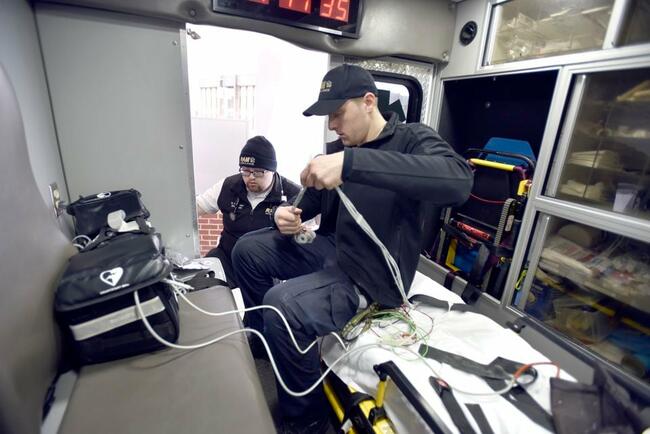
Invite local reporters to non-crisis station visits. Walk them through a unit check. Explain what readiness looks like at 3 a.m. Provide a simple overview of how EMS is funded and how reimbursement works. Show them the difference between a transport-driven model and a readiness-based model. Most reporters want to understand the system but have never been given the opportunity.
These early interactions create context. When a negative event occurs, the reporter already knows the operational environment. That doesn’t eliminate critical coverage, but it improves accuracy and reduces speculation. A reporter who understands EMS will ask better questions and present more balanced information.
3. Explain Readiness, Not Just Response
The public measures EMS by response time and transport. Both are visible and easy to understand. Readiness is invisible and therefore undervalued. PR should focus on making readiness visible.
Explain what it costs to staff a unit for 24 hours regardless of call volume. Show how many hours a truck is committed even when it doesn’t move. Demonstrate how coverage areas change when a unit is closed. These are operational realities that directly affect patient outcomes, but they are rarely communicated in plain language.
This isn’t about asking for more funding. Whether the service is funded by the municipality or only by reimbursements, it’s about explaining what the current funding actually pays for. When communities understand that they are paying for availability rather than mileage, the conversation shifts from transport volume to system capacity. That shift is essential for long term sustainability.
4. Use Data to Tell the Story of Risk
EMS agencies collect large amounts of data, but data alone doesn’t change perception. PR should translate system metrics into patient-centered risk. A 12-minute response time is an abstract number. A 12-minute response time for a cardiac arrest is a survival probability. The closure of one unit isn’t a staffing adjustment—it’s a gap in coverage area and a delay in advanced life support. When data is connected to clinical impact, decision makers better understand the stakes.
This doesn’t require complex analytics. Simple comparisons and visual explanations are often more effective for the public—they’re not as accustomed to the world of EMS. Show what happens to response times when call volume increases. Show how overlapping calls affect availability. Present the information consistently so that leaders see trends instead of isolated incidents.
5. Make Your Crews Visible as Clinicians, Not Operators
Public perception shapes funding. If crews are only seen during transport, the system will be valued as transportation. PR should highlight the clinical role of EMS.
This includes sharing training activities, continuing education, and examples of advanced interventions within appropriate privacy guidelines. Community paramedicine programs, public education initiatives, and quality improvement efforts demonstrate that EMS is part of the healthcare system, not a logistics service.
When the public sees clinicians instead of operators, support for training, equipment, and staffing increases. This also improves workforce morale. Crews who see their work represented accurately are more likely to engage with the organization’s mission and messaging.
Conclusion
Moving from reactive to strategic communication is arguably beneficial to any EMS service. Effective PR doesn’t eliminate operational challenges. It does ensure that when challenges occur, they are understood within the correct context. Services that communicate consistently about readiness, risk, and clinical care build credibility before they need it.
The goal isn’t to control the narrative. The goal is to provide enough accurate information it makes the narrative reflect reality. That requires planning, real leadership involvement, and a willingness to treat communication as part of system design rather than an afterthought.
At 2 a.m. the unit is still stocked, the monitor is still charged, and the crew is still ready. The work of readiness continues whether anyone sees it or not. PR is how we make that work visible. When the community understands what readiness means, they are more likely to support the resources required to sustain it.
EMS can’t afford to wait until the next crisis to explain itself. The systems that survive will be the ones that communicate clearly, consistently, and operationally about what they do and why it matters.
About the Author
Andrew Perry is a rural EMS provider and public relations director based in Arkansas with more than a decade of frontline experience. He currently serves as the NAEMT Advocacy Coordinator for Arkansas, focusing on system sustainability, reimbursement reform and workforce stability. His work centers on helping small and rural agencies translate operational realities into clear, actionable communication for policymakers and the public. Perry writes frequently on the intersection of EMS operations, leadership and strategic messaging. He is committed to strengthening community based EMS through practical advocacy and education.