Fire Chief Turned Author Talks School Bus Wreck Training and Scene Management
School bus-related crashes killed 128 people nationwide in 2023, up 23% compared to 104 deaths in 2022, according to the latest statistics from the National Safety Council using data from the National Highway Traffic Safety Administration.

From 2014 to 2023, about 71% of the deaths in school bus-related crashes were occupants of vehicles other than the school bus, and 16% were pedestrians. About 6% were school bus passengers, 4% were school bus drivers, and 3% were riding bicycles.
About 34% of people injured, but not killed, in the same timeframe were school bus passengers; 9% were school bus drivers, and 52% were occupants of other vehicles. The remainder were pedestrians, bicyclists, or unknown.
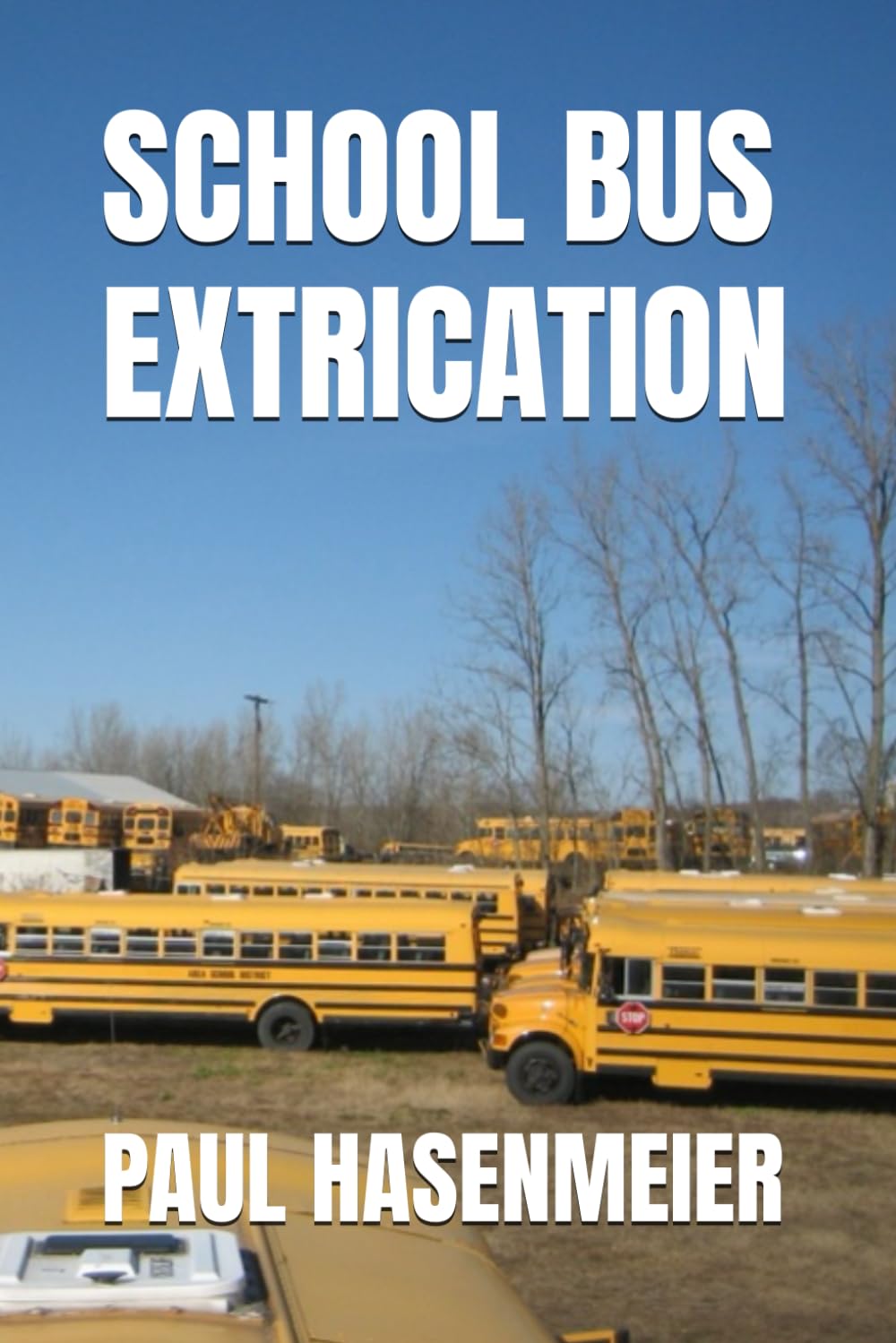
Paul Hasenmeier, public safety director and fire chief for Hernando County, Florida, and lead faculty member at Columbia Southern University, released his book School Bus Extrication in January 2024. The book is available on Amazon or through the New York State Association of Fire Chiefs bookstore.
EMS World spoke with Hasenmeier about his book and why training on school buses for optimal outcomes in real-world situations matters.
EMS WORLD: What was the driving factor for writing your book?
HASENMEIER: I got into some technical rescue stuff. I got asked to teach a school bus class. I didn’t really know anything about it, so I did a little research. I couldn't find any articles. There was one guy in the fire service that had a little video out. I found an old bus, started cutting it up, and taking pictures. Over the last number of years, I wrote several articles for magazines and taught at conferences all over the country on school bus extrication. I did hands-on training with firefighters and school districts. I got promoted. I’m working on my doctorate now. (The book) was a capstone project to put everything I've been teaching and writing about in one place as a simple book with a lot of pictures for people in fire-rescue or even school bus drivers to get a better understanding of school bus extrication.
EMS WORLD: In researching, training, and teaching school bus extrication, you found many first responders haven’t been exposed to this technical rescue topic and they don't plan for the worst. Was that a driving factor as well?
 HASENMEIER: Absolutely. In fire-rescue service, we can get passenger vehicles easily to cut up for training, but getting retired school buses to cut up is a little bit more effort. A lot of fire-rescue workers have never cut up or trained on a school bus because they can’t get them. They're not readily available for training. Keep your local school bus garage, wreck yard, and salvage yards on notice when one becomes available. I make connections with different people so I know when a school district's running a surplus of old buses. We can cut it up and give it back to them for scrap for money. A lot of rescue workers haven't got to cut on a bus or done some of the different drills just because of the availability.
EMS WORLD: You’ve indicated it's challenging to predict and plan for the countless variables in a school bus emergency. What are the top variables, and how should an agency plan for them?
HASENMEIER: My background is in fire-rescue and EMS. But wherever I'm teaching, I always encourage—whether it’s the transportation industry, fire, EMS, law enforcement—them to sit down at the local level and talk about their plan, what they're going to do if there's a school bus crash in their jurisdiction, how all those different agencies are going to come into play and set up different scenarios.
Nowadays, with social media and everything you can see, there are school bus crashes somewhere in the country every day. It’s obviously a fire threat—that’s still a hot topic. in the last three years in my county, we've had multiple vehicles running into the back of or T-bone style collisions with school buses. Is that attributed to distracted drivers? Probably. Weather comes into play with buses sliding off the roads or rolling over. Maybe a school bus hits a bridge abutment, another large vehicle, or something on the highway. I know it's a threat, so I've tried to help educate firefighters, EMTs and paramedics, and school districts on how to be better prepared to deal with it.
EMS WORLD: How does the type of accident inform how you respond?
HASENMEIER: Every jurisdiction has their standard response for vehicle crashes. If a school bus is involved, the telecommunicators are certainly contacting the school district, but the school district might already know of the crash by the time the 9-1-1 call is placed. You’re going to get school officials, fire, EMS, law enforcement coming pretty quick regardless of whether it's a minor or major crash involving a school bus.
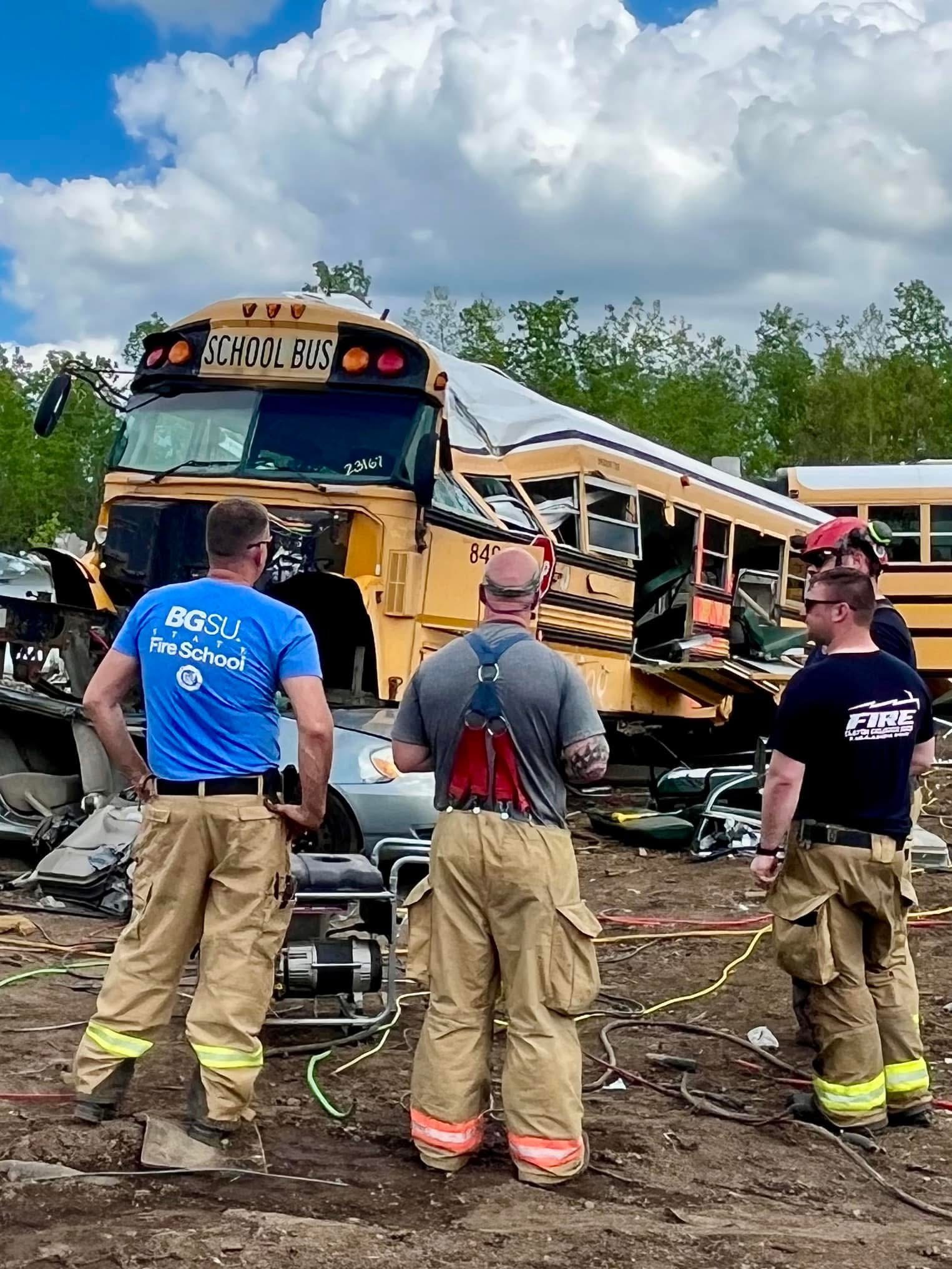
EMS WORLD: What are some of the challenges first responders face when doing this, especially given that they're dealing with children?
HASENMEIER: Everything involving kids is a little bit tougher. A lot of first responders are parents, and they see that. So, the kid calls are tough.
These are things first responders are looking for upon arrival to the scene. Are weather conditions involved? Is it super hot or super cold? Are there power lines down? Is there a fuel leak?
We work to identify any hazards. If the kids are involved in a school bus crash, they’re texting their friends and parents and posting on social media. Law enforcement support right away helps secure the scene. We're trying to protect the kids not only from harm from the crash, but also from bystanders. We don’t know if they're good or bad bystanders. That's where securing the scene with law enforcement and making sure we have good accountability of the number of students comes in: if they're walking wounded, if they're injured, are they on the bus, off the bus? I believe part of our job as first responders in the community is to protect the kids from any threat, whether it's a crash, injury, or fire. A big thing is determining what's going on at the scene, protecting the kids, and figuring out who needs to go to the hospital. We’re going to go through the process to either get them on a different bus to go to school or home or reunite them with parents at a select location.
EMS WORLD: A particular challenge might be in rescuing a child with an intellectual or developmental disability. What is your advice on doing that most effectively?
HASENMEIER: A lot of times, the school district has different aides on the buses for kids with any developmental or a physical disability. Maybe they're in a wheelchair or some sort of harness. I recommend getting with the school district and understanding their protocols. Many times, we're going to crashes blind, and we don't know what's going on. If the aide or bus driver has information and they're not incapacitated, we're going to rely on them for different things. Some students may have to stay in some sort of device or chair that benefits them and their medical conditions—we try to identify that. Many of the buses have lifts. I encourage firefighters and EMS personnel to go to the local bus yard, ask for a tour, and look at how the manual and electric lifts operate and see how wheelchairs and different harness systems are attached to the seats.
EMS WORLD: Address the emotional aftermath of a school bus collision as reported in this EMS World story.
HASENMEIER: Fire, EMS, law enforcement—we’re both good and bad at after action reviews and critical incident stress debriefings. Talking about the run afterwards with the crews that were there starts that process. If there’s a large-scale critical incident, my department has a great peer support program. A critical incident stress debriefing team goes through that process within 24 to 72 hours, letting anybody debrief during that. If people have individual needs where they need to talk to somebody else, we have a peer support team, our chaplain, and a clinician that can support the mental health components of anybody that has those needs.
EMS WORLD: Seatbelts in school buses have always been a matter of debate. What are your thoughts on mandating seatbelt use in school buses? What role does it play when you're doing a rescue where you may need to cut them to release people?
HASENMEIER: The seatbelt debate's been going on in school transportation for decades. Some states require seat belts. Some states don't. A lot of it comes down to money. Some of it comes down to folks who think that if kids are belted in, they can't evacuate quick enough if there's a fire. My stance on it has always been that seatbelts should be mandated on school buses for the simple fact that when my kids were two- and three-years old in car seats, they figured out how to undo their seatbelt. I believe preschoolers, kindergartners, and first graders can unlatch a shoulder or lap belt if they're told to by the bus driver and aide to evacuate the bus. I believe kids can do that if there's a fire. I've been a part of different drills and with a little bit of teaching and guidance from the bus driver and some of the annual drills they do, that shouldn't be a problem.
My big concern is if kids don’t have a seatbelt on and the bus rolls, they fly like little ping pong balls and greater injuries, fatalities, and ejections can happen to unrestrained passengers of any vehicle, including a school bus. I’m confident the school districts and transportation folks can teach kids how to evacuate, even if they have to hit the little red button on the seatbelt to get up. Some passengers are restrained in wheelchairs and other devices for transportation. Those students and other students can evacuate when told to do so.
EMS WORLD: How do you deal with bystanders who either want to help or are getting in the way gawking?
HASENMEIER: That’s a big part of the law enforcement component. In some of the drills I've done with school districts, I've always involved law enforcement, because we need their help and support. If fire and EMS are doing extrication or rescue, law enforcement is going to help direct traffic, make the scene safe on the perimeter, and secure the scene from bystanders. There are always folks with good intentions that want to help, but we have to be careful because everybody is not acting in good faith. We don’t want to see a kid come up missing or hurt by somebody that didn't have good will. Law enforcement securing the scene helps us keep accountability of all the patients: where they're being transferred to, where the family reunion location is, etc.
EMS WORLD: What advice do you have for first responders on interacting with the parents of the children on board the bus in terms of unification and accountability?
HASENMEIER: There are different standard operating procedures or guidelines on what to do during a bus crash or a bus fire. It’s important police, EMS, fire, and the school district to get together and make sure everybody knows what the operational plan is once the decision’s made to transfer kids to a different bus or if there's a lot of kids being transported to a hospital or if we're going to have a church or school for reunification site. Schools should be on the front end of notifications about what bus is involved and give parents direction with their notification systems. If we don't get the message out, somebody's going to post it on social media and then it snowballs out of control. With school bus incidents, we get public information out on social media, press releases, and use the technology that sends immediate messages out to parents. If you send out what bus route it was or what bus number it is, that calms down a huge number of parents. If you just say there was a Hernando County school bus crash at this intersection, then every parent is getting nervous trying to get hold of their kids. Getting the information out, keeping everybody as calm as possible, and then controlling the scene is important.
EMS WORLD: How about coordination between firefighting activities and emergency medicine activities?
HASENMEIER: In most cases, that coordination is seamless. If there's a private EMS agency responding with a fire department, the key is the training on the front end. Going through the process of how you're going to handle the scene is important. Fire suppression, extrication, rescue, EMS, scene security, law enforcement is going to happen quickly, and it happens faster with upfront training.
EMS WORLD: How about the interaction with the school bus driver?
HASENMEIER: If the bus driver is not incapacitated, then they're the one who knows the kids. When first responders show up, most of the time, they’re not going to know who the kids are. The bus driver has that rapport with them, can identify names and people, maybe any medical conditions that are pertinent at the time. They are that initial liaison to make sure school district officials are coming with another bus. The school bus drivers and aides have the most intimate knowledge of the passengers.
EMS WORLD: What advice do you have for school districts in terms of having an emergency operation plan in place? What should be in that plan?
HASENMEIER: Most school districts probably have emergency operation plans related to bus crashes, fires, and other emergencies. The biggest part I've seen is a lack of attention. The school districts have a policy, but the fire department doesn't know what that policy is. The key is for fire departments, EMS agencies, and law enforcement to have training to make sure they know the school district’s policy.
EMS WORLD: What are the best ways to do training exercises for this type of event? Who should be involved?
HASENMEIER: Hands-on sessions for fire rescue and EMS to go through extrication drills and different challenges are good. I’ve also done some joint trainings with school districts, school officials, bus drivers, transportation managers, fire, EMS, and law enforcement. We break into individual working groups about what's specific to their discipline and then come together for a bigger hands-on drill. I’ve talked with a lot of bus drivers over the years where they tell me they’ve been a bus driver for 20 years and have never seen the fire department cut up a bus. With training, if a crash happens, these are some of the sights and sounds they might see the fire department doing for different reasons.