Attracting Young People to Emergency Medical Services Careers
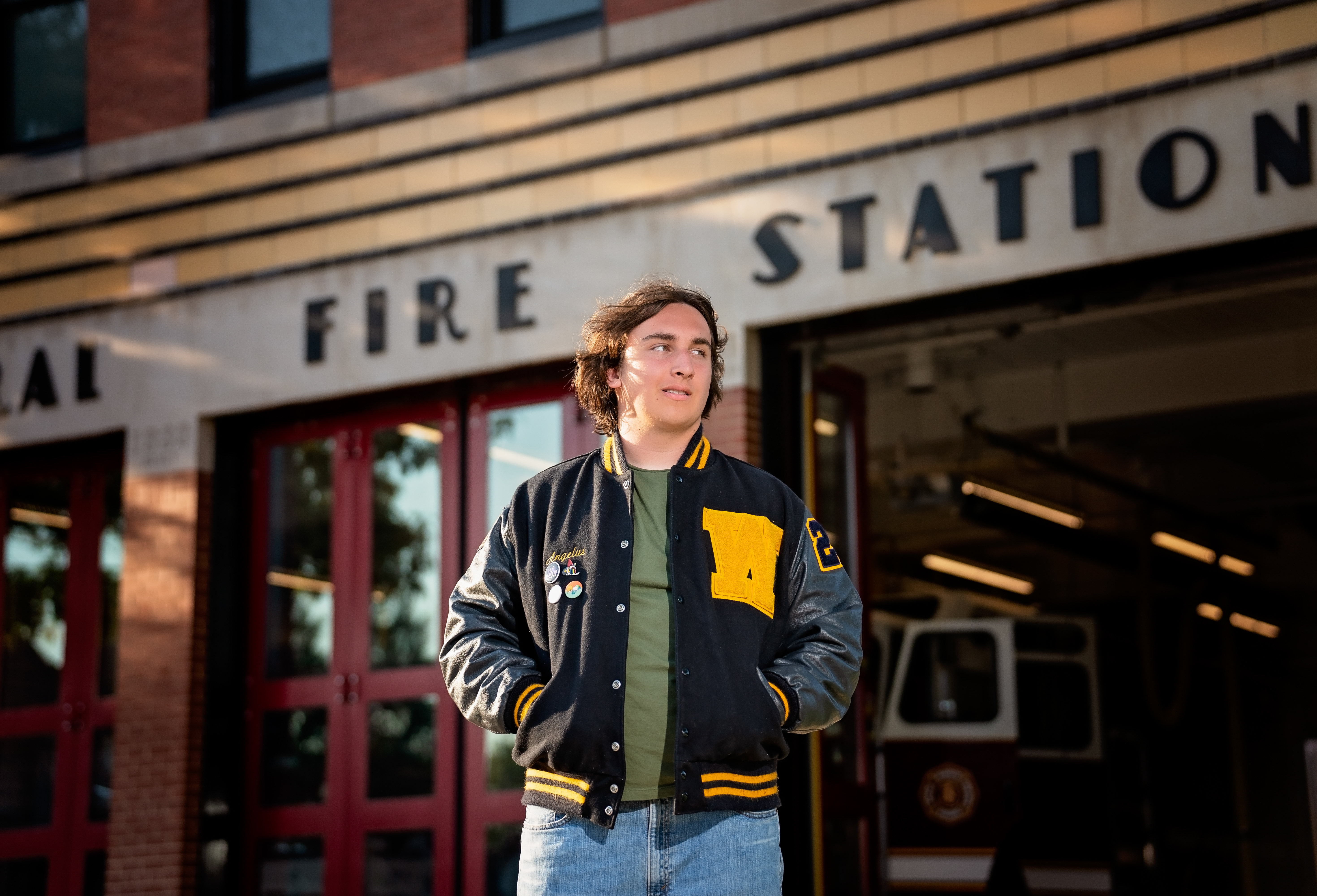
Angelus Howard, 18, of Wyandotte, Michigan, wanted his high school graduation photo to be taken at the town’s fire station to reflect his aspirations to become a firefighter-paramedic. Wyandotte Fire Department Chief Jeremy Moline was more than happy to comply with the request.
“I originally learned about becoming a firefighter from Chief Moline,” Howard said. “He did a lecture for my senior year careers class and then I interviewed with him for an assignment. After that, he kept an eye on my progress and offered to help if I needed guidance. I feel he was impressed with my interest in firefighting, because I was awarded the scholarship from the Wyandotte Firefighters Union by surprise. It was very helpful in paying for my EMT books. “
Moline said the Wyandotte Fire Department began awarding the scholarships about 16 years ago when he was in the union before he became fire chief. The scholarships are now awarded through the city’s local high school, Roosevelt High School.
While he wishes the $500 scholarship—given to a student intent on pursuing a career in the public sector—could be more and there could be more of them, that’s what the budget dictates and he’s grateful for the community support.
Moline noted what set Howard apart is that he has articulated to him about wanting to be a first responder. “He was involved in soccer, he was a good student. He’s made it very clear this is what he wants to do.”
Howard said he became interested in becoming a firefighter/EMT/paramedic to help people. He has no interest in a 9-to-5 career but seeks a varied work schedule.
“I originally considered becoming a police officer, but negative stigma around the policing community made me reluctant to join that career,” he said. “Also, the college training required lined up perfectly for me to receive the Michigan Legacy scholarship, which means I don’t have to pay for college for the two years it takes me to become a firefighter and paramedic.”
Howard is currently attending the Michigan Institute for Public Safety Education (MIPSE) at Wayne County Community College for training that will take two years.
Howard said his first semester entails EMT training and then he can begin working as an EMT while he finishes his college training. The second semester focuses on firefighting and the entire second year focuses on paramedic training.
Recruitment Challenges
Howard symbolizes success in what is otherwise a challenge in attracting young people to emergency medicine.
“Recruiting the next generation into EMS is tough when the field may be perceived as high-stress, underpaid, and undervalued,” said Kellie O’Dare Wilson, PhD, founder and executive director of the 2nd Alarm Project. “Younger recruits won’t sign up or stay if they see an organization that runs its people into the ground or fails to back them up.”
Showing that EMS is a career of true impact, led by agencies that value their people and build environments where crews can thrive, and making wellness part of the mission can help overcome these perceptions, she said.
Moline noted the challenges fire rescue agencies have in attracting young people to the field are multifaceted. “I don’t think it’s just the fire departments that are struggling—I think it’s all trade work,” he said. “Young people are really into technology.”
Another challenge in Michigan is the state changed from accepting a state paramedic license to accepting only National Registry of Emergency Medical Technicians certification. “That’s challenged a lot of the younger generation coming into the profession because it’s a tough program,” he said. “We struggle getting paramedics, and we run advanced life support, so we require everyone to have their paramedic license. Getting your basic EMT license is relatively easy but getting that national registry paramedic license is tough. What they’re doing in the field are very advanced procedures, like what they're doing in the ER.”
Also, Moline believes the fire-rescue service has done a disservice to itself over the years by taking for granted that the potential workforce would be the same as it was when he hired in more than 24 years ago.
“It was a valued job—you would be testing against hundreds of people for one position, and we just took that for granted,” he said. “We weren’t promoting ourselves and our jobs and our careers to the younger people. We just expected that they're going to keep coming and got bypassed by all of the technology jobs attracting young people.”
Attracting the Next Generation
The new generation brings energy, skills, and a willingness to challenge outdated norms, noted O’Dare Wilson. “They don’t shy away from tough conversations about mental health, which makes the workforce stronger and more resilient,” she said. “They expect professionalism, accountability, and respect—and they call out toxic cultures when they see them. They want workplaces where integrity isn’t optional and where values like fairness and respect are non-negotiable.”
Howard advised agencies throughout the U.S. to offer free college training and talk about it more in high schools to bring in new paramedics and EMTs.
“I feel like there isn't enough advertising to draw young people into EMT and firefighting,” Howard said. “Most people in my classes are older or following in their families’ footsteps. I feel like I stumbled upon this career. Most people don't know the difference between an EMT and paramedic and that those skills are needed to become a firefighter. Everyone has a general idea of what it means to be a paramedic/firefighter, but not how to become one.”
Moline concurred, saying he believes today’s approach should entail visiting schools, getting to know the students, and explaining to them what first responders do and how they do it. He does a presentation at Roosevelt High School’s career pathways class about fire-rescue careers, the benefits package, and its pros and cons.
“The biggest thing is to give them the knowledge of the careers out there. It’s a good career. I love what I do,” he said.
Onboarding a New Recruit
Once a fire-rescue agency hires a young person, how that person is onboarded sets the tone for their success, O’Dare Wilson said. “If a rookie’s first experience is disrespect, broken promises, or leaders who don’t live up to their word, trust is gone before the job even starts.”
O’Dare Wilson recommends agencies:
- Build a culture where asking questions, owning mistakes, and reaching out for help is respected, not ridiculed.
- Bring families into the process early, showing them the demands of the job and how the agency stands behind its people.
- Pair new hires with seasoned mentors who lead by example, model resilience, and show what it means to operate with professionalism and grit.
Moline said onboarding younger people into an agency with respect to technology “is way easier than it probably would be because they're familiar with that. The challenge becomes the people skills and the hands-on technical skills. … It’s a give-and-take: you get better employees in one area, but you have to invest more time in other areas with them.”
Retention Strategies
To retain young hires, today’s leaders need more than technical skills—they need earned credibility, O’Dare Wilson said. “Younger providers expect leaders who communicate straight, show up for their crews, and don’t dodge the hard conversations. Culture-killing behaviors like incivility or hypocrisy will cost trust fast. On the other hand, leaders who back up their words with action, invest in wellness, and recognize the families that stand behind their providers will earn loyalty and commitment.”
Retention falls apart when agencies talk wellness but tolerate burnout or turn a blind eye to toxic behavior such as workplace incivility and administrative betrayal, O’Dare Wilson said, adding “that gap destroys trust and drives people out the door.”
Mitigation strategies include treating respect as non-negotiable and quickly dealing with incivility, she said. Providing strong peer support and confidential access to culturally competent clinicians while supporting families is a key part of workforce stability.
“Build wellness into leadership accountability, policies, and daily practice,” she said. “If leaders don’t live it, it’s not real.”
Moline said it may not be possible to prepare new first responders for what they may see on the job—pointing out the nature of calls has changed over the years—but noted there is a better focus on mental health now than before.
“You can be giving them the tools, opportunities, and resources to make sure that they know that there are outlets for them,” he said. “We really push strongly for mental health, and our city has EAP programs. If they check in with me and my assistant chief if they have a bad call, we will make sure we follow up personally with each person on that call and let them know there are opportunities for them if they need to speak to someone.”
O’Dare Wilson said while pay and benefits matter, they aren’t enough.
“Culture is what keeps people connected to the job,” she said. “Agencies that enforce respect, root out toxic behavior, live their values, and support both responders and their families will have no problem drawing in the next generation and building a workforce that is resilient, loyal, and ready for the long haul.”