42-Year EMS Veteran Receives AAA “Stars of Life” Award
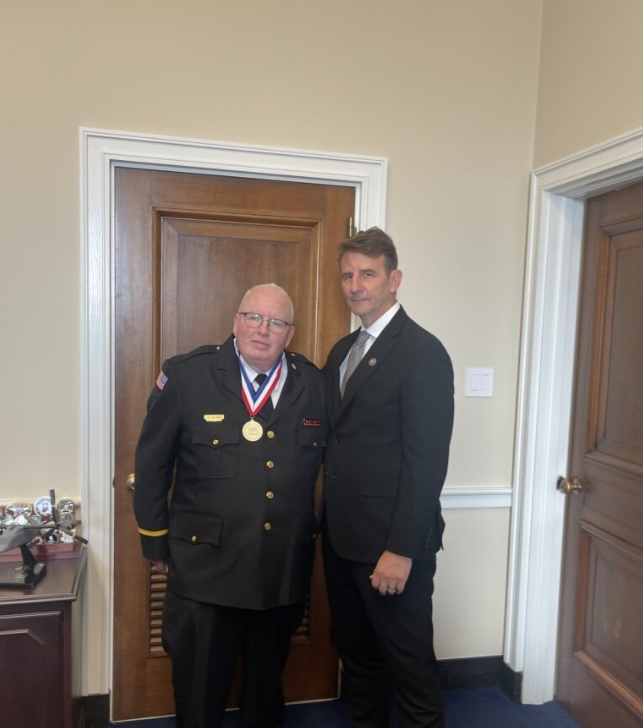
The American Ambulance Association (AAA) has recognized Tom Felter Jr.’s 42 years in emergency services with an AAA “Stars of Life” Award. Felter is a paramedic and station manager at Superior Air-Ground Ambulance of Indiana, where he oversees a team of more than 50 EMTs and paramedics while serving in the field as needed. Superior, headquartered in Elmhurst, IL, operates in Illinois, Indiana, Ohio, Michigan, and Wisconsin.
In addition to Felter, five other Superior employees received AAA Stars of Life awards in Washington, DC in November 2025.
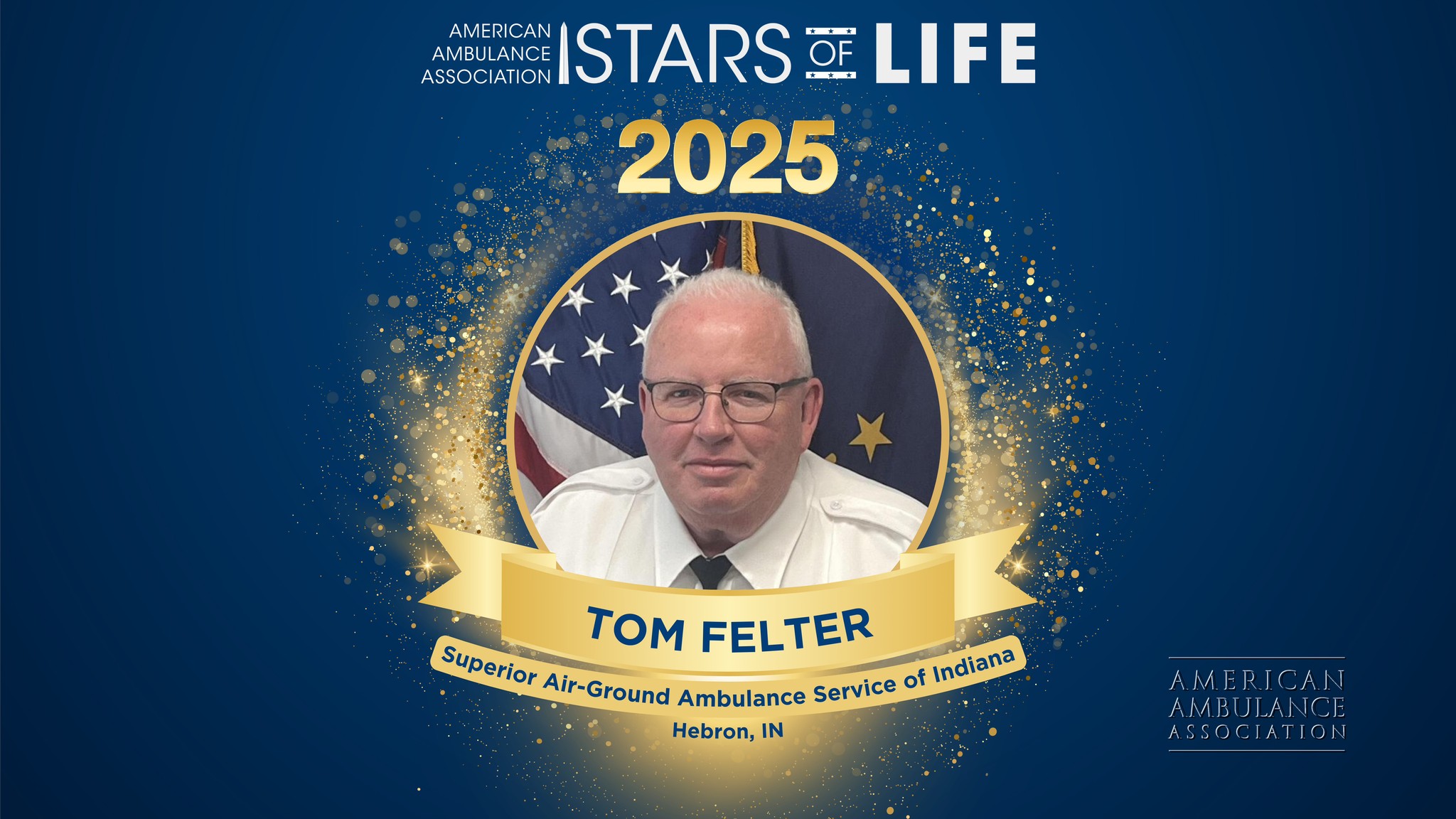 The American Ambulance Association’s Stars of Life program celebrates the contributions of ambulance professionals who have gone above and beyond the call of duty in service to their communities or the EMS profession. The award honors the contributions of these heroes while shining light on the critical role EMS plays in our healthcare infrastructure.
Felter said he won this award both for his work in EMS, and as the creator of “The Emily Talk.” Named for his 30-year-old daughter Emily, who has Down Syndrome, The Emily Talk teaches first responders and the wider community how to interact constructively with people with Down Syndrome, autism, and other disabilities. It has been profiled in the Emmy-winning TV documentary “Teacher of Patience.”
“I believe I earned this Stars of Life award in large part because of Emily,” he said. “Being her dad makes me better at what I do. I’ve been at this a long time, and I’ve been recognized for a few different things, but it wasn’t until I got to Superior that I was recognized nationally. Superior made that happen for me.”
Given his lifelong commitment to EMS, it’s surprising to learn that Felter made this career choice somewhat by accident. “I was going to be a photographer when I grew up,” he told EMS World. “That was what I was going to do after I graduated high school. But at age 20, I joined the local fire department as a volunteer fireman, and they also ran an ambulance. It was staffed by paid personnel, and the volunteer firefighters would help with the ambulance calls.”
Felter decided that he liked working in EMS, so he went to school to become an EMT. He did that for 13 years before going back to school again to become a paramedic. “I’ve also been an industrial firefighter, a police officer, and 9-1-1 dispatcher,” he said. “But the bulk of my career has been working on an ambulance as an EMT and then as a paramedic. Early on, when I started working as a volunteer firefighter and had occasion to assist with the ambulance calls, it was just obvious that this was important to a lot of people, to have an ambulance there when they needed it.”
Looking back on his 42 years of service—a career that is still going strong—Felter believes the key to compassionate care is focusing on the patient’s state of mind. “Over the years, I’ve realized that nobody calls an ambulance just because they’re having a bad day; they call because they need help,” he said. “Even when it’s not life-or-death, we can ease their anxiety. It sounds cliché, but it’s rewarding work."
When asked which moment stands out most from the past four decades, Felter recalls a quiet afternoon on a BLS truck. “When I was real early in my career, we picked up a patient from the hospital who was going to hospice, which is generally end-of-life care,” he said. “This gentleman was alert and knew what was going on. We took him to the hospice facility. When we got there and took him out of the back of the ambulance, it was a nice sunshiny day in the middle of summer. He wanted to just hang around outside for a minute before we went inside, so we did that. My partner and I let him hang around in the sun for 15 minutes until he said, ‘okay, I'm ready to go in.’ As far as I could tell, that was the last time he saw sunshine. It meant a lot to him to do that. And like I said before, this wasn’t life-or-death; it was just moving this guy from one place to another.”
Felter’s compassionate approach to life extends to The Emily Talk, which draws on his experience in raising his daughter Emily. Having gained many useful insights as a Down Syndrome parent, he is dedicated to helping first responders benefit from this knowledge when treating such patients.
“13 years ago, Emily and I created The Emily Talk,” Felter said. “We talk to first responders and the wider community to help them understand how Emily and other people on the spectrum operate, to make it easier for everyone to interact and achieve positive outcomes.”
According to him, the key to success in this regard is patience. “My wife and I, we are always on Emily Time,” he said. “If we need to go somewhere and she's not ready to go, then we're not going until she's ready. Now translate that to an emergency scene where she needs to go to the hospital: If she's not ready to go, she's not going. So I have to impress upon the responders to be patient. You have to be patient with her or anybody like her so that we can get her to the hospital. It's got to be on her terms.”
Felter has no immediate plans to retire. “This is going to be just full of cliches, but I enjoy helping people and I enjoy what I've been doing for all this time,” he said. “I've certainly not gotten rich doing it, but if money is your only motivation, then don't do this job. I'm not going to get rich doing this. But if you factor in how I feel about helping people and how I feel about helping people understand Emily and how I feel about helping Emily, then I'm rich beyond measure. I just don't have the bank account to prove it.”