New Strategies to Improve Mental Health Outside Talk Therapy
In 2023, my partner of nine years broke up with me over speakerphone in front of my coworker who obviously had neither asked nor expected to be part of this conversation six hours into a 24-hour shift. Three days previously he had brought up, unprompted, that my surname would be more practical for our inevitable children since it was easier to spell than his own.
I can see the comedy of the whole incident now. At the time I was not so sanguine.
My experience is not unique. Continuous, intimate contact with the tragedies of others is an inevitable result of working in EMS, while personal ones are a result of both bonding with other people and being away for one-third of the time.
Out of sheer desperation, I was willing to entertain almost any method of holding myself together with duct tape and staples. They ranged from the cringe-inducing to the slightly deranged: somatic yoga, breathing exercises, Thai Chi, acupuncture, six kinds of therapy, journaling, meditation, affirmations about self-worth, a rotating cast of psychiatric medications, and numerous others. I got the most relief out of sharing my despair with anyone who made the mistake of asking me how I was doing.
They’d Actually Rather Die Than Talk About Their Feelings
But my coworkers, while just as likely to face the charred remains of the bright future they’d once believed in as strongly as gravity, are almost all male. They face enormous societal and emotional obstacles to seeking out mental health care, no matter how close they are to making an irreversible decision.
Hopefully the future will look different, but these first responders need mental health help now, in a way that does not require them to be vulnerable or appear foolish in any way. Basically, you can either re-write what it means to be a man in America—or you can provide and normalize Tetris machines at your station.
Only one of these goals can be accomplished in less than two hours for under $100.
Play Tetris. No, Really.
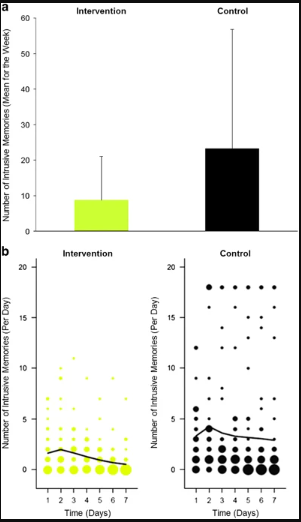
Playing Tetris after a traumatic event dramatically reduces the amount of intrusive memories and flashbacks of the event. It’s extremely cheap, even free, as Tetris can be located on any device that can access the internet. It is a very low time commitment. To get the very powerful effect of cutting intrusive memories by 62% you only need to a. Think about the worst part of the sad thing and then b. Play Tetris for 10 minutes every day for a week. It’s also one of the most pleasant ways to manage these feelings. No external emotional vulnerability or even admitting you’re struggling with your emotions is required.1
It also doesn’t differentiate between what’s causing you the stress. It can be your stepdaughter’s suicide attempt, a particularly messed up motorcycle accident, or anything in between.
You don’t have to wait until the individual is already buckling under the weight of what we see in the field all the time or has just been flattened by a personal tragedy. People don’t even need to know whether they’ll end up struggling, they can just play the Tetris and actually prevent flashbacks before they ever happen.
It seems fair to state that providers who are less burdened with intrusive memories will be not only better first responders, partners, friends, and parents, but happier ones. This is a simple, cheap step we can take to have responding to 9-1-1 calls cost a little less, especially since we can’t know ahead of time just what that budget looks like.
Finally, and most importantly, people will agree to do it. This study worked with individuals presenting to the emergency room who had been in a car accident. Of those, 48% agreed to participate in the Tetris trial, compared to 10% who agreed to talk therapy.
Go Jump in a Lake
Cold water plunges are very fashionable right now—for good reason. The mental health benefits are only beginning to be studied but seem likely to be numerous: decreased anxiety, decreased stress hormone concentration, lessened fight or flight response when exposed to future stressors, improved energy and mood, and possibly even improved brain and immune function. To summarize: submerging yourself in cold water is good for your body and mind and probably your muscles and happiness, too.2
You only need a cold body of water that doesn’t have any piranhas in it. You can buy specialized equipment, or you can use a shower or even a cold bucket or sink full of water to submerge your face in. This technique also demands little of your time. Benefits begin after just five minutes in the water and in fact it is not recommended to plunge yourself in cold water for longer than 10 minutes. Though some common sense needs to be applied as well: it is not recommended to submerge in water colder than 50 degrees Fahrenheit lest you develop actual cold injuries.
Most crucially, this activity is a form of physical suffering in a way that might lead to a stronger body. It does not demand emotional vulnerability or an admission that help is needed. It’s therefore far more palatable than making a collage about your feelings (an activity I regularly participate in and enjoy) to the average EMT.
Hire More Women
Each human woman is an individual and there are no generalizations that can apply to even most of us. Of course, there are benefits in having as large of a variety of lived experiences as possible in each fire department. A more diverse fire and EMS department can more readily connect with our increasingly diverse patient populations and can also bring valuable perspectives and experience that simply cannot be acquired in a single lifetime.
When my partner left, I cried on everyone. My EMT partner, my lieutenant, all three chiefs, my captain. Even our medical director, who made the mistake of asking me how I was holding up at run review. For months I acted like a toddler, weeping often and at random, asking repetitive and impossible questions: How could this have happened? How were we supposed to build lives with other people if this is what other people were like?
I can’t emphasize enough how stalwart, patient, and kind my shift was in response. As long as I live, I will never forget how steadied and supported I felt during the worst year of my life, how wonderful they were when conversing with me could be described as a “chore.” I received this support simply because I was willing to do what none of my coworkers were: ask for it.
But then something else happened. As I overshared with anyone who made the mistake of walking by too slowly, utterly shameless, there was an unintended result, an unexpected effect.
They started confiding to me, in turn. Men I’d already spent two years on shift and in station with free offered personal details and volunteered feelings. I won’t repay that tremendous honor by repeating a single syllable of it here.
This dynamic is not atypical, either. Evidence suggests that men tend to confide about emotional difficulties in their female friends and are more likely to simply share activities with even close male friends. While there is so much more that women can add to fire and EMS service, one benefit is that it’s even possible that women can also model healthy emotional processing and supportive intersocial skills for their male coworkers.3
Women expect and generally receive support when confiding in their friends. Men generally benefit from this support but struggle to either offer or request it from the men in their lives.
In a world where some studies estimate that as many as 51% of men have no one they confide in at all, an increasing number of female coworkers to model a more open and healthier way of relating to others could make all the difference. There are numerous reasons EMS will benefit from increasing its diversity. But one possible future is a fire and EMS department that is more female and therefore a more open and supportive environment for the tragedies that inevitably arise, both on and off shift.
References
- Iyadurai, L., Blackwell, S. E., Meiser-Stedman, R., Watson, P. C., Bonsall, M. B., Geddes, J. R., Nobre, A. C., & Holmes, E. A. (2018). Preventing intrusive memories after trauma via a brief intervention involving Tetris computer game play in the emergency department: a proof-of-concept randomized controlled trial. Molecular psychiatry, 23(3), 674–682. https://doi.org/10.1038/mp.2017.23
- Jumping into the Ice Bath Trend! Mental Health Benefits of Cold Water Immersion. (2024, May 22). Stanford LifeStyle Medicine. https://longevity.stanford.edu/lifestyle/2024/05/22/jumping-into-the-ice-bath-trend-mental-health-benefits-of-cold-water-immersion/
- Mankeeping: How Shrinking Male Social Networks May Burden Women. Forbes. (2024, October 23). https://www.forbes.com/sites/kimelsesser/2024/10/23/mankeeping--how-shrinking-male-social-networks-may-burden-women/