Public Service Fire and EMS
The Blue Ridge Mountains lie about 15 miles behind us as the crow flies. Much larger mountains lie to the west of Interstate 81, which runs through the area about nine blocks through town in the opposite direction. The town has Catholic schools, minorities of all stripes—racial, ethnic and linguistic—and old houses, most dating back to the 1920s and earlier. The home of Confederate Lady Spy is prominent on Orange Street as you edge your way out of town. The world changes in a number of ways as you leave town, both figuratively and literally.
You roll into a compound where the county health department is located and, 200 feet behind it, an impressive juvenile detention center. Concertina wire guards the fence tops and is strung all over the sheriff’s department that forms, but is not all of, the huge building’s constituency. The building has a commanding view of the surrounding area and a perfect line of fire for rapid-fire weapons in all three directions. One side of the building is allocated to the county’s fire and emergency medical services. They have paid daytime crews in 2004.
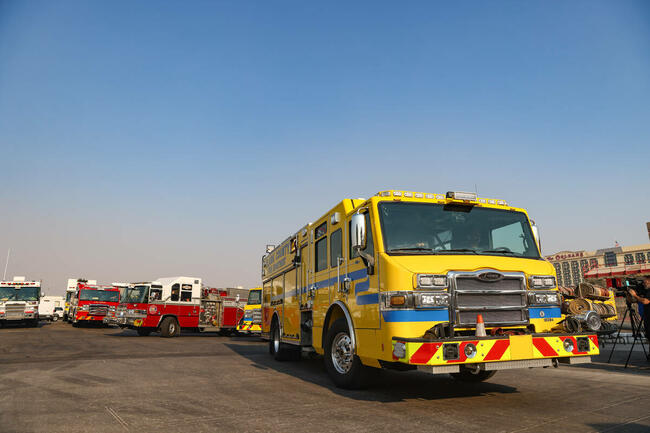
They go everywhere in the county, except for Martinsburg. They sometimes rove into neighboring Maryland or Virginia and do their own extrication. Firefighters have been cross-trained as EMTs for nearly two decades and still have an EMS unit stationed with a medic and an EMT on board. They respond to interstates and rural roads, and follow the plow in snowstorms. They have their own emergency operations planning and state-of-the-art rigs, but no bingo nights or jazzy logo that reeks of more than a century of history.
It’s not as though Martinsburg does not have a long history. Just like Charles Town, it was fought over and burned some in the Civil War. But Martinsburg’s EMS history is much more immediate and telling—in many ways sad and bad. The town’s public safety and public health authorities drew a line in the sand and chose to issue a usurious demand on the surrounding area. People beyond the town line would have to pay to get reliable EMS. EMS care came to end right at the town line, or more properly, the city’s care did. The outlying population came to create its own grand-scale emergency services apparatus.
You can drive from this veritable lager to the city’s own version of fire and EMS easily. It is less than 2.2 miles no matter how you go. The people there are fairly cheerful, too, but quickly tell you they only serve the town. The Berkeley County Office of Emergency Services staffs inside the clear line of fire tell you the inverse, but allow as how there was no choice. The town was too greedy. The rest of the county wasn’t buying it. West Virginia, and later Homeland Security, monies made the rupture doable, workable, even desirable.
The paid day crews work 6 a.m. to 6 p.m. and handle 2,100 calls each year. The immediate area does not have 50,000 residents. Excluding Martinsburg, it has almost half that many. The crews have war stories just like crews do everywhere: crispy critters and squash on the interstate and other highways. One wreck on a major state road held up traffic in both directions for four hours. The patient mix is familiar. The far-ranging response organization is more typical of the Great Plains and Northwest.
EMS Director Stephen S. Allen is proud that there is little turnover and that they have female members. The professional day crew is an unspoken source of pride as well. They no longer go to firefighters’ competitions in nearby Winchester, VA. Times are different, yet he recalls a time when they went all out for EMS Olympics competitions. September 11, 2001, tempered his and the office’s focus. Hazmat and hazmat planning matter big time. The war is real enough. Money sent their way by the feds to get ready is warning enough. They remain sober, brave and unflappable.
What an awesome outfit. Little jazz; much esprit d’corps! No resignation. No defeat-ism, and little in the way of simplistic illusions. This is the way it ought to be in other places: wild, wonderful and really together.